Incomes passive earnings by means of a FTSE 100 ETF has change into a vastly widespread technique. So I made a decision to dig into the dividend yields of two main tracker funds to see how a lot an investor would really need to succeed in £1,000 a month in passive earnings.
First up, the iShares UK Dividend UCITS ETF affords a 4.9% yield, whereas the Vanguard FTSE U.Okay. Fairness Revenue Index Fund yields 4.2%.
The iShares fund is comparatively concentrated, holding simply 51 shares. Vanguard spreads its publicity over 104 holdings.
Regardless of the distinction in breadth, each are dominated by FTSE 100 heavyweights akin to BP, Rio Tinto, Authorized & Common, HSBCand Shell. A handful of FTSE 250 names additionally seem, however with a lot smaller weightings.
I do maintain the Vanguard fund myself, however I don’t solely depend on it to construct passive earnings. One motive is that a number of of its largest holdings aren’t high-yield names, so the earnings stream is of course restricted.
If the aim is £1,000 a month (£12,000 a 12 months), the 4% rule offers us a easy goal: you’d want roughly £300,000 in your pot.
And that is the place issues get attention-grabbing.
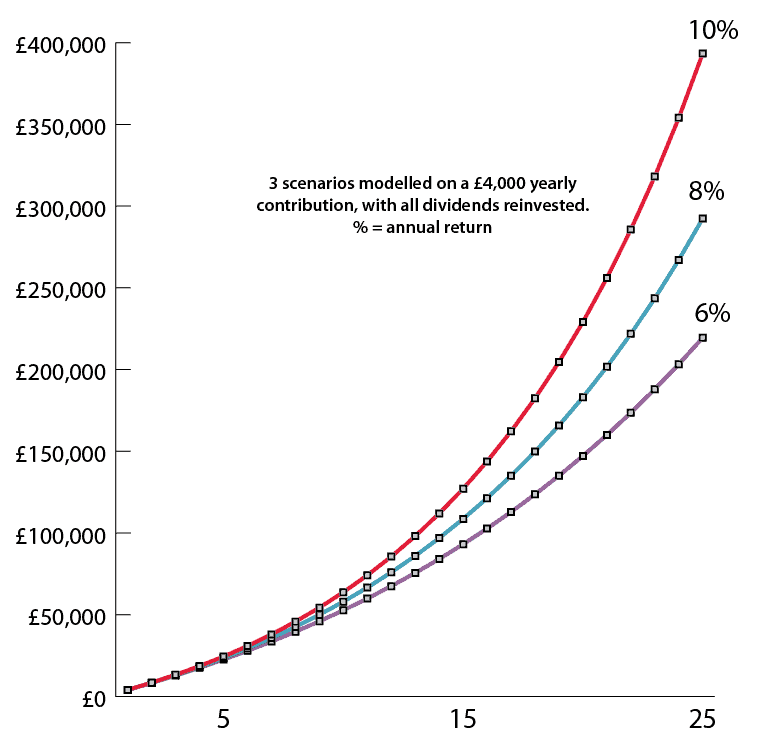
Because the chart reveals, utilizing fastened yearly contributions of £4,000 and easy compounding at at this time’s yields, neither ETF will get near that £300,000 goal over 25 years. The earnings ranges simply aren’t excessive sufficient for the pot to develop on the tempo required.
chart illustrating compound development precept and reinvesting dividends
Chart generated by writer
That’s why I favor pairing a tracker fund with particular person dividend shares that provide larger, extra significant yields.
One large FTSE 100 title lacking from each ETFs’ prime 10 lists is Aviva (LSE: AV.). Its share worth has jumped 32% in a 12 months, which naturally pushed the dividend yield down from 8% to five.5%.
However right here’s the important thing distinction with proudly owning particular person shares: whenever you reinvest dividends into a robust firm, your holding grows a lot sooner than the sluggish, spread-out development you get from an ETF.
In its newest replace, Aviva laid out three daring targets for 2028: develop working earnings per share at an 11% compound annual price, ship an IFRS return on fairness above 20%, and generate greater than £7bn in cumulative money remittances.
To hit these formidable targets, the corporate is doubling down on its shift to a capital-light mannequin. Inside a number of years, it expects over 75% of working revenue to come back from areas like Common Insurance coverage and Wealth, which require far much less capital to develop.
If it could easily combine Direct Line, increase flows by means of Succession Wealth, and proceed scaling by way of main partnerships akin to Nationwide, then these targets begin to look genuinely achievable.
No funding is risk-free. For Aviva, falling insurance coverage premiums, regulatory adjustments, or interest-rate swings might strain income and dividends. Sudden claims or slower development in capital-light divisions might additionally restrict money technology, which is vital for sustaining payouts.
For me, it’s all about constructing a dependable stream of passive earnings. Reinvesting dividends from sturdy, cash-generating shares has quietly constructed a rising earnings stream in my ISA through the years. Whereas the FTSE 100 spreads danger broadly, I’ve discovered that rigorously monitoring a number of high-yield names can flip regular payouts into a robust compounding engine. And there are many different high-income shares to select from.
The submit How a lot do you have to spend money on a FTSE 100 ETF for £1,000 month-to-month passive earnings? appeared first on The Motley Idiot UK.
Extra studying
Andrew Mackie has positions in Aviva Plc. The Motley Idiot UK has no place in any of the shares talked about. Views expressed on the businesses talked about on this article are these of the author and subsequently could differ from the official suggestions we make in our subscription companies akin to Share Advisor, Hidden Winners and Professional. Right here at The Motley Idiot we consider that contemplating a various vary of insights makes us higher traders.
Motley Idiot UK 2025
https://weblog.passive-income4u.com/create-your-very-own-auto-publish-news-blog-site-and-earn-passive-income-in-just-4-easy-steps/