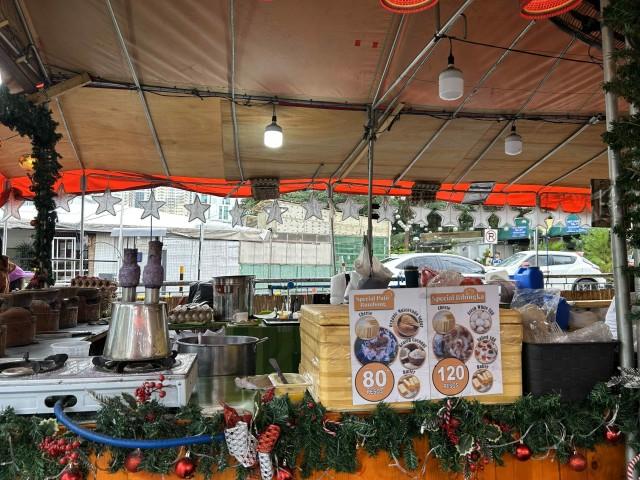
On a wet afternoon only a few days earlier than Christmas, Ate Jocelyn was busy catering to clients – each locals and foreigners – queuing for his or her piping sizzling, mouth-watering bibingka and puto roof.
Ate Jocelyn has been making bibingka and puto roof for the previous 20 years – and even when Christmas comes simply annually, promoting the favored rice muffins is a job that continues all year long.
“No, it is nonetheless the identical. Their earnings continues to be massive,” she stated when requested if gross sales are decrease outdoors of peak season.
(It’s nonetheless the identical, truly. Our gross sales are nonetheless excessive.)
Nonetheless, the demand for the native rice muffins is basically excessive through the vacation season: “Throughout Christmas, there are lots of providers. Those that take it when there’s a Christmas occasion, we’ve that service.”
(We cater to many orders each Christmas. We now have many orders for Christmas events.)
For Ate Jocelyn, bibingka and puto roof will at all times a staple of Christmas celebrations within the Philippines.
“That is actually what Filipinos do. Is not that what we’re searching for after we exit for Simbang Gabi – bibingka and puto bumbong. After we exit of church, that is a Filipino custom,” she stated.
(That’s what Filipinos actually search for. After we attend the Simbang Gabi, as quickly as you step out, that’s what you search for – bibingka and puto roof. As soon as individuals go away the church, that’s already a practice for a lot of Filipinos.)
Sociologist Mark Godwin Villareal stated consuming bibingka and puto roof goes again to pre-Hispanic occasions and even earlier than the arrival of Christianity within the nation.
“In response to Filipino historians, we are able to nonetheless hint him through the pre-colonial Philippines. As a result of there’s truly a delicacy or to illustrate, puto bumbong or bibingka. So we have already got it as a result of we’re an agricultural nation. Most Filipinos, pre-colonial or through the interval of colonization, most of our compatriots are farmers. So the elements used for bibingka and puto bumbong are a part of their tradition,” he stated in an interview with GMA Information On-line.
(In response to Filipino historians, we are able to hint it again to pre-colonial Philippines. As a result of there was already a delicacy, or let’s say a rice cake like puto roof or bibingka. We had these again then as a result of we’re an agricultural nation. Most of our countrymen, pre-colonial or through the interval of colonization, have been farmers. So the elements used for bibingka and puto roof have been already a part of their tradition.)
As Christianity unfold all through the islands, the Filipino trustworthy considered having one thing to eat after attending the Daybreak Plenty and earlier than going to work within the fields.
“So when the Spaniards got here, we had the idea of Simbang Gabi, particularly when Christmas or the beginning of Christ is close to. We included the meals of puto bumbong and bibingka as a result of we’ve Misa de Gallo,” stated Villareal, who teaches on the College of Santo Tomas (UST).
(So when the Spaniards arrived, we developed the idea of Simbang Gabi, particularly when Christmas or the beginning of Christ is close to. We included the consuming of puto roof and bibingka due to the Misa de Gallo.)
“And since a lot of the Filipinos who imagine are farmers, they lose time to arrange their breakfast as a result of they must attend mass. And due to this, they considered what are the simple issues that we are able to eat after mass in order that we are able to go straight to our work, to our farming within the fields. And this will likely be and will likely be used as a supply of their vitality.”
(And since a lot of the Filipino trustworthy have been farmers, they didn’t have time to arrange their breakfast as a result of they needed to attend Mass. Due to this, they considered meals that was straightforward to make and may very well be eaten after Mass so they may go straight to working within the fields. And this additionally served as their supply of vitality.)
Sensory expertise
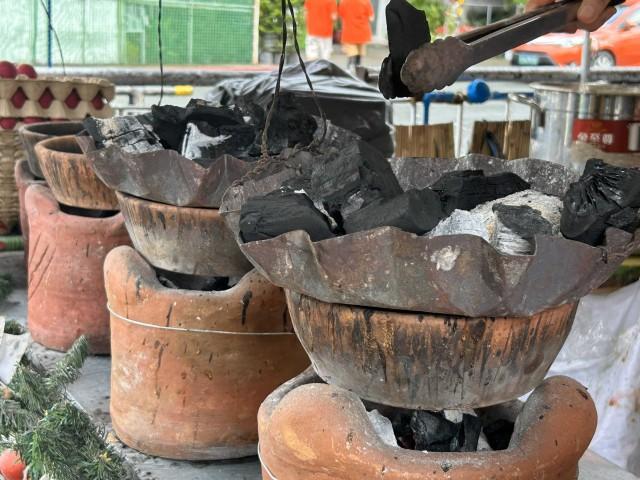
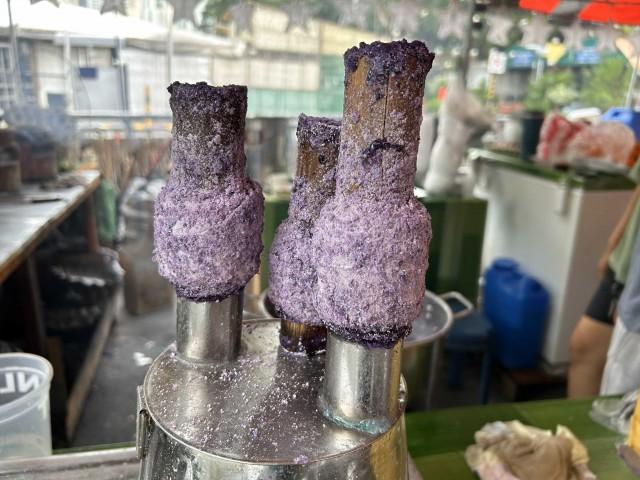
The preparation of the 2 Filipino Christmas specialties is a sensory expertise – the scent of the burning charcoal combining with the aroma from the banana leaf and the cooking bibingkaand the sight of the steam coming from the bamboo tubes, the place the purple puto roof is being steamed to perfection.
“It would not disappear anymore as a result of when there’s puto bumbong or bibingka, it is like an indication that Christmas is close to due to the breeze. It contains the scent or the aroma of banana leaves when the bibingka is being cooked, or if not the steam that comes when the puto bumbong is being cooked. In order that’s why the meals of puto bumbong and bibingka grew to become related throughout Christmas,” Villareal stated.
(These won’t go away, as a result of when there’s puto roof or bibingkait’s like a sign that Christmas is close to and the air is cooler. There’s additionally the scent or the aroma of the banana leaf when the bibingka is being cooked, or the steam coming from the puto roof because it cooks. That’s the reason consuming puto roof and bibingka grew to become related to the Christmas season.)
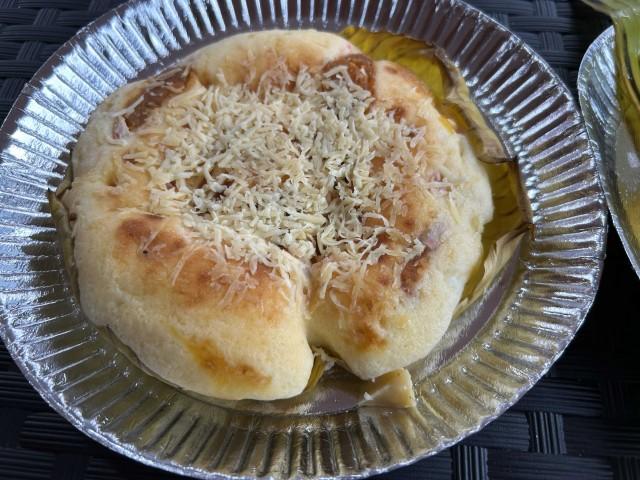
Except for its appetizing aroma, bibingka and puto roof are additionally visually interesting. The fluffy bibingka is often a vivid yellow rice cake with salted egg and barely toasted brown spots that additionally add texture to the rice cake.
Then again, the puto roof’s vibrant purple properly contrasts with the yellow shredded cheese and butter, with brown muscovado sugar on prime.
Villareal added that the preparation of the 2 Christmas delicacies even have symbolisms linked to faith and spirituality.
“I agree with the purple or violet symbolism of Creation preparation earlier than or earlier than the beginning of Christ. There may be even there, you may hear the place the steam is popping out, even pre-colonial, we are able to actually say that it has a spiritual affiliation as if it have been an providing to the gods,” the sociologist stated.
(I agree that purple or violet is a symbolism of the Creation preparation earlier than the beginning of Christ. You’ll even hear that the steam that comes out of cooking, even in pre-colonial occasions, has a spiritual affiliation as if an providing to the gods.)
“Additionally, you will hear some interpretations or symbolism of the bibingka. It is a circle, proper? It appears to represent the unity or union of households, we are able to additionally say that it symbolizes a king that we affiliate with Christ.”
(Additionally, you will hear interpretations or symbolisms of the bibingka. It’s a circle, proper? It symbolizes the unity or union of households; we are able to additionally say it symbolizes the solar, which we affiliate with Christ.)
Shut household ties
Though each rice muffins, the bibingka and puto roof are created from totally different sorts of rice. The bibingka is fabricated from goofywhereas the puto roof is often made purely from pirurutonga brownish-violet glutinous rice or blended along with white glutinous rice.
Villareal stated each delicacies will also be related to Filipinos’ shut household ties.
“That is why they’re edible, I imply it is fabricated from sticky rice. So it exhibits the shut household ties the place after we say shut household ties, Christmas just isn’t enjoyable after we’re not with our neighbors, particularly our members of the family,” he stated.
(That’s why they’re referred to as to eatthat means they’re created from sticky rice. This exhibits shut household ties, and after we say shut household ties, Christmas just isn’t joyful if we aren’t with our members of the family.)
“So we are able to say that what’s symbolized by consuming puto bumbong and bibingka is mostly a familial or communal celebration. As a result of, Christmas is joyful when there’s a occasion, Christmas is joyful when the household is collectively, Christmas is joyful after we share our consolation meals, like puto bumbong and bibingka.”
(So we are able to say that what the consuming of puto roof and bibingka symbolizes is mostly a familial or communal celebration. As a result of Christmas is joyful when there’s a feast, Christmas is joyful when the household is collectively, and Christmas is joyful after we share our consolation meals, like puto roof and bibingka.)
Meals additionally performs an vital function in Filipino holidays as a result of Filipinos like to speak about their experiences whereas bonding over a meal.
“We like to eat as a result of we love to speak. We like to eat as a result of we like to share our experiences. Should not there be a feast, not simply to share, the scrumptious meals served in entrance of us. If not, speak about what we went by way of final 12 months or the 12 months earlier than,” Villareal stated.
(We like to eat as a result of we love to speak. We like to eat as a result of we like to share our experiences. That’s why there are feasts – not simply to partake within the scrumptious meals served in entrance of us, however to speak about what we’ve gone by way of over the previous 12 months or years.)
Fashionable occasions, innovation
The bibingka and puto roof enterprise the place Ate Jocelyn is working has been in operation for almost 30 years.
Even with different institutions providing the identical delicacies all year long, Ate Jocelyn stated they don’t really feel threatened as they financial institution on the authenticity of their recipe.
“Different individuals’s is flour, ours is sticky. Then our puto is basically sticky,” she stated. “That is what our clients say, the style, that is why they hold coming again.”
(With others, they use flour, however with us, we use goofy. Additionally, our puto roof is fabricated from actual glutinous rice. That’s what our clients say, they just like the style, which is why they hold coming again.)
For his half, Villareal stated the provision of the 2 delicacies even after Christmas has led Filipinos to innovate and provides their distinctive tackle these recipes.
“We can’t deny the existence of commercialism. It is good enterprise, after all… However we must also have a look at it from an angle the place it may give extra appreciation to how resourceful or how artistic Filipinos are in evolving and innovating our meals, identical to puto bumbong and bibingka,” he identified.
(We can’t deny the presence of commercialism. It is a good enterprise, after all… However we must also have a look at it from a perspective the place we are able to additional admire how resourceful or artistic Filipinos are in evolving and innovating our meals, identical to with puto roof and bibingka.)
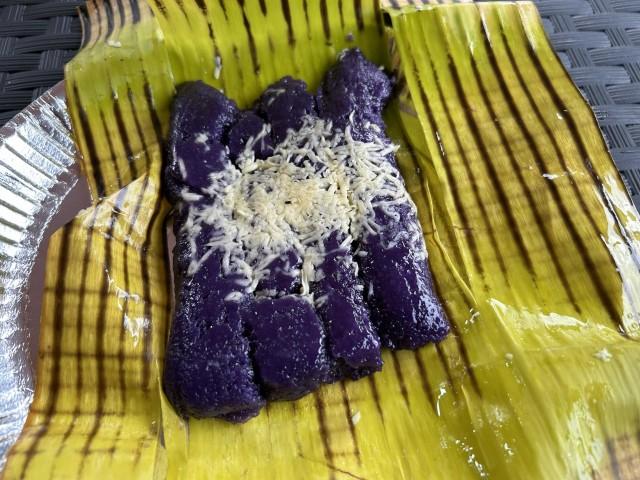
“We are able to see in our historical past that the elements of puto bumbong and bibingka are simply fundamental. However now in what is obtainable in eating places, within the stalls that we see within the mall and even within the distributors themselves within the church – that’s the place we name innovation,” he added.
(Our historical past has proven that the elements for puto roof and bibingka are very fundamental. However now, innovation is current if you have a look at what’s supplied in eating places, stalls in malls, and even these promoting these outdoors the church buildings.)
Villareal famous that some distributors gave their very own twist to the 2 rice muffins, equivalent to including leche flan and all types of toppings to make it extra scrumptious.
Similar to Ate Jocelyn, Villareal is optimistic that the bibingka and puto roof – which have stood commercialism and check of time – are right here to remain.
“We are able to actually say that bibingka and puto bumbong, it transcended time and tradition. We’ll see, proper? Pre-colonial to the Spanish regime. It actually endured totally different generations, challenges, improvements, and he’s nonetheless right here,” he stated.
(We are able to really say that the bibingka and puto roof transcended time and tradition. We are able to see it, proper? From pre-colonial occasions to the Spanish regime. It has actually endured totally different generations, challenges, and improvements, and it’s nonetheless right here.)
“It endured as a result of at the beginning, it’s a part of our Filipino identification. It’s one thing that’s a part of our tradition that can’t be taken away from us.” — JMA, GMA Built-in Information
https://weblog.passive-income4u.com/create-your-very-own-auto-publish-news-blog-site-and-earn-passive-income-in-just-4-easy-steps/
https://www.gmanetwork.com/information/topstories/nation/970546/not-just-a-istmas-craving-how-filipinos-are-connected-by-bibingka-puto-bumbong/story/