I joined 14 different journalists in a week-long journey to Germany to listen to about local weather, peace, and safety
BONN, Germany – “Birds are again,” Vee advised me. I strained to hear. There was a whistling that appeared to pierce the countless grey of winter.
We have been in Bonn on the United Nations campus. It was my sixth day in Germany and in February ice was nonetheless melting and light-weight rain showered every so often. I used to be with 14 different journalists from all over the world. Vee was one of many program coordinators from Goethe Institut who organized the data tour.
Earlier than going to Bonn, we have been in Berlin listening to lectures on local weather, peace, and safety in places of work of presidency companies and suppose tanks.
On the grounds of the UN Campus beside the Rhine, it dawned on me that in Berlin and in Bonn I’ve solely seen crows and pigeons. What we heard that Friday afternoon have been the songbirds that arrived early again in Europe. At house, the place I typically see a yellow-vented bulbul perched on a tree by the sliding door, I by no means thought of not listening to birds.
Because the planet warms, migratory birds are being pressured to reach earlier in breeding grounds even when it’s nonetheless winter. Growth and fast urbanization has precipitated habitat loss and fragmentation for birds.

Will we adapt?
Days earlier than in Berlin, we met Kamal Amakrane, the local weather envoy of the president of the UN Common Meeting. He wore a blazer and a turtleneck, went across the room and requested us which nation we got here from.
Amakrane sought to encourage with out ignoring the paperwork of the worldwide local weather regime that’s preserving the world from extra formidable motion. “Lots of people have put a variety of hearts into this,” Amakrane mentioned. “However I can’t deny you the realities.” A few of my colleagues would say in a while that the session with him was one in every of their favorites all through the tour.
He emphasised that whereas the local weather disaster is international, adaptation is “very a lot native.”
“We are going to all be impacted by local weather change, however we are going to really feel it in a different way. Some could possibly adapt and a few may have sturdy difficulties.”
It is a primary reality in local weather and catastrophe. However adaptation requires funds and the technical experience. Funds come as both grants or loans. The entire debacle on finance is very on show on the annual UN local weather summits.
Weak nations would demand extra, and polluting nations would push again. It has lengthy been regarded that local weather is a improvement subject. The world settles for a consensus, which Amkrane says is the “minimal frequent denominator.”
“We’ve got failed frontline communities,” Amakrane mentioned.

Local weather is a safety subject
It was icy chilly after I arrived in Berlin. A number of days earlier than, the capital’s airport was shut down due to snow and freezing rain. I used to be not used to damaging temperatures and located nice aid in dependable heating methods of institutions.
Later I might be taught that heating is a contested subject because the German federal authorities mandated that newly put in heating methods needs to be at the very least 65% renewable. The coalition authorities just lately agreed to scrap this and permit oil and fuel heating methods.
The journalists stayed in Werderscher Markt, a public sq. within the coronary heart of Berlin the place the international federal workplace and different embassies are situated.
Our arrival in Germany got here months earlier than the election of a non-permanent seat on the United Nations Safety Council. Germany is campaigning for this seat. We have been advised, in some ways, that Germany desires to mainstream the local weather disaster as a matter of worldwide safety.
A report commissioned by G7 nations recognized threats exacerbated by local weather change:
- Native useful resource competitors
- Livelihood insecurity and migration
- Excessive climate occasions and disasters
- Risky meals costs and provision
- Transboundary water administration
- Sea-level rise and coastal degradation
- Unintended results of local weather insurance policies
“The place establishments and governments are unable to handle the stress or soak up the shocks of a altering local weather, the dangers to the soundness of states and societies will enhance,” the report learn.
Beethoven and the Rhine
The journalists I used to be with largely got here from growing nations, from locations weak to sea degree rise corresponding to Fiji, Samoa, and the Solomon Islands.
Some reporters requested concerning the relation of sure establishments’ applications to their nation. Some requested if Germany plans to return to nuclear within the close to future. (The reply we have been advised, for now, is not any.)
Some requested about Europe’s place – and Germany’s – within the worldwide local weather regime as the US abandons the worldwide local weather effort. I requested Amakrane if he thinks the UNFCCC course of has grow to be too bureaucratic for progress to be urgently felt on the frontlines.

My takeaway is that the present international order can’t accommodate the urgency and ambition wanted within the combat towards local weather change. I didn’t discover this shocking.
As a break from all of the lectures and by the top of the week, we visited the home the place Beethoven was born. The information sampled Scene by the Broook and drew our consideration to the the fowl calls that Beethoven mimicked. That of a nightingale, a quail, and a cuckoo.
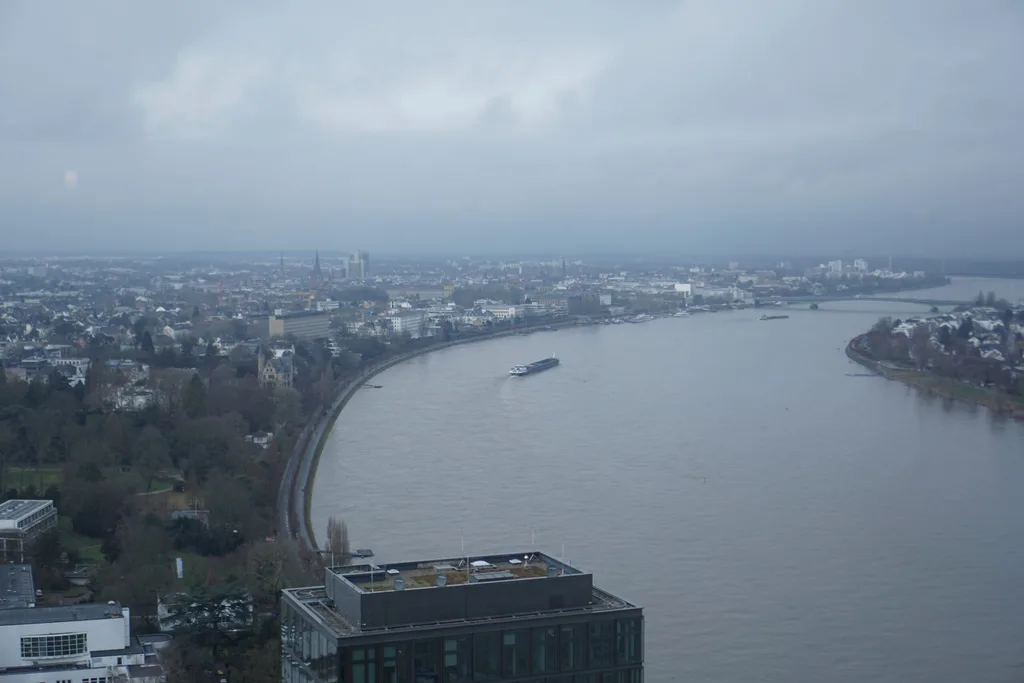
On our final night time, we shared a farewell dinner at a restaurant overlooking the Rhine. All of us talked about a number of the issues we realized as journalists.
What I didn’t say then I’ll write right here.
I realized that in Germany, practice stations shouldn’t have gates and also you solely validate your ticket as soon as. That Deutsche Bahn will get delayed. That in Bonn, small statues of Beethoven are in all places, in the identical method that Santo Niño figures are scattered within the Philippines. That listening to songbirds within the stillness of February is unexpectedly marvelous and that the silence of birds may very well be defeaning. – Rappler.com
https://weblog.passive-income4u.com/create-your-very-own-auto-publish-news-blog-site-and-earn-passive-income-in-just-4-easy-steps/
https://www.rappler.com/voices/rappler-blogs/bonn-germany-birds-coming-back/