In latest days, many readers have written to this column expressing a rising concern: that the unfolding controversy surrounding questionable flood-control tasks dangers being pushed apart by louder headlines — from the escalating tensions between the United States-Israel alliance and Iran to the fixed churn of home political drama, together with impeachment talks and different urgent nationwide points.
It’s a sample Filipinos know too effectively. Public outrage erupts, investigations start, after which consideration quietly shifts elsewhere. These implicated usually depend on exactly that cycle, wagering that the nation’s notoriously brief political reminiscence will finally blur the main points and uninteresting the demand for accountability.
The messages we acquired carry a easy plea: that this column continues to maintain the problem within the public eye, not as an act of advocacy however as a reminder that infrastructure funded by taxpayers deserves scrutiny lengthy after the information cycle has moved on. Accountability, in spite of everything, hardly ever arrives by itself; it should be sustained by public consideration.
The refined power of a column like Vantage Point lies in its skill to amplify extra than simply this author’s private perspective, however to function a platform to echo the very important, but usually unheard, considerations of others.
Over the previous weeks, readers with verified e-mail addresses, have written to this area in response to our earlier investigation into the controversial flood-control projects in Naujan, Mindoro. One message specifically got here from somebody who originated from the province and now works in Metro Manila. Her letter captures exactly why public scrutiny issues. She didn’t write within the language of authorized briefs or engineering reviews, however from the angle of an abnormal citizen who expects one thing quite simple from the federal government: competence, accountability and honesty.
The reader, Arlene Raagas, reached out after studying our earlier column on the controversial road-dike challenge alongside the Magazine-Asawang Tubig River. What she identified deserves consideration — not as a result of it settles the problem, however as a result of it highlights the type of questions that residents themselves are actually asking about how a P289.5-million flood control project might have unfolded in plain sight, with native officers now claiming they knew little about it.
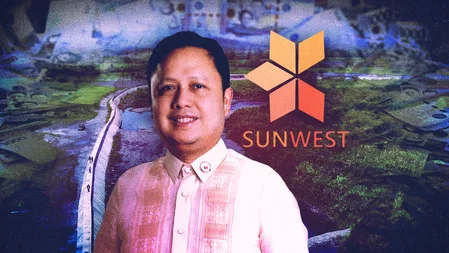
The challenge itself has already drawn the eye of investigators and has grow to be a part of litigation now being dealt with by a number of divisions of the Sandiganbayan. What’s startling, in keeping with Arlene, is the reason provided by Naujan Mayor Henry Joel Teves, who reportedly advised the Impartial Fee for Infrastructure (ICC) that the municipal authorities couldn’t adjust to a subpoena requesting challenge paperwork as a result of it had none to provide. In accordance with the mayor’s assertion, no constructing allow was issued to contractor Sunwest Inc. as a result of no allow software was filed with the municipality within the first place.
In different phrases, the native authorities’s protection rests on a curious declare: {that a} main flood management construction was constructed inside its jurisdiction with out the municipal authorities being formally concerned within the allowing course of.
For anybody aware of how infrastructure is usually applied within the Philippines, the declare raises rapid questions. Even when tasks are funded and supervised by the Division of Public Works and Highways (DPWH), coordination with native governments is often unavoidable. Heavy gear should transfer by municipal roads. Building actions have an effect on barangays. Native engineering places of work monitor compliance with zoning and security guidelines. And politically, infrastructure tasks are hardly ever invisible occasions; they’re usually handled as milestones proudly displayed earlier than constituents.
The reader expressed disbelief on the notion {that a} challenge of such scale might proceed with out the data of the municipal management. Her response displays a broadly shared actuality in native politics: when infrastructure tasks are launched, politicians are often desirous to be related to them. Groundbreaking ceremoniesribbon cuttings, and web site inspections will not be uncommon occurrences — they’re nearly all the time anticipated. For this reason the current declare of official ignorance seems troublesome to reconcile with the political tradition surrounding infrastructure growth.
What complicates the narrative additional is the presence of earlier public communications attributed to Mayor Teves himself. As early as 2023, posts from his official social media channels described a deliberate flood-control initiative alongside the Magazine-Asawang Tubig River — an esplanade-style road-dike spanning barangays San Andres, Tagumpay and Inarawan, with a design likened to the Roxas Boulevard baywalk.

These publicly out there descriptions, which this column has reviewed, bear a hanging resemblance in location, idea and timing to the challenge now below investigation. Whether or not they discuss with the identical enterprise or to separate phases of a broader flood mitigation plan is a matter that solely full challenge documentation can make clear. However the alignment is exact sufficient to lift a extra basic query: how does a challenge publicly described on the conceptual degree later floor as administratively undocumented?
If these posts precisely describe the identical challenge now below investigation, then the narrative of municipal unfamiliarity turns into tougher to clarify.
Past the political optics lies a extra technical concern involving allowing necessities. Beneath Part 301 of the Nationwide Constructing Code of the Philippines, contractors enterprise building actions are sometimes required to safe the suitable permits and coordinate with native authorities. Whereas sure nationwide infrastructure works could comply with specialised procedures, the spirit of the rule is simple: native governments should be cognizant of main tasks inside their jurisdiction due to their impression on native land use, public security, and growth planning.
In follow, this coordination often happens lengthy earlier than concrete is poured or earth is moved.
That is the place the Naujan controversy shifts from a slender technical concern to a broader governance query. If the municipal authorities really had no data of permits, it raises the likelihood that correct coordination could not have taken place. But when native officers had been in actual fact conscious of the challenge and are actually distancing themselves from it, the problem turns into one in all accountability reasonably than oversight.
Both situation suggests a troubling hole within the system.
Additional complicating the timeline is the municipal administrative construction in the course of the interval when the challenge was reportedly underway. The place of municipal administrator — an workplace accountable for overseeing day-to-day coordination throughout municipal departments — was held on the time by Stephanie “Phanie” Teves-Wongthe mayor’s daughter. Her tenure reportedly lasted from August 2023 till September 2024, when she stepped all the way down to pursue an electoral marketing campaign elsewhere.
Municipal directors are sometimes tasked with supervising the operational equipment of native authorities. Their places of work coordinate departments, facilitate challenge implementation, and be sure that municipal insurance policies are carried out successfully. Whereas this association is just not unusual in Philippine politics, it does increase reliable questions on how data flowed throughout the municipal authorities in the course of the interval when the flood management challenge was executed.
By themselves, these questions don’t show guilt. Nonetheless, they do emphasize the crucial want for transparency in public infrastructure tasks.
Flood management methods will not be symbolic tasks. They’re constructed to guard lives, houses and livelihoods in communities that usually face the specter of heavy rains and overflowing rivers. When such tasks grow to be entangled in allegations of irregularities or administrative confusion, the general public deserves clear explanations — not evasive narratives about lacking permits or absent data.
That is exactly why reader engagement issues. Residents usually see particulars that formal investigations solely uncover later. Their observations grow to be early alerts of issues that may in any other case stay buried beneath official paperwork.
On this case, a reader’s letter merely raised a query that many others are actually beginning to ask: how does a P289.5-million flood management challenge advance in a municipality whose personal management claims it had no concept it was occurring? – Rappler.com

Click on right here for extra Vantage Point articles.
https://weblog.passive-income4u.com/create-your-very-own-auto-publish-news-blog-site-and-earn-passive-income-in-just-4-easy-steps/
https://www.rappler.com/voices/thought-leaders/vantage-point-naujan-flood-control-accountability-washes-downstream/