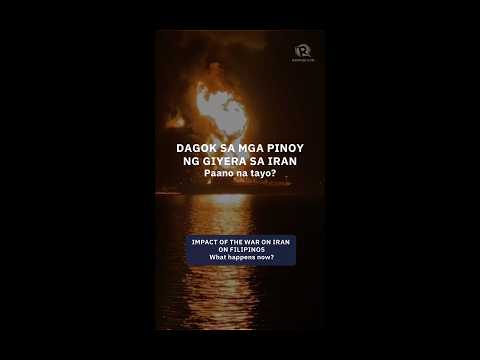
Rappler appears to be like again on the large oil crises of the Nineteen Seventies to look at what triggered them and what sweeping measures the older Marcos utilized to pressure nationwide vitality conservation
As President Ferdinand Marcos Jr. grapples with unstable pump costs pushed by ongoing geopolitical tensions in the Middle Easthistorical past affords a stark reminder that the Philippines has been right here earlier than.
His father, the late dictator Ferdinand E. Marcos, confronted comparable issues in the course of the 1973 and 1979 international oil crises, which confirmed how rapidly worldwide developments can translate into home financial chaos.
Rappler appears to be like again on the large oil crises of the Nineteen Seventies to look at what triggered them and what sweeping measures the elder Marcos put in place to pressure a nationwide conservation of vitality.
1973 oil disaster: Creating Philippine Nationwide Oil Firm, larger tax on oil and gasoline
The 1973 oil disaster started in October 1973 when the oil-producing members of the Group of the Petroleum Exporting Nations (OPEC) imposed an oil embargo on nations supporting Israel in the course of the Yom Kippur War.
This warfare noticed a coalition of Arab states, led by Egypt and Syria, launch a shock army marketing campaign in opposition to Israel to regain territories misplaced in the course of the 1967 Six-Day Conflict. When the USA and different Western allies intervened to supply Israel with important army arms and monetary support to counter the offensive, Arab OPEC members retaliated through the use of oil as a political weapon.
OPEC’s “coordinated technique” led to the drastic improve of oil costs to $US12 per barrel from simply round $3. The Netherlands and the US additionally confronted a complete embargo.
Within the Philippines, the disaster uncovered the nation’s extreme vulnerability as imported oil accounted for over 90% of its vitality provide on the time, which all got here from Center East international locations that “have been partly in unsure political conditions,” based on a report by the Japan Worldwide Cooperation Company.
The sudden value shocks and provide disruptions triggered extreme gasoline shortages, lengthy strains at gasoline stations, and hovering inflation. Corporations laid off employees whereas the impression on “agricultural growth actions and the stoppage of commercial exercise” was additionally observed in some areas.
In response, the administration of then-president Marcos applied strict vitality conservation measures. In October 1973, his authorities elevated the tax on gasoline, lubricating oil, and automotive diesel gasoline by means of Presidential Decree 314. This transfer again then was stated to be “per current coverage to preserve gasoline.”
Marcos additionally issued General Order 40 which directed the “strict observance” of a four-day workweek for presidency places of work because it already grew to become “essential to prescribe even stringent measures for the conservation and correct allocation of vitality assets obtainable.” This lasted from November 13, 1973 to April 1, 1974.

The disaster additionally served as a significant catalyst for the creation of the Philippine Nationwide Oil Firm (PNOC) in November 1973 by means of Presidential Decree 334. Based on the doc, “there’s a compelling want for the federal government to embark on measures which is able to assist insure steady provide of petroleum merchandise with a purpose to maintain the expansion of the economic system and of the social well-being of the nation.”
The PNOC was established to make sure “an satisfactory and steady provide of oil and petroleum merchandise for home requirement.” Its broader mandate additionally included selling the “exploration, exploitation, and growth” of indigenous vitality sources, whereas fostering operational circumstances that help the corporate’s balanced and sustainable development.
General Order 41issued in December 1973, additionally positioned crude and different petroleum merchandise underneath the management of PNOC.
The embargo was finally lifted in March 1974.
1979 second oil shock: Extra energy-conservation measures, rules
The 1979 oil disaster was triggered by the Iranian Revolutionwhich disrupted oil manufacturing in Iran, then one of many world’s largest exporters.
This revolution noticed the overthrow of Shah Mohammad Reza Pahlavi and the institution of an Islamic republic underneath Ayatollah Ruhollah Khomeini. World oil provide really decreased by only around 4%however the disruption triggered widespread worry and speculative hoarding.
This panic led to the drastic improve of oil costs, which greater than doubled from around $13 per barrel to nearly $40 over the next year. A number of nations throughout the globe faced severe supply shortfalls and massive economic disruptions.

The disaster as soon as once more uncovered the Philippines’ vulnerability to exterior shocks. Throughout his 1979 State of the Nation Deal with, Marcos stated “it’s unlucky that the world has developed such a robust dependence on oil to the extent that the weaning course of is proving to be traumatic for a lot of nations on the earth. And the Philippines shouldn’t be an exception.”
The Marcos administration applied a brand new wave of strict vitality conservation measures. In June 1980, his authorities enacted National Law No. 73. This transfer aimed to “institutionalize vitality conservation with a purpose to improve the provision of vitality provides required to help the nation’s financial, social and developmental objectives.”
This legislation prohibited a number of actions, together with:
- The importation, manufacture, or meeting of professional quality, gas-guzzling automobiles, particularly passenger vehicles with an engine displacement of over 2,800 cubic centimeters or a kerb weight exceeding 1,500 kilograms.
- Using neon and electrical lights for industrial promoting outdoors the strict window of 6-9 pm. It additionally banned pointless and extreme lighting in accommodations, malls, and different industrial buildings, with exceptions granted solely in the course of the Christmas and Ramadan seasons.
- Using authorities automobiles for non-official enterprise and on Sundays, authorized holidays, and outdoors of standard workplace hours. All official journeys required a clearly displayed journey ticket on the windshield.
It additionally empowered the federal government, particularly what was then the Ministry of Power, to implement a number of strict regulatory measures, equivalent to:
- The authority to ascertain and administer a gasoline allocation and rationing program throughout provide shortages, in addition to make sure that sellers bought the right high quality and amount of gasoline.
- Requiring the distribution and sale of other vitality blends to spice up the usage of home vitality assets.
- Dictating vitality consumption requirements for all oil-powered or electrical equipment, home equipment, and automobiles manufactured, imported, or bought within the Philippines.
- Fixing the manufacturing yields and product high quality of oil refineries throughout shortages and requiring industrial and transport sectors to gather waste oil for recycling.
- Monitoring heavy vitality shoppers. For instance, institutions consuming over a million liters of gasoline equal yearly have been compelled to submit strict consumption and manufacturing statistics whereas these consuming over two million liters needed to make use of certified engineers as designated “vitality managers” and submit common vitality audits and conservation applications.
- Regulating use of air-con models in places of work and industrial buildings and mandating particular thermostat temperatures to steadiness conservation with affordable consolation.
To implement nationwide conservation in the course of the disaster, the legislation granted sweeping emergency powers to varied authorities ministries:
- The then-Ministry of Labor was allowed to compress workweeks or shift workplace hours to ease visitors and save energy, with out reducing employees’ pay.
- The previous Ministry of Schooling was allowed to regulate class hours to keep away from rush-hour congestion and combine vitality conservation into the curriculum.
- The then-Ministry of Commerce might dictate the working hours of non-essential companies and leisure spots, whereas producers additionally needed to disclose their merchandise’ vitality effectivity.
- The previous Ministry of Human Settlements was tasked with imposing energy-efficient constructing designs and planning communities so individuals might stay nearer to work and college.
- What was then the Ministry of Transportation and Communications wielded large management over motorists: they might legally impose “carless days,” mandate carpools, limit driving throughout rush hour, and even cap the variety of new vehicles registered yearly.
The disaster finally subsided by the early Nineteen Eighties as international oil consumption fell and non-OPEC international locations elevated their manufacturing. – Rappler.com
https://weblog.passive-income4u.com/create-your-very-own-auto-publish-news-blog-site-and-earn-passive-income-in-just-4-easy-steps/
https://www.rappler.com/newsbreak/iq/things-to-know-philippines-oil-crises-ferdinand-marcos-years-1973-1979/