First of two components
The Philippines didn’t simply expertise a debt disaster in 1983. It constructed one.
Not merely by means of how a lot it borrowed—however by means of the way it borrowed. And that distinction issues once more immediately.
Within the Nineteen Seventies, the Philippines nonetheless had entry to long-term improvement financing from establishments just like the World Financial institution and Asian Improvement Financial institution. These loans have been prolonged over a long time, priced extra predictably, and tied to infrastructure and industrial improvement.
However by the late Nineteen Seventies, that window started to slender. On the identical time, world banks—flush with petrodollars—have been aggressively lending to rising markets. These loans have been sooner, much less restrictive, and simpler to deploy.
The Philippines shifted accordingly.
Borrowing more and more took the type of short-term business loans and provider credit, typically tied to imported initiatives and negotiated with far much less oversight. Many of those loans carried floating rates of interest, exposing the nation to world financial shifts.
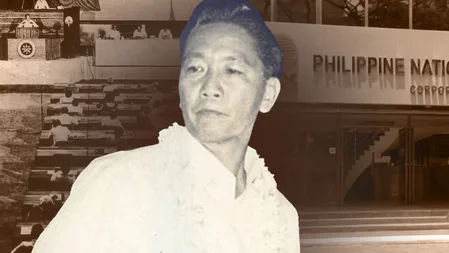
Ferdinand Marcos Sr.’s borrowing sample differed from bigger Latin American economies in essential methods. As a substitute of counting on giant, long-term syndicated loans, a lot of the Philippines’ debt got here by means of provider credit and commerce financing—typically tied to imported initiatives and politically favored contractors. These buildings have been sooner to rearrange and simpler to hide, however far much less steady. The loans have been additionally shorter-term and extremely fragmented, making them tough to restructure when situations deteriorated. Compounding this, a lot of the borrowing occurred on the worst level within the world cycle, simply as US rates of interest have been surging. By 1983, the mathematics broke.
This was not only a monetary shift. It mirrored a political system that favored pace, discretion, and centralized management. Nevertheless it additionally embedded a structural weak spot: dependence on fixed refinancing in a risky world setting.
That weak spot grew to become seen in 1979, when US rates of interest surged to historic highs—peaking above 18% underneath Federal Reserve Chairman Paul Volcker.
As a result of a lot of Philippine debt was short-term and floating, curiosity prices rose nearly instantly. On the identical time, loans started to mature in clusters.
For a number of years, banks had routinely rolled over these loans, creating the phantasm that short-term debt may perform like long-term financing. However by 1983, confidence deteriorated. Political instability deepened. Credit score tightened. Rollover stopped.
What adopted was not a gradual adjustment, however a liquidity disaster. By the mid-Nineteen Eighties, debt service was consuming over 1 / 4 of presidency expenditures, squeezing out the remainder of the price range and weakening the state’s skill to perform.
📊 Debt Construction and Fiscal Stress (Nineteen Eighties Snapshot)
| Indicator | Approximate Degree |
| US rates of interest (Volcker peak) | >18% |
| PH debt kind | Quick-term, floating-rate |
| Debt service burden | >25% of gov’t spending |
| Outcome | Liquidity disaster + fiscal collapse |
Within the late Nineteen Eighties, many nations got a second probability by means of the Brady Planwhich allowed them to restructure debt and reset their economies. Mexico and Brazil used it to revive market entry and return to development.
The Philippines entered that course of from a weaker place. Its debt was fragmented, shorter in maturity, and already partially restructured. That restricted its leverage.
The nation prevented outright default. Nevertheless it didn’t obtain the type of clear reset seen elsewhere. The system that produced the disaster was by no means absolutely dismantled.
Subsequent administrations discovered from this expertise.
Under Benigno Aquino IIIdebt-to-GDP fell from roughly the low-50% vary to round 40%. Borrowing grew to become longer-term, extra predictable, and extra disciplined.
Below Rodrigo Duterte, borrowing increasedsignificantly in the course of the pandemic. However a lot of that financing—particularly from exterior sources—was long-tenor and concessional, in a worldwide setting of near-zero rates of interest.
In each intervals, the construction of debt was extra steady than within the early Nineteen Eighties.
Immediately, the priority is not merely how a lot the Philippines is borrowing, however how—and when—it’s borrowing.
The nation is elevating funds in the next rate of interest setting, with a rising share of market-based exterior bonds that usually mature inside 5 to 10 years. On the identical time, fiscal deficits stay elevated at round 5 to six% of GDP, even exterior disaster situations. Debt-to-GDP has hovered within the low-60% vary—manageable by itself, however extra delicate when paired with greater borrowing prices and refinancing wants.
None of those elements alone indicators disaster. However collectively, they start to type a well-known sample.
Debt crises hardly ever start with a single shock. On the top of the 1983 disaster, the central financial institution was pressured to depend on in a single day borrowing simply to keep up liquidity—an indication of how shortly monetary stress can escalate. They emerge when monetary fragility meets uncertainty. Markets reply not simply to numbers, however to confidence—in fiscal self-discipline, in establishments, and in coverage route. When confidence weakens, borrowing prices rise additional, reinforcing the very pressures that undermine it.
That is how debt shifts from a instrument right into a lure.
The worldwide setting immediately gives much less room for rescue than it did within the Nineteen Eighties. Debt is extra fragmented, collectors extra various, and markets sooner and fewer forgiving. There isn’t any coordinated mechanism just like the Brady Plan ready within the background.
When the Philippines retired its closing Brady bonds in 2007, it benefited from a uncommon alignment of worldwide situations. That alignment not exists.
Immediately’s world setting isn’t equivalent to the Nineteen Seventies—however the underlying mechanics aren’t solely unfamiliar.
Then, oil shocks generated extra liquidity that flowed into rising markets, encouraging fast borrowing underneath fragile buildings. Those self same shocks additionally contributed to the inflation that in the end triggered a pointy rise in world rates of interest.
Immediately, vitality markets are as soon as once more risky. Geopolitical tensions—from the Center East to Ukraine—proceed to form oil costs and world inflation. Whereas this has not produced the identical wave of straightforward credit score, it has created a distinct type of strain: persistently greater rates of interest and tighter monetary situations.
The sequence isn’t equivalent. However the interplay is comparable: exterior shocks form world financing situations, whereas home debt buildings decide how weak nations are to them.
The lesson of the Nineteen Eighties isn’t merely that debt may be harmful. It’s that debt construction determines resilience.
The Philippines was lucky to wash up its Brady bonds throughout a uncommon window of favorable world situations between 2006 and 2007.
That window is now closed. – Rappler.com
Sources: Philippine Bureau of the Treasury (Nationwide Authorities Debt Statistics); Improvement Price range Coordination Committee (DBCC) Fiscal Program; Worldwide Financial Fund (IMF) nation experiences and sovereign debt information; World Financial institution World Improvement Indicators; historic documentation on the Brady Plan (U.S. Treasury, 1989).
Dr. Jaemin Park is an Adjunct Professor on the College of the Philippines Faculty of Public Well being and works throughout Southeast Asia on healthcare financing, medical innovation, and system reform.

https://weblog.passive-income4u.com/create-your-very-own-auto-publish-news-blog-site-and-earn-passive-income-in-just-4-easy-steps/
https://www.rappler.com/enterprise/opinion-brady-bonds-philippines-government-debt-trap/