In 2004, discovering Filipino meals in Japan meant figuring out the place to look — and who to ask. It’s tucked away within the backrooms of small OMITTED (outlets) that doubled as grocery shops and neighborhood hubs, largely invisible to the Japanese public. They have been for “us” — the homesick, the hardworking, and people who knew which unmarked door led to a steaming bowl of porridge (Filipino bitter soup).
Now, eight years into my second chapter residing in Tokyo, the panorama has begun to shift, albeit progressively. As we rejoice Filipino Meals Month, I see a neighborhood slowly shifting from the far periphery towards a extra seen presence. This shift is most seen in our eating areas — from the survivalist consolation of the old-school OMITTED to the regional satisfaction of in the present day, and the extra intentional bistro ideas now rising.
A comparative perspective
My journey as a lawyer has taken me between many islands — the Philippines, Japan, and the UK. Throughout my time in London, I noticed a vibrant Filipino meals scene that had efficiently crossed over. From the polished hospitality of Kasa and Kin close to Oxford Avenue to the unapologetic “dwelling cooked” (home-cooked) spirit of Coco’s Lounge in North West London, our meals has turn into a celebrated a part of that metropolis’s material.
Maybe most symbolic is Jollibee’s everlasting dwelling within the iconic Leicester Sq.. Each time the burden of residing overseas alone felt too heavy or the London fog grew too chilly for me, I might discover my method to that red-and-yellow storefront.
It wasn’t simply the acquainted style of Chickenjoy or Jolly Spaghetti. It was the environment. Stepping inside felt like being again within the Philippines even for a second. However what struck me simply as a lot was the group: locals from all backgrounds, lining up alongside us. Watching them take pleasure in our meals stuffed me with satisfaction and made it clear to me that our tradition shouldn’t be confined to us however one thing that others can step into, and really feel at dwelling in as nicely. (READ: (BizSights) Making a case for Pinoy fried chicken)
Coming again to Japan, the distinction is sharp. Regardless of our neighborhood’s measurement, our delicacies stays considerably underrepresented in comparison with the ever-present Thai or Vietnamese eating places discovered on each nook.
From survival to storytelling
The old-school OMITTED — the neighborhood carinderia (small meals stall) — was constructed on practicality. These spots have been outlined by a sprawling buffet and a karaoke machine. As Johndy Zinampan, the proprietor of Bananas Bistro and a detailed good friend, places it: “The main focus was easy: inexpensive, filling meals served rapidly. It was casual, useful, generally chaotic, however all the time grounded in neighborhood.” In these settings, meals and music have been a mixed protection in opposition to the loneliness of life overseas.
Earlier than the fashionable wave, institutional pillars like New Nanay’s in Roppongi, New Nene’s Kitchen in Akabane, and Ana’s Restaurant in Saitama, held the neighborhood collectively. These “Nanays” (moms) turned home-cooking into an expert legacy, creating areas the place households may collect for a real style of dwelling.

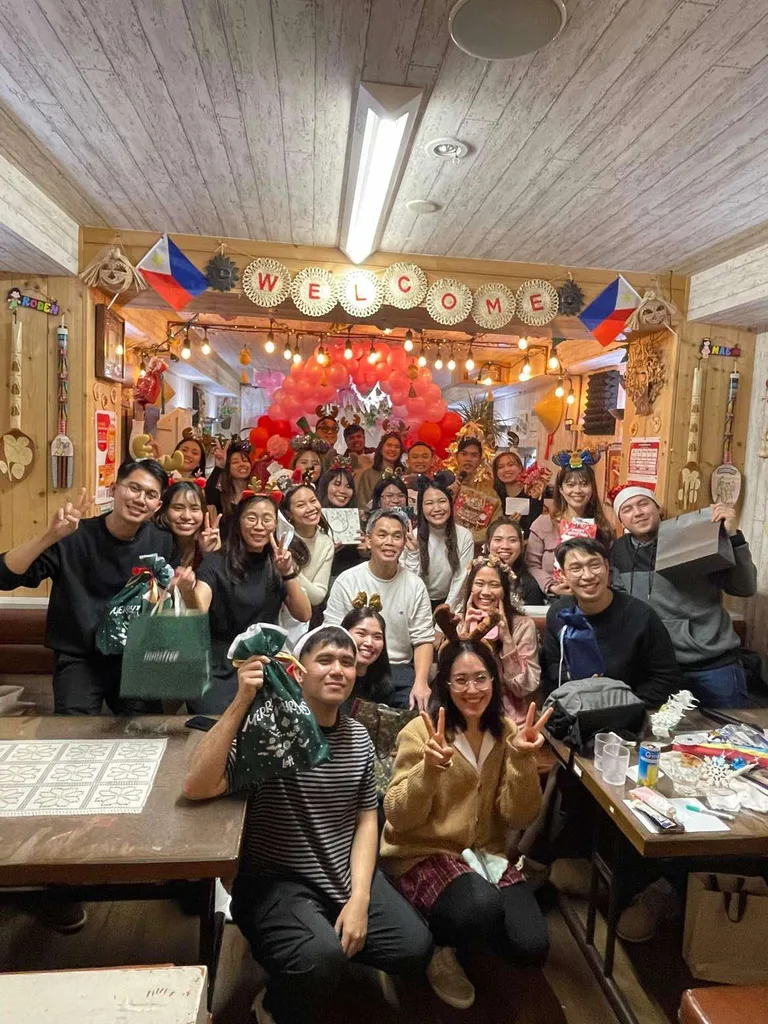
CELEBRATIONS. At New Nene’s Kitchen, one in every of our authentic village squares in Tokyo, each event finds its place – birthdays, weddings, Christmas, or just being collectively. For a lot of Filipinos in Tokyo, that is the place life is widely known. Pictures courtesy of New Nene’s Kitchen.


Regional satisfaction on the transfer

Our culinary narrative can be changing into extra specialised. We’re shifting past generic adobo towards distinct regional expressions. Barrio Grill in Chiba is a first-rate instance, bringing the smoky flavors of Bacolod to Japan. Pau Apsay Aquino’s cover and behaved replicate a stage of craft that has earned Barrio Grill the “Greatest Sales space” title on the Philippine Competition for 2 consecutive years.

This attain extends past the Kanto Plain. In Fukuoka, the place I used to stay, Juri Kajiwara has pioneered Angel’s Kitchen, a cell Filipino restaurant that brings the style of the islands to the streets of Kyushu. Her meals truck displays the fashionable mobility of our diaspora — adaptive, seen, and introducing the Japanese public to flavors they might not have in any other case encountered.
Bananas: A brand new entry level
If the OMITTED was about survival, the fashionable Filipino bistro is about intentionality. At Bananas Bistro in Shinjuku, the aim is to bridge the cultural hole. “The thought,” Johndy explains, “was to create an area the place Filipino meals may stand on equal footing with different revered cuisines in Tokyo — offered with the identical care you’d anticipate from a superb French bistro.”

The identify itself is a bridge. Philippine bananas are our prime export to Japan and a well-known staple right here. “It’s a quiet entry level,” he says, “a disarming method to invite individuals in.” At Bananas, the “soul” stays genuine, however the presentation is designed to be legible to a Japanese visitor who is likely to be attempting sisig for the primary time. It’s a transition from the loud heat of the karaoke bar to a extra curated eating expertise.


NEW VILLAGE SQUARE. Bananas Bistro alerts a brand new face of Filipino eating in Japan grounded in basic flavors, however offered with a renewed sense of function. With its welcoming facade (proper), Bananas Bistro stands as a part of a brand new, extra seen Filipino presence in Japan. It reimagines the brand new village sq. the place Filipino eating in Japan strikes from hidden areas to intentional, welcoming interiors. Pictures courtesy of Johndy Zinampan, proprietor of Bananas Bistro


The aspirational horizon
Whereas we rejoice these strides, we’re nonetheless within the early phases. Filipino meals in Japan is way from being a family identify, however there may be anticipation for what’s subsequent. My time in different world hubs has proven me what is feasible. It stays my fervent want and mission to see extra Filipino eating places, Jollibee (after all) and different beloved Filipino manufacturers set up a everlasting dwelling right here. Seeing them and the “Crimson Bee” within the coronary heart of Tokyo could be a strong sign that our tradition has lastly discovered its place within the Japanese day by day routine.
A legacy on a plate
This evolution is a narrative of resilience. As Johndy places it: “Filipino tradition is constructed on layers — the sweetness subsequent to acidity, the consolation subsequent to depth. All of it comes from a protracted historical past of change and adaptation.”
As we rejoice Filipino Meals Month, I have a look at the doorways of those institutions — from the neighborhood hubs in Saitama to the regional mastery of Barrio Grill and the fashionable ambition of Bananas Bistro. They symbolize a neighborhood that’s slowly however certainly shifting towards the middle of the dialog.
The spirit of let’s eat (Let’s eat) stays our best export. The Filipino desk is getting greater in Japan, and as we outline our personal lane, the longer term feels more and more hopeful. – Rappler.com
Ricky Aringo Sabornay is a cross-border lawyer who strikes between the Philippines and Japan, serving to individuals navigate not simply completely different authorized programs, however other ways of considering. He runs Sabornay Lawa member agency of Uryu & Itogathe place his work sits on the intersection of two authorized programs and two cultures that don’t all the time communicate the identical language. Join with him on LinkedIn.
Beneath are hyperlinks to different Between Islands articles:


https://weblog.passive-income4u.com/create-your-very-own-auto-publish-news-blog-site-and-earn-passive-income-in-just-4-easy-steps/
https://www.rappler.com/voices/thought-leaders/between-islands-filipino-food-japan-slowly-more-visible/