For many, the picture of a museum seems to be fronted by an enormous façade beaming in all white with big columns and inside, spacious halls with big galleries. Then there are those who stay virtually hidden in plain sight, tucked behind outdated corridors, historic partitions; and within the case of this stunning discover in Naga Metropolis, contained in the grounds of a trailblazing college.
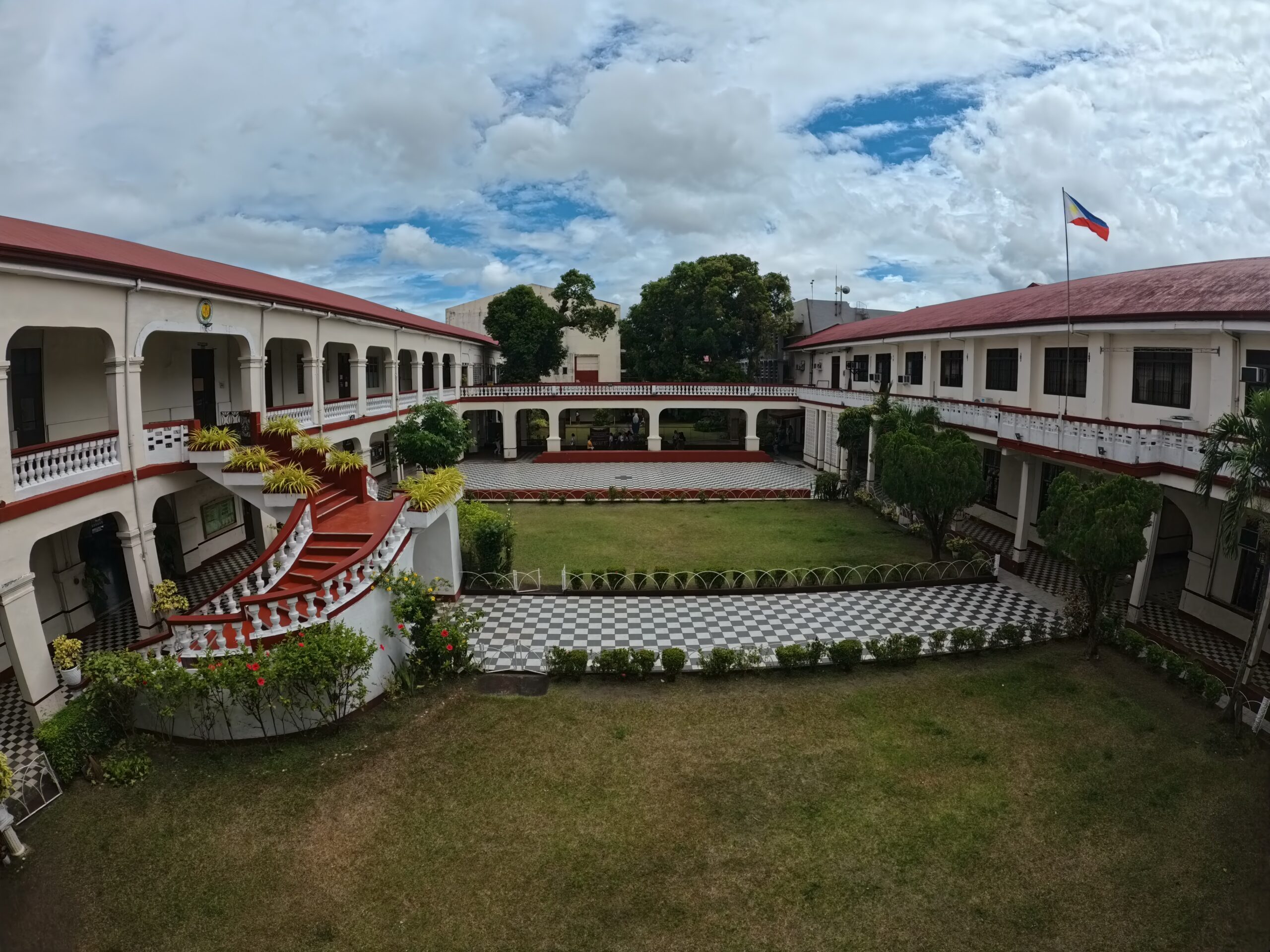
Contained in the campus of College of Sta. Isabel in Naga Metropolis, the Historic Museum of the College of Sta. Isabel features precisely like that: hiding a wealthy assortment of artifacts associated to religion, revolution, and ladies’s rights.
The museum doesn’t merely narrate the historical past of a pioneering college. It additionally tells the story of a remodeling nation starting within the latter a long time of the nineteenth century.
College origins
Declared a Nationwide Historic Landmark, the college traces its origins to 1868, when Bishop Francisco Gainza, a Spanish Dominican bishop assigned to Nueva Cáceres, the outdated title of Naga, envisioned one thing radical for its time: a proper establishment devoted to the schooling of girls. In an period when girls had been largely confined to home roles, the concept bordered on revolutionary.
“Girls have an enormous function in society,” museum curator Luis Banzuela defined throughout a guided tour by the galleries. “By educating girls, you possibly can educate the world.”
The bishop’s dream would finally grow to be the first normal school for women in Southeast Asiaand among the many earliest establishments in Asia devoted to coaching feminine academics.
The phrase “regular,” Banzuela defined, didn’t confer with peculiar education however to norms or requirements of educating. In trendy phrases, it was trainer schooling.
At first, there was no grand campus. The college briefly occupied rooms contained in the convent beside the cathedral. Gainza needed permanence.
In a petition to Spain, he requested that the varsity be constructed beside the cathedral, the bishop’s palace and the seminary. The situation of the college at present stands because the success of that request.
The museum’s first gallery recreates this origin story by a collection of work accomplished in 1968 for the establishment’s centennial anniversary. They’re among the many museum’s most prized items: a visible chronicles of arrival, aspiration, and colonial-era Bicol.
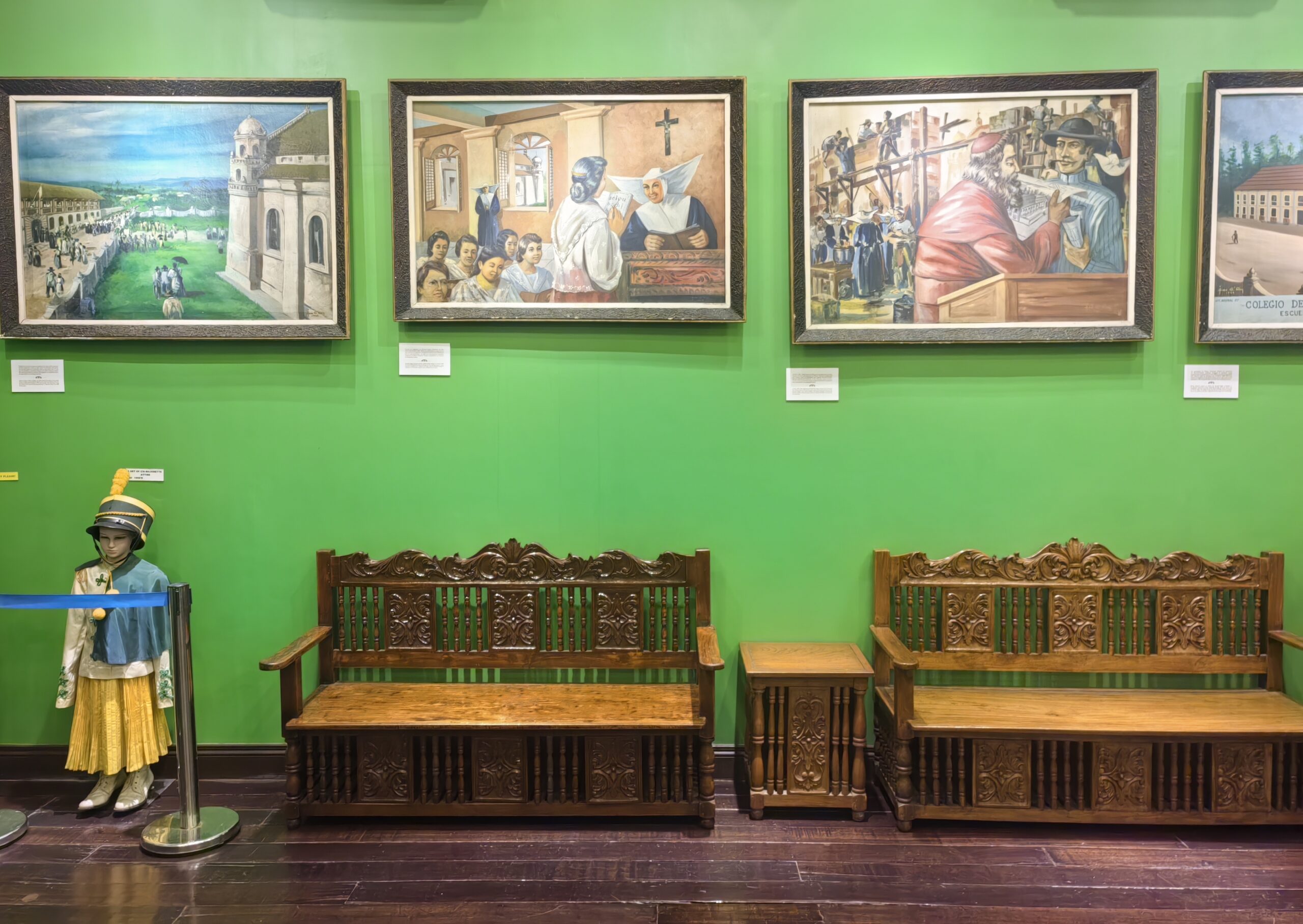
One canvas depicts the six Daughters of Charity sisters from Spain who stayed on the college for a while after Gainza secured royal approval for the varsity. In response to Banzuela, locals had been astonished by the sight of girls clothed in clothes resembling these of monks, and the collection of work reveals how the locals welcomed them.
One portray reveals their tough voyage to Bicol in April 1868, touring by the Bicol River aboard native watercraft from Pasacao to Nueva Cáceres in time for Palm Sunday.
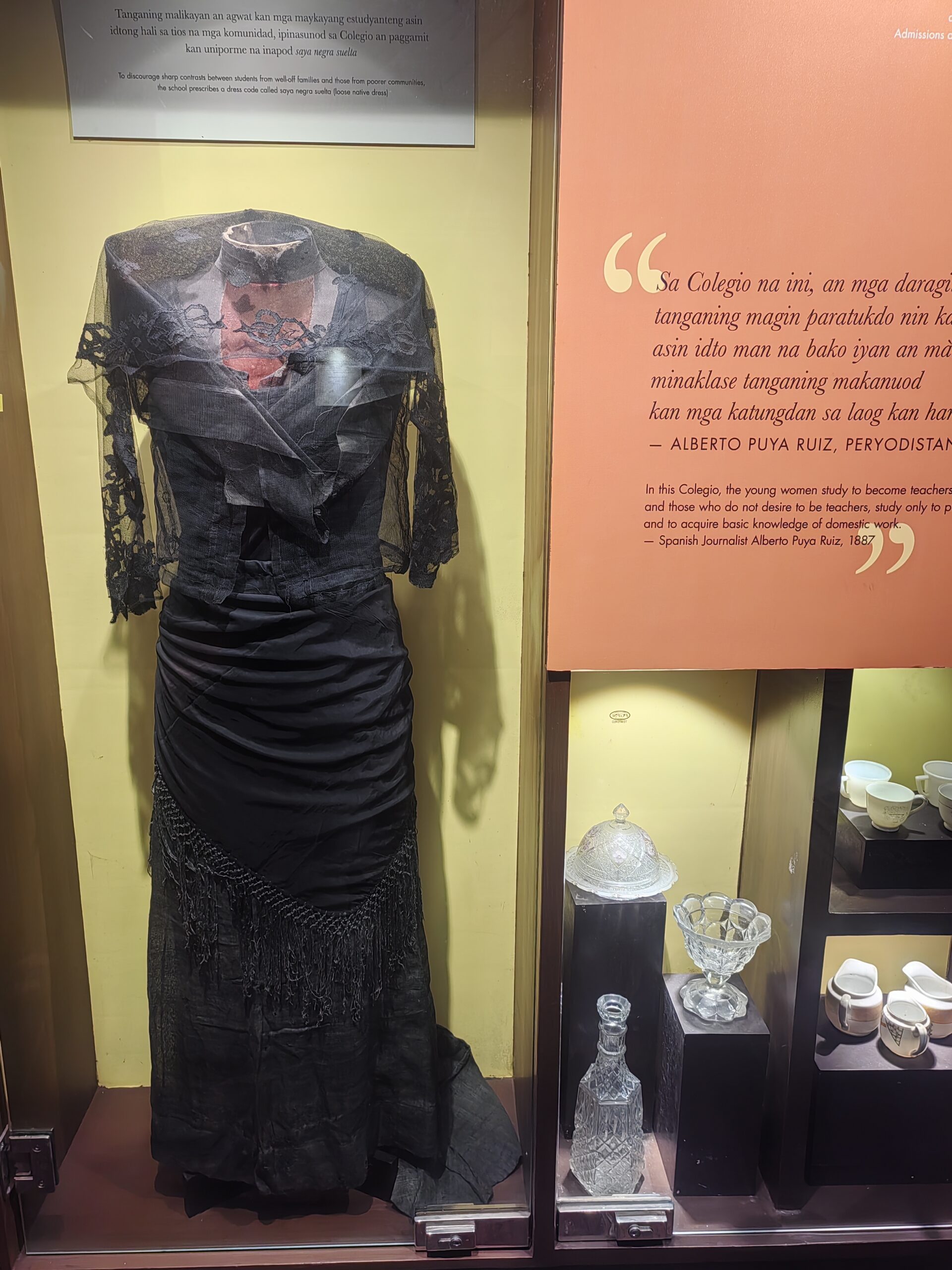
Elsewhere within the gallery hangs a recreation of the varsity’s early uniform, the unfastened black skirt, a college carried out dressworn by the scholars to discourage sharp distinctions between these coming from rich households and people from poorer communities.
“To discourage discrimination between the wealthy and poor,” Banzuela defined, “all women wore black.”
That dedication to schooling prolonged past finishing-school refinement. After only some years, Gainza grew dissatisfied that graduates weren’t changing into academics. He petitioned Spain once more, this time to raise the establishment into an Escuela Regular de Maestras, a teacher-training college. Approval arrived in 1872.
Inside glass circumstances are photocopies of software letters written by younger girls hoping to check there, maps displaying how college students traveled from throughout Luzon to Naga, and speeches meant for the primary graduates of the teacher-training program.
One tackle, written by Gainza in Spanish for the varsity’s first 11 graduates, needed to be delivered by another person as a result of the bishop had grown too in poor health to learn it himself.
However maybe the museum’s most exceptional assortment lies deeper contained in the galleries: its relics.
Saintly relics
Rows of shrines containing first-, second-, and third-class relics of saints line the shows with stunning numbers. Some comprise fragments of bone. Others protect fabric touched by canonized figures.
For Catholic guests, they’re sacred objects. For historians, they’re artifacts of devotion and ecclesiastical networks stretching throughout continents.
Among the many most prized items is a reliquary gifted by Queen Isabella II to Bishop Gainza throughout an viewers in Spain on October 1, 1867. The story behind it was made extra fascinating by how Banzuela narrated it to guests.
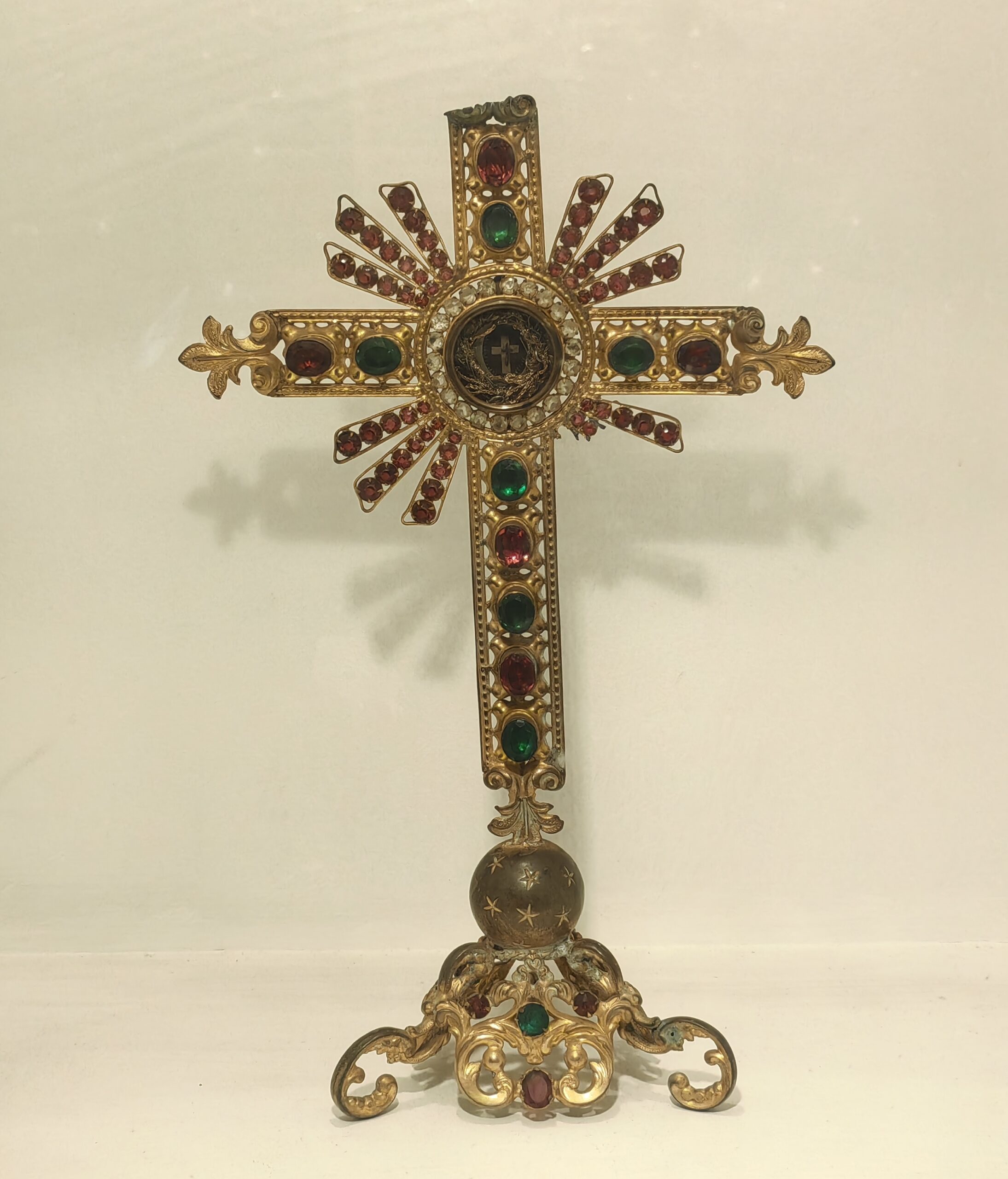
Gainza had traveled to Europe and hoped to personally meet the queen after years of writing letters about his plans in Bicol. Throughout their assembly, he mentioned his imaginative and prescient of creating a college for girls in Nueva Caceres.
Happy with the bishop’s mission, the queen introduced him with a relic related to Elizabeth of Hungary, the saint for whom the varsity would later be named (Isabel is the Spanish model of the title Elizabeth).
For years, the item was launched merely as a relic of St. Elizabeth. Later analysis, nonetheless, prompt that the relic additionally contained one thing far rarer: a fraction believed to be from the True Cross. Contained in the small container rests a tiny piece of wooden mentioned to return from the cross upon which Jesus was crucified.
In response to Banzuela, Queen Isabella II herself was believed to be a descendant of St. Elizabeth of Hungary, including one other layer of symbolism to the present. The queen, he mentioned, selected to dedicate the varsity not after herself, however after a “celestial queen.”
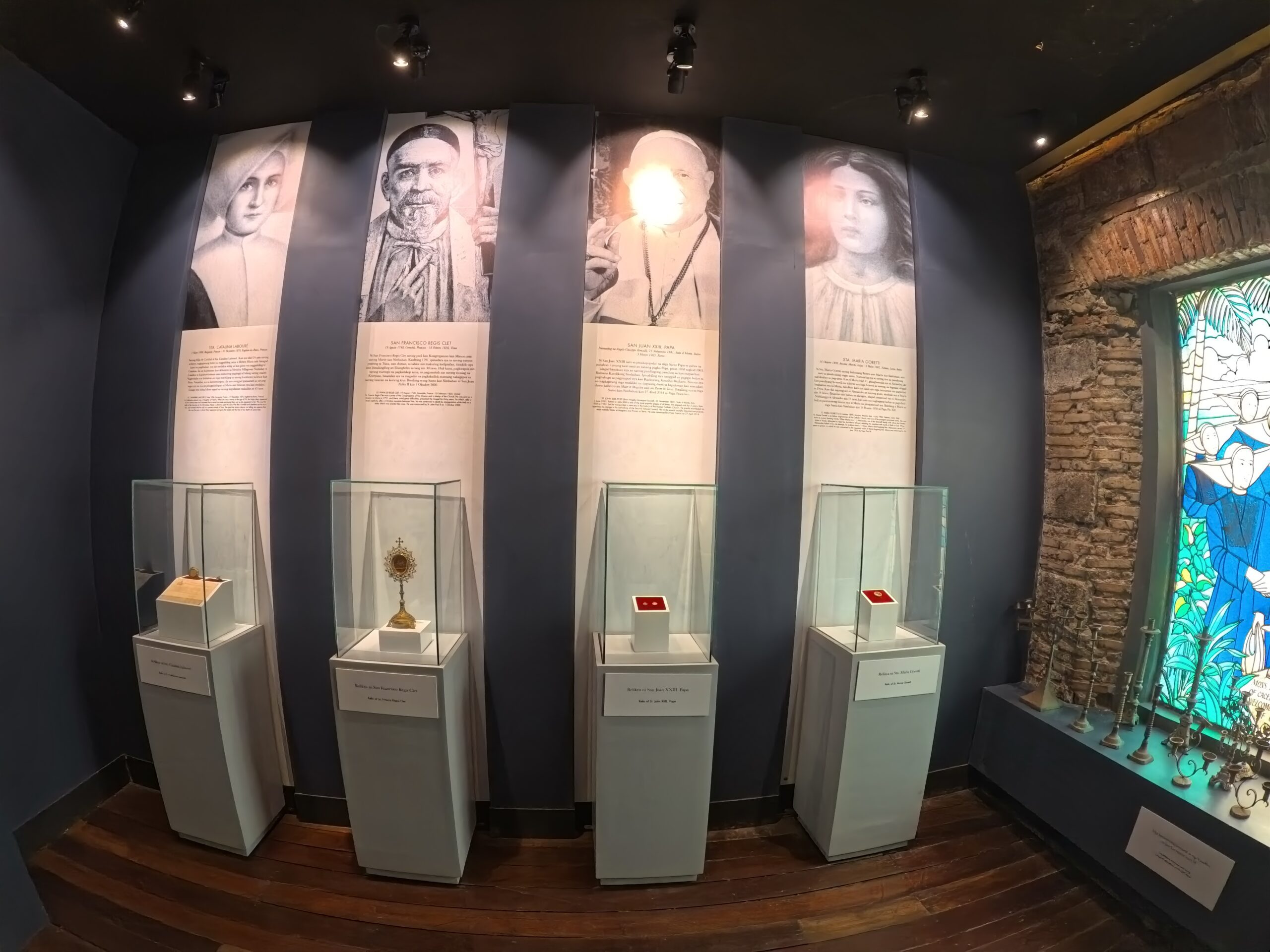
The museum’s relic assortment, amassed from presents from the Spanish Queen, as she grew extra admiring of the college’s features, additionally contains first-class relics linked to Vincent de Paul and Louise de Marillac, reinforcing the college’s deep ties to the Vincentian custom.
Aside from faith and schooling, the museum additionally shows the scars of conflict. Through the Philippine Revolution, the campus served as headquarters for Filipino rebels, together with Corporal Elias Angeles, who led revolutionary forces in Bicol in opposition to the Spanish in 1898.
Throughout World Warfare II, the Japanese army occupied the campus as a garrison. American bombings decreased a lot of the unique buildings to ruins.
Pictures displayed within the galleries present shattered partitions and skeletal stays of buildings. Empty bomb shells, wartime foreign money often called “Mickey Mouse cash,” and surviving artifacts from the occupation are displayed in one of many galleries.
For all its historic significance, nonetheless, the museum stays low-key. Banzuela guides guests like a storyteller desirous to share neglected particulars: the social hierarchy mirrored in vintage rooster carriers known as gallineras; the vanished relics and wartime artifacts stolen earlier than heritage preservation turned a factor; the annual rotation of objects from storage to maintain repeat guests returning.
There’s something extra interesting concerning the place. In an age when museums more and more compete for grandness, the Museo Histórico de la Universidad de Sta. Isabel as a substitute depends on the tales it tells, particularly a few metropolis as soon as known as Nueva Caceres, of girls breaking social boundaries by schooling, of revolutionaries and 6 nuns, of relics touring from royal courts in Spain to a college in Bicol — all that making this museum a must-visit amongst historical past fanatics. – Rappler.com
https://weblog.passive-income4u.com/create-your-very-own-auto-publish-news-blog-site-and-earn-passive-income-in-just-4-easy-steps/
https://www.rappler.com/individuals/human-interest/museum-universidad-sta-isabel-naga-city/