Tax guidelines require REITs (actual property funding trusts) to return a minimum of 90% of their rental revenue to shareholders annually. This implies a lot of them supply above-average yields. However as a distribution of revenue, there aren’t any ensures in terms of dividends. In any case, 90% of nothing is nil.
Right here’s one REIT that’s at present paying a tremendous 7.3%. Might this final? Let’s see.
Do you have to purchase Grocery store Revenue REIT Plc shares as we speak?
Earlier than you resolve, please take a second to evaluation this report first. Regardless of ongoing uncertainties from US tariffs to international conflicts, Mark Rogers and his workforce consider many UK shares nonetheless commerce at substantial reductions, providing savvy buyers loads of potential alternatives to study.
That’s why this may very well be a great time to safe this priceless analysis – Mark’s analysts have scoured the markets to disclose 5 of his favorite long-term ‘Buys’. Please, don’t make any large choices earlier than seeing them.
Please be aware that tax remedy will depend on the person circumstances of every shopper and could also be topic to alter in future. The content material on this article is offered for data functions solely. It isn’t supposed to be, neither does it represent, any type of tax recommendation. Readers are accountable for finishing up their very own due diligence and for acquiring skilled recommendation earlier than making any funding choices.
What does it do?
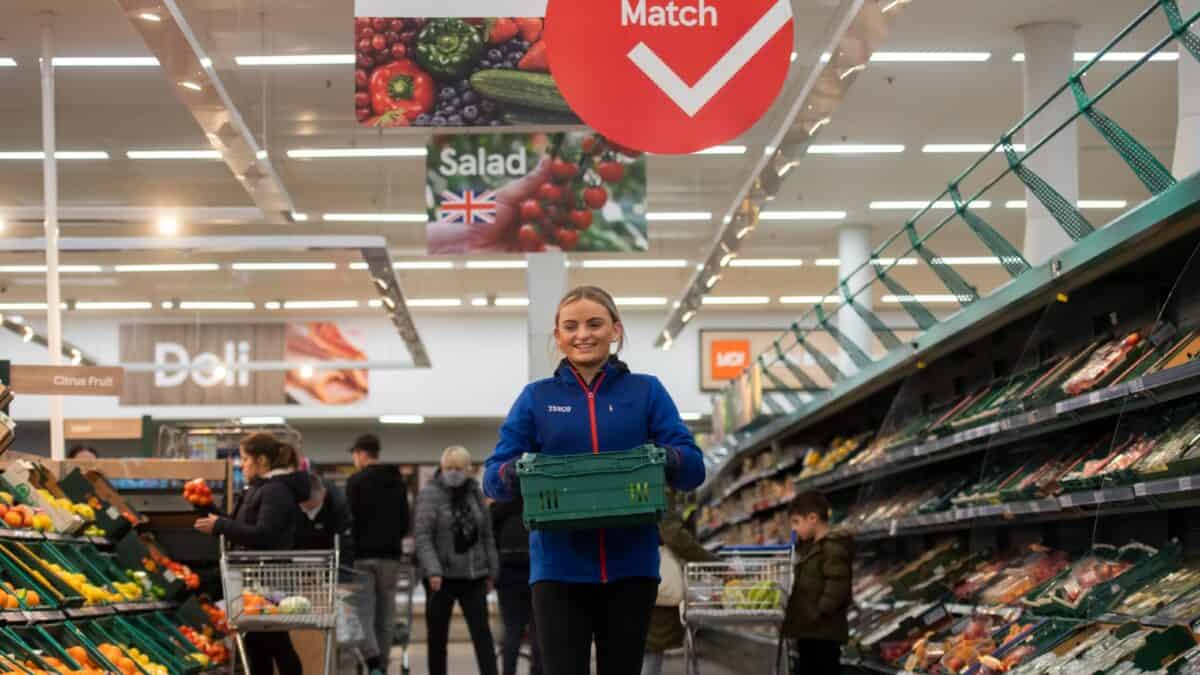
Grocery store Revenue REIT (LSE:SUPR) owns a £2bn portfolio of grocery shops, which it rents to blue-chip tenants.
From a monetary perspective, its operations are straightforward to grasp. It has one supply of revenue, few overheads — regardless of having a market cap of £1.1bn, it employs lower than 20 individuals – and comparatively giant borrowings.
So long as it efficiently manages the ratio of rents to mortgage repayments, it ought to have some money left over to return to shareholders.
Supply: firm presentation
Certainly, as a result of a big proportion of its tenancies present for inflation-linked lease will increase (82%) and the price of a major quantity of its debt is fastened or hedged (92%), it’s been in a position to steadily increase its dividend since itemizing in 2017.
The REIT paid its first dividend in October 2017. Since then, it’s returned a complete of 51.65p a share. This is the same as simply over half of its IPO worth of 100p.
However this highlights a possible situation. The group’s share worth is now (14 June) 85p. Shareholders have carried out properly from the belief’s dividends however the lack of capital has, little doubt, been painful.
What’s the issue?
I think a lot of this lack of investor confidence pertains to the upper rate of interest setting that we’ve skilled because the pandemic.
In frequent with most REITs, Grocery store Revenue makes use of debt to assist finance the acquisition of its properties. Larger borrowing prices are unhealthy for its backside line.
At 31 March, its internet debt was 8.2 occasions its EBITDA (earnings earlier than curiosity, tax, depreciation, and amortisation) in comparison with a ratio of 5.1 9 months earlier. The belief expects it to be inside a spread of 7-8 occasions by March 2027.
Importantly, the REIT at present has a loan-to-value ratio of 43%, which is comfortably under the 60% restrict specified by its debt covenants.
Larger rates of interest additionally imply that buyers with some spare money might even see a possibility to earn a greater return elsewhere, corresponding to by way of much less dangerous authorities bonds or deposit accounts.
My view
However I stay a fan of the REIT, notably its dividend.
Based mostly on quantities paid over the previous 12 months, a £10,000 funding (11,765 shares) may produce £730 in dividends in the course of the yr forward. In fact, there can by no means be any ensures in terms of payouts.
Nonetheless, there are a selection of things that counsel it may very well be elevated in coming years.
Positively, the typical unexpired time period of its rental agreements is 12 years. It enjoys a 100% occupancy fee and a 100% lease assortment file. It additionally claims to have the second-lowest cost-to-income ratio of the FTSE 350’s REITs.
For these wanting to spice up their passive revenue, I feel Grocery store Revenue REIT is properly value contemplating. In reality, I’ve it in my very own portfolio. However I’m not anticipating its share worth to go gangbusters. Traders wanting one thing a bit extra thrilling ought to in all probability look elsewhere.
Do you have to make investments £5,000 in Grocery store Revenue REIT Plc proper now?
When investing knowledgeable Mark Rogers and his workforce have a inventory tip, it may possibly pay to hear. In any case, the flagship Twelfth Magpie Share Advisor e-newsletter he has run for almost a decade has offered 1000’s of paying members with prime inventory suggestions from the UK and US markets.
And proper now, Mark thinks there are 6 standout shares that buyers ought to think about shopping for. Need to see if Grocery store Revenue REIT Plc made the listing?
James Beard owns shares in Grocery store Revenue REIT.
https://weblog.passive-income4u.com/create-your-very-own-auto-publish-news-blog-site-and-earn-passive-income-in-just-4-easy-steps/