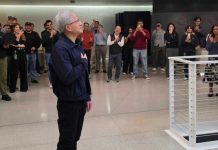
I taught human-centered design (HCD) to 2 teams final month: excessive schoolers in Ateneo Arete’s Junior Sandbox Program and school students with the Division of Science and Expertise’s Science Training Institute (DOST-SEI).
Between camps, I caught up with Fr. Jett Villarin, SJ, a local weather scientist, who can be interviewed in regards to the coming El Niño. We mentioned how he may talk the magnitude of the occasion.
I started with questions that every one science communication professionals use as a part of their technique: Who precisely was he reaching out to? What have been their lives like? How would they expertise El Niño as an issue? What may they do about it?
With us was an Arete intern, a communication main who had simply completed the obligatory science and danger communication course. She added that merely scaring folks wouldn’t work. Steerage would make a message each helpful and hopeful.
It’s laborious to not be hopeful once you’re round younger folks preventing to work past the world’s tragedies. In each HCD camps, I noticed college students excited to see the world via the experiences of others. When made to suppose, they by no means pouted or implied that I used to be flawed for countering deeply-held beliefs. They by no means threw down their instruments or threw up their fingers to surrender on the challenges introduced to them. There was a lot promise and potential, so many younger minds trying to find an outlet for each vitality and creativity.
I needed to verify one thing that college students had as soon as informed me in my Points in Science Communication class.
“How true is it that your lecturers deducted factors out of your lab stories in case your findings didn’t match their expectations?” I requested through the DOST-SEI speak, “And the way true is it that you simply modified your findings so that you simply nonetheless acquired excessive grades?”
Their reply, in refrain: “Each true!”
“You’ve been educated for fraud! You gained’t do nicely in science! You’ll do nicely in Congress, although.”
Laughter to the rafters.
Even with a background of shortcuts and memorization, the scholars by no means cursed their lecturers or condemned those that had gone to higher-tier colleges. They didn’t concentrate on their limitations. They didn’t cease asking questions and reveling within the solutions, even when it’s simpler to surrender and despair slightly than hope and dream.
Hope actually is more durable to put in writing about, take into consideration, and work on. It’s simpler to consider that medicine and video video games make folks violent, or the youth are lazy, or the world is doomed. It’s simpler to curse others with punishment, imprisonment, and even demise.
A curse, nonetheless, isn’t mere phrases. When despair is spoken out loud, it additionally invitations us to think about just one form of future: one the place anybody could be conveniently erased if they don’t conform to the form of 1’s actuality.
There isn’t any such factor as a innocent curse. The previous president wasn’t simply hyperbolic when he known as for demise; his daughter wasn’t any higher when her anger acquired the higher of her. Anger, grief, and impulse neither excuse nor justify condemnation; they don’t diminish the facility of a curse.
A curse places a sentence the place life nonetheless asks questions. It’s a lot more durable to ask “why?” Why do folks take medicine, resort to violence, or behave in bewildering methods? It could possibly be flawed authorities infrastructure; damaged, wounded households; a tradition that prioritizes obedience and conformity on the expense of rules; a mix of extra issues than one can instantly think about or know.
Asking why opens us to the likelihood that we are able to repair our issues if we regard one another as human beings slightly than vessels of unforgivable sins. “Why” is all the time an invite to hope.
Hope asks us to be open to grace and shock in an unsure world. It encourages listening. In contrast to the intellectually lazy despair, cursing, and condemnation, hope calls for creativeness. Hope is a self-discipline.
And hope, just like the endless questions that one should ask when designing, pursuing the sciences, or wrestling with religion, is understandably exhausting. It means strolling with folks for a for much longer time slightly than merely displaying up of their hour of want, giving them donations for a photograph alternative, after which strolling away when the long-term work is required.
It means working to expunge corruption by making folks much less depending on political patronage, creating infrastructure that responds to their context, and forming folks into residents slightly than mere spectators.
Because the theologian Karl Rahner, SJ as soon as mentioned: hope is a dedication to an unknown future. We’re all unfinished symphonies.
When Fr. Jett and I parted methods final week, our intern mentioned, “Ma’am, it’s so fascinating that you simply’re already skilled professionals, however you’re nonetheless brainstorming options.”
I had no time to answer then, however my reply would have been: there isn’t a recipe for a humanity that’s all the time altering, however it’s our job to maintain asking questions. It’s our job to hope.
That’s how we contribute to the unfinished symphony: we don’t sing its conclusion, however we write the notes that maintain the music going.
—————-
iponcedeleon@ateneo.edu
https://weblog.passive-income4u.com/create-your-very-own-auto-publish-news-blog-site-and-earn-passive-income-in-just-4-easy-steps/
https://opinion.inquirer.internet/192798/the-discipline-of-hope