
MANILA, Philippines – As Philippine ube (purple yam) continues to captivate world style buds, the native authorities of Bohol is safeguarding Ubi Kinampay, an iconic ube number of the province and one of many nation’s heritage crops.
The provincial authorities, by the Bohol Financial Improvement and Funding Promotion Workplace, filed its software for geographical indication (GI) registration of the Bohol Ubi Kinampay with the Mental Property Workplace of the Philippines (IPOPHL).
READ: Ube’s global appeal takes root
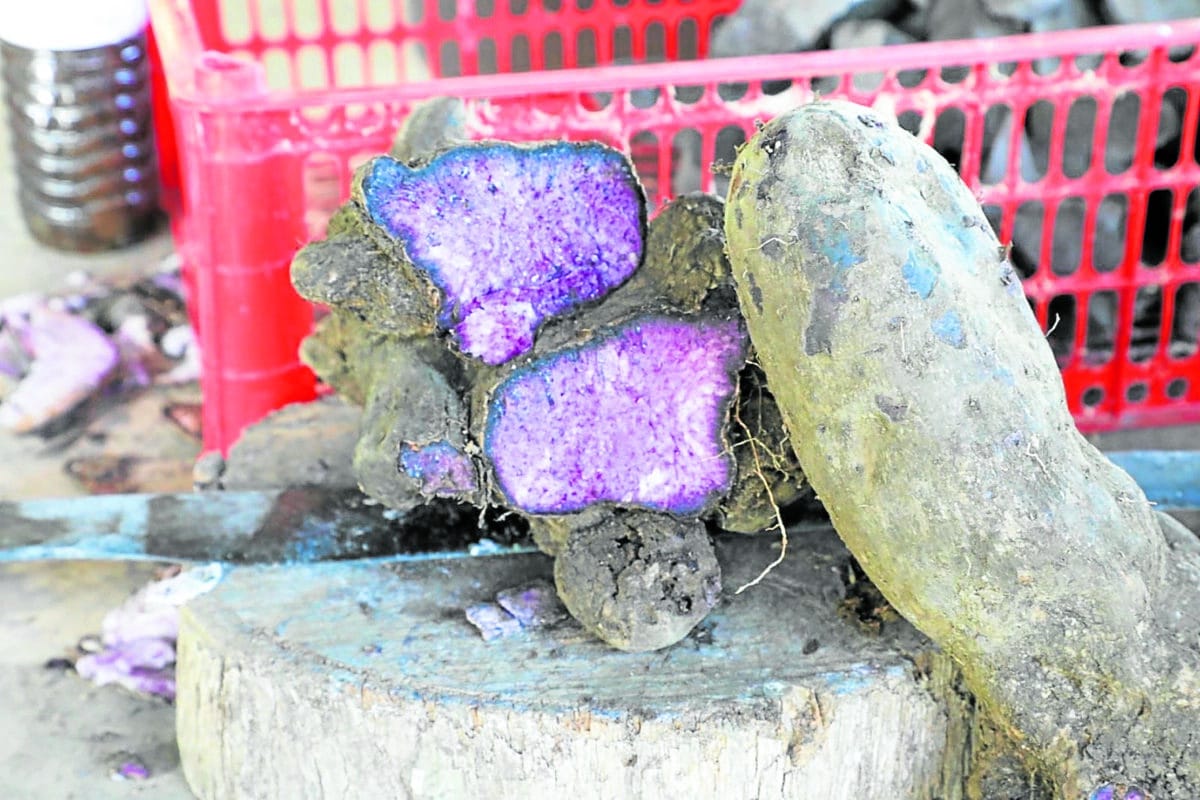
Famend because the “queen of Philippine yams,” Ubi Kinampay has turn out to be a sought-after ingredient in each native and worldwide culinary markets. It’s identified for its naturally vibrant violet flesh, earthy aroma and wealthy taste, that are related to Bohol’s geography, soil, local weather and conventional farming practices.
Ube-flavored merchandise vary from ice cream and pastries to drinks, gaining traction in North America, Europe and elements of Asia.
“The world is now in the midst of a ‘purple gold rush’ and GI safety might help the Philippines stake its declare within the rising world demand by strengthening its market id and place,” IPOPHL Director Basic Teodoro Pascua says.
Securing GI safety for Bohol’s Ubi Kinampay is seen to assist defend this indigenous selection from false origin claims and unauthorized use of the title.
GI registration protects items with distinctive high quality, traits and fame linked to their geographical origin or human elements.
Such registration gives safety for a limiteless time period, until revoked, stopping third events from deceptive the general public with false origin claims.
“As ube turns into extra world, we should be certain the roots of sorts from the nation aren’t misplaced. GI safety helps be sure that the true coronary heart of the Bohol Ubi Kinampay—its soil, story and folks—stay Boholano and Filipino,” Pascua provides.
Up to now, the Philippines has 4 registered GIs:
As soon as accredited, Ubi Kinampay would be the second domestically protected GI from Bohol province after Asin Tibuok, an artisanal heritage sea salt from the city of Alburquerque.
Thoughts the gaps
Past Bohol, the Division of Agriculture (DA) goals to institutionalize the Philippine ube trade in its long-term technique. It goals to journey the worldwide purple gold rush.
The DA plans to create a steering committee and technical working group to outline the official scope of ube, standardize uncooked and processed merchandise, in addition to harmonize high quality necessities throughout companies and exporters.
The company says the proposed physique, which might be represented by varied DA companies, connected companies and the non-public sector, is predicted to align phytosanitary and technical requirements throughout companies. That is seen to deal with long-standing regulatory fragmentation that has constrained agricultural exports.
READ: DA distributes 60,000 ube planting materials in Leyte, Bohol
“The urgency is underscored by trade knowledge exhibiting that present manufacturing ranges of round 50 to 60 metric tons (MT) per operator might scale as much as as a lot as 500 MT with improved provide coordination and expanded uncooked materials entry,” the DA says.
However growth of the ube trade is hindered by worth chain gaps.
“Manufacturing stays modest, constrained by restricted planting materials, fragmented smallholder manufacturing and inadequate processing capability,” the US Division of Agriculture’s Overseas Agricultural Service says in a market transient.
A number of the recognized gaps embrace: restricted entry to high quality planting supplies; shortage of licensed setts, or items of ube tubers lower particularly for planting and propagation; and the absence of analysis infrastructure and laboratory testing capability.
The report likewise cites fragmented ube manufacturing, with small holder farmers working largely in isolation. It additionally notes important post-harvest losses as a result of inadequate amenities and regulatory inconsistencies in imposing varied requirements.
The shortage of a proper and universally acknowledged definition of ube as a commodity can be a stumbling block.
One other bottleneck is the dependence of producers on intermediaries, which limits pricing transparency and reduces farm-gate returns. Farmers additionally grapple with lack of entry to formal lending establishments.

Planting assist
Wanting to present the ube sector a lift, the Bureau of Plant Business (BPI) and the Philippine Root Crop Analysis and Coaching Middle distributed virtually P2.6 million price of ube planting supplies to round 900 farmers in Leyte and Bohol.
Greater than 60,000 purple yam planting supplies have been distributed to 60 farmer teams throughout key ube-producing areas within the Visayas.
Beneficiaries come from the cities of Dagohoy, San Isidro, Lila, Cortes and Alburquerque and Abuyog in Tacloban. In Leyte, planting supplies reached the cities of Baybay, Maasin and Ormoc, in addition to the cities of Carigara, Mayorga, Palompon, Naval, Mahaplag, Kananga, Burauen, Calubian and Inopacan.
BPI vows to proceed offering technical assist and capacity-building actions to bolster farmers’ yields and faucet rising market alternatives.
“As ube features worldwide recognition, we should guarantee Filipino farmers are positioned to make the most of the alternatives it creates,” BPI Director Gerald Glenn Panganiban says.
“This initiative helps present the inspiration for elevated manufacturing, larger incomes and a stronger home ube trade,” he provides.
Export guess
Agriculture Secretary Francisco Tiu Laurel Jr. says the Philippine authorities is exploring different agricultural merchandise with robust export potential to spice up farmers’ revenue and assist slender the agricultural commerce hole.
“President Ferdinand Marcos Jr. has tasked us to develop extra export winners that may elevate farmers’ incomes and create larger worth for the economic system,” Laurel says.
“With ube now having fun with world recognition, we see a possibility to increase manufacturing, improve exports and assist scale back the nation’s greater than $10-billion annual agricultural commerce deficit,” the agriculture chief provides.
Ube exports amounted to $3.06 million in 2025, doubling from $1.4 million recorded by the
Philippine Statistics Authority (PSA) in 2024, knowledge from the Division of Commerce and Business confirmed.
In response to the DA, key export markets embrace Canada, the Center East and elements of Asia. In the meantime, the USA, South Korea and Europe are rising as next-wave development locations.
READ: Global ube boom highlights problems for Filipino farmers
However regardless of the rising world urge for food for ube, native output of this root crop dropped by 6.7 % to 12,483.31 MT in 2025, primarily based on PSA knowledge.
Key producing areas are Central Visayas (33 %), Calabarzon (13 %) and Cagayan Valley (12 %).
The Philippines doesn’t import recent purple yam from some other nation, the BPI reminds the general public.
“Any recent ube being bought, transported, or claimed as ‘imported’ needs to be verified with the suitable authorities,” BPI Nationwide Plant Quarantine Companies Division says.
The importation of recent agricultural commodities, in response to BPI, is topic to strict phytosanitary laws to forestall the introduction and unfold of dangerous plant pests and illnesses which will threaten Philippine agriculture and meals safety.
To mitigate these dangers, the company reiterates its dedication to defending the nation’s plant sources by efficient border management measures whereas facilitating secure and compliant agricultural commerce. INQ
https://weblog.passive-income4u.com/create-your-very-own-auto-publish-news-blog-site-and-earn-passive-income-in-just-4-easy-steps/
https://enterprise.inquirer.internet/598928/ph-stakes-claim-in-purple-gold-rush