I simply got here from Singapore the place my new e-book, Twin Plagues: How Duterte and Covid-19 Wrecked the Philippine Economywas launched.
It’s my third time in Singapore, and I’m all the time amazed at their transportation system, significantly their railway system. Trains arrive each two to 3 minutes. Stations are clear and funky. A single card (or as of late, any bank card) will get you on any prepare or bus.
You then fly dwelling and return to the drudgery of lining up for an hour at an MRT-3 station, or ready for a bus alongside EDSA within the rain.
The hole is staggering particularly whenever you put numbers on it. Singapore’s rail community now spans about 250 kilometers throughout six MRT traces, carrying greater than 3 million passengers every day, in a city-state of nearly 6 million folks. Actually, two extra traces are underneath building, and the community is ready to succeed in round 460 kilometers by 2040.
Metro Manila, in contrast, with greater than twice Singapore’s inhabitants, has roughly 60 kilometers of city rail unfold throughout three traces constructed many years aside. Additionally they barely join with each other.
We was once a pioneer within the area: LRT-1 opened in 1984, the primary mild rail system in Southeast Asia, three years earlier than Singapore’s MRT carried its first passenger. Singapore has caught up, then lapped us many instances over.
How Singapore did it
Singapore’s exemplary rail system didn’t spring from wealth alone. As a substitute, it sprang from meticulous planning and continuity.
The federal government recognized the necessity for a rail spine in its 1971 Concept Plandebated it for a decade, and dedicated in 1982 to what was then its largest public mission ever. Each authorities since has stored constructing on it, no matter who was in energy.
Establishments mattered, too. Since 1995, a single company, the Land Transport Authority, has deliberate roads, rails, and buses as one built-in and coherent system. Buses are usually not opponents to trains however feeders: routes are deliberate (and paid for) by the state, and personal operators are contracted to run them. Fares are built-in so a visit combining bus and prepare doesn’t punish the transferring passenger.
Singapore additionally made driving costly on function. A certificate of entitlementwhich one wants simply to personal a automobile, can value greater than the automobile itself. Whereas politically painful, it pushed folks towards public transport and freed up roads for buses.
In distinction, the three rail traces within the Philippines had been constructed underneath completely different administrations, completely different contracts, and completely different applied sciences. Businesses with overlapping mandates (the transportation division, the Land Transportation Franchising and Regulatory Board, the Metropolitan Manila Improvement Authority, and native governments) every maintain a bit of the commuting puzzle; nobody holds the entire.
In the meantime, we stored constructing roads and skyways as an alternative, which principally profit the one in 10 or so Filipino households that personal vehicles. The Japan Worldwide Cooperation Company (JICA) has estimated that congestion prices Metro Manila about P3.5 billion a day, and that might balloon to P5.4 billion every day by 2035 if nothing adjustments.
What we are able to realistically do
The excellent news is that the Metro Manila Subway, MRT-7and the North-South Commuter Railway are all underneath building, and the LRT-1 extension already reaches Parañaque.
The primary process then is to simply end what we began. Our report right here just isn’t encouraging. Take the case of MRT-7 alongside Commonwealth Avenue, going close to UP Diliman. It broke floor in 2016 and will solely partially open in 2027. Proper-of-way issues have stalled the LRT-1 extension’s later phases. Each delay compounds prices and erodes public belief.
Second, we have to combine our techniques. A commuter at this time might have, for example, separate playing cards, separate traces, and lengthy walks between stations. All of this could have been designed as one. A real common stationseamless transfers, and a single fare system throughout all trains, buses, and fashionable jeepneys would elevate ridership with out having to put a single new observe.
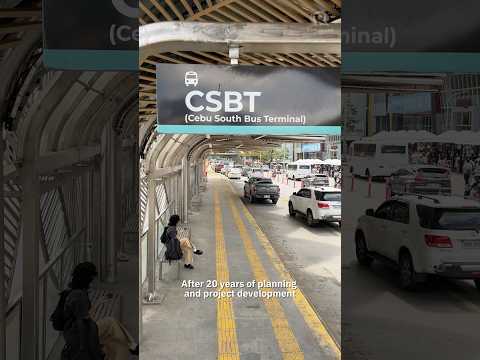
Third, deal with buses as infrastructure. The EDSA Busway or Carouselborn as a pandemic stopgap, now strikes lots of of 1000’s every day. This mannequin of devoted lanes, service contracting, and government-planned routes may very well be prolonged to different corridors much more cheaply and shortly than rail. The Cebu Bus Rapid Transit Project is an effective instance, however it has “confronted repeated delays” itself and a “sequence of restructurings and deadline extensions.”
Likewise, moderately than treating jeepneys as a problem to be phased outwe might deal with them as Singapore treats its feeder buses: the last-mile hyperlink between houses and stations. The jeepney modernization program would possibly face much less resistance if drivers had been supplied contracted feeder routes, with steady pay, as an alternative of loans they cannot afford.
Fourth, the fixed exhortation to repair establishments. We might have our personal model of the Land Transport Authority (LTA): a single metropolitan physique with the mandate and price range to plan all modes collectively, insulated from the three-year and six-year election cycles that hold resetting our plans.
The Metropolitan Manila Improvement Authority (MMDA) hardly matches the invoice. It was designed as a coordinating physique, not an built-in transport authority. (Apparently, each the MMDA and Singapore’s LTA had been based in the identical yr, 1995.)
Not one of the above is technically laborious. The binding constraint is political will sustained throughout administrations—one thing our leaders have hardly ever managed. – Rappler.com
Jan Carlo “JC” Punongbayan, PhD is an affiliate professor on the College of the Philippines Faculty of Economics (UPSE). His skilled expertise consists of the Securities and Trade Fee, the World Financial institution Workplace in Manila, the Far Japanese College Public Coverage Middle, and the Nationwide Financial and Improvement Authority. JC writes a weekly economics column for Rappler.com. He’s additionally co-founder of UsapangEcon.com and co-host of Usapang Econ Podcast.
His first e-book, False Nostalgia: The Marcos “Golden Age” Myths and The right way to Debunk Them, was printed by Ateneo de Manila College Press in February 2023. His second e-book, Twin Plagues: How Duterte and Covid-19 Wrecked the Philippine Economic system, shall be printed by Penguin Random Home SEA in June 2026. Observe him on Instagram (@jcpunongbayan).
Listed here are different In This Economic system items you will have missed:
Click on right here for different In This Economy articles.
https://weblog.passive-income4u.com/create-your-very-own-auto-publish-news-blog-site-and-earn-passive-income-in-just-4-easy-steps/
https://www.rappler.com/voices/thought-leaders/in-this-economy-why-singapore-transport-system-moves-metro-manila-trains-behind/