(Second of two components)
Half 1: An Indonesian billionaire wants EDC: The $5-B offer raising the stakes in the Lopez feud
The information this July that an Indonesian billionaire has supplied US$5 billion for Power Improvement Company (EDC) lands in another way as soon as the corporate’s historical past is specified by full. EDC isn’t merely a big energy producer that occurs to be caught within the Lopez household’s governance conflict. It’s an over 50-year experiment in what a rustic does about vitality insecurity, an experiment that has handed by way of state possession, a contested privatization, a debt disaster that value the Lopezes their oldest utility, and a company rebuilding that turned it into one of many largest geothermal corporations on Earth.
This piece traces that arc, as a result of each query now being requested concerning the Barito provide, who decides, who advantages, what the nation stands to lose, has a solution rooted someplace on this historical past.
A baby of the 1973 oil shock
The story begins with a conflict on the opposite facet of the world. In October 1973, after the outbreak of the Yom Kippur Conflict between Israel and its Arab neighbors, the Arab members of the Group of Petroleum Exporting International locations (OPEC) imposed an oil embargo on nations seen as supporting Israel, and inside months the worth of crude roughly quadrupled. For the Philippines, which imported about 95% of its vitality necessities as oil, the shock was existential. Gasoline was rationed, brownouts unfold, and the import invoice blew a gap within the stability of funds. A second shock in 1979, when the Iranian Revolution slashed Iran’s output, confirmed the lesson: a rustic that produces none of its personal gasoline is a hostage to different folks’s wars.
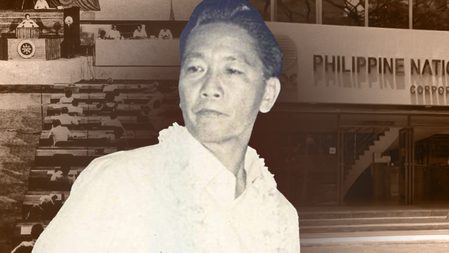
The response of the primary Marcos authorities was institutional. In November 1973 it created the Philippine Nationwide Oil Firm (PNOC), the state’s car for securing oil and, quickly after, for creating vitality sources that no Arab or OPEC embargo might contact. On March 5, 1976, Presidential Decree 927 established the Power Improvement Company (EDC) as PNOC’s geothermal exploration and improvement arm.
Geothermal was one entrance in a wider indigenous-energy marketing campaign that additionally pushed hydropower dams by way of the Nationwide Energy Company (Napocor), opened offshore oil exploration in Palawan, developed the Semirara coal mines, and dedicated the nation to the Bataan nuclear plant. What set geothermal aside was geology and luck: the Philippine archipelago sits on the Pacific Ring of Fire, and beneath its volcanic belts in Leyte, Negros, Bicol, and Mindanao lay reservoirs of superheated water and steam, rainwater that had seeped into fractured rock, cooked by magma, ready to be tapped by wells drilled one to a few kilometers down. Presidential proclamations in 1975 reserved the Tongonan, Palinpinon, and Bacon-Manito areas for geothermal improvement, and a 1978 decree created the service-contract framework the trade nonetheless acknowledges.
The early division of labor is a element that issues enormously later, and it’s best to image geothermal as two companies joined on the pipe. The primary enterprise will get the steam out of the bottom: it drills deep wells into the mountainside, a lot the best way a city drills for water, besides that what rushes up is scalding steam from the recent rock beneath, and it lays the pipelines that carry that steam to the place it may be used. The second enterprise is the ability plant on the finish of these pipes, the place the stress of the steam spins a big machine, and the spinning is what produces electrical energy, the identical manner a bicycle dynamo lights a lamp when the wheel turns.
Below Marcos-era preparations, PNOC-EDC ran the primary enterprise, the wells and the pipes, whereas Napocor owned and operated many of the energy crops on the different finish. The state, in impact, saved the steam and the machines in separate palms. When the corporate was finally privatized, its new house owners found they’d purchased the steam however not all the machines it powered, and reuniting the 2 halves would drive among the most consequential Lopez choices of the next decade.
Constructing the spine
The primary industrial breakthroughs got here in 1983, when the 112.5-megawatt Tongonan-1 plant in Leyte and the 112.5-megawatt Palinpinon-1 plant in Negros Oriental entered service, each born of the post-oil-crisis push. Via the late Eighties and Nineties the corporate added the Bacon-Manito crops in Bicol and the Mt. Apo advanced in Mindanao, entered energy technology instantly by way of build-operate-transfer schemes, and by 1997 was claiming Tongonan because the world’s greatest moist steam subject.
The crops had been constructed the place the useful resource is: in distant volcanic uplands above Ormoc and Kananga, above Dumaguete and Valencia, on the slopes of Mt. Apo in Kidapawan, reached by mountain roads and served by transmission traces carved by way of troublesome terrain, as a result of steam, in contrast to coal or fuel, can’t be shipped to a handy web site. What the issue purchased was the rarest factor in renewable vitality: baseload energy, electrical energy produced across the clock from warmth that doesn’t set with the solar or die with the wind, holding up the ground of the nation’s demand by way of the ability crises of the early Nineties and past.
The largest – and most controversial – privatization
By the mid-2000s the federal government needed out of EDC to chop the yawning nationwide debt and plug funds gaps. However the method of its exit stays one of many extra instructive fights in Philippine privatization historical past.
The Joint Congressional Energy Fee (JCPC), the bicameral physique overseeing the ability sector’s restructuring, had blocked the unique exit plan in 2005 and in 2006 endorsed a distinct one: promote every government-owned geothermal energy plant along with a long-term contract for PNOC-EDC’s steam, in order that whoever purchased the generators additionally locked within the gasoline popping out of the bottom. It was an try and reunite what the Marcos-era setup had cut up — steamfields in a single state firm, energy crops in one other. The situations for that bundle had been by no means met on time, so the federal government deserted the scheme and as a substitute put up on the market its 60% fairness stake in PNOC-EDC itself.
The combat that adopted was about greater than timing and value. Attorneys and nationalist economists additionally questioned who was being allowed to purchase. Below Philippine legislation, solely a “Philippine nationwide” can personal management of an organization that faucets pure assets, and regulators had lengthy relied on the “management take a look at”: if a minimum of 60% of a bidder’s shares had been held by Filipino firms or people, the entire bidder was handled as Filipino. Crimson Vulcan cleared that take a look at as a result of 60% of it was owned by Lopez-controlled First Gen Company, with the remaining 40% held by three way partnership companion Spalmare, a Dutch car for 2 Icelandic geothermal companies, Reykjavik Power Make investments and Geysir Inexperienced Power.
Critics argued that the grandfather rule ought to have been used on prime of the management take a look at, tracing possession by way of every company layer to see the true Filipino-versus-foreign cut up behind the bidders. They warned that in the event you “grandfathered” constructions like Crimson Vulcan and its rivals, international capital may in substance find yourself with greater than the Structure permits, and on that foundation branded the sale “unlawful” or unconstitutional. Then-senator Joker Arroyo filed a decision to place the public sale on maintain, and then-senator Miriam Defensor Santiago, the JCPC co-chair, railed in opposition to promoting what she referred to as the state’s most worthwhile enterprise simply to plug a one-year deficit, noting that EDC earned P5.4 billion within the first 10 months of 2007 alone.
Courts had been by no means requested to strike the transaction down, and no ruling has voided the privatization; the bidding went forward on November 21, 2007, and Crimson Vulcan received with a P58.5-billion provide, the most important privatization price ticket the nation had seen.
What endured was the query the deal left behind, and which the Barito curiosity now mirrors from the opposite facet: if EDC was constructed and as soon as held within the title of vitality safety, ought to it merely be priced and traded like every other asset?
The Lopez guess, and the money owed that got here with it
Throughout the Lopez group the transfer by First Gen carried a transparent generational signature. Among the many brothers of the second technology, Eugenio “Geny” Lopez Jr. was recognized with the media empire constructed round ABS-CBN, Manuel “Manolo” Lopez ran the household’s energy distribution enterprise at Meralco, and Oscar Lopez, father of the present First Gen chairman Federico “Piki” Lopez, led the vitality and industrial facet by way of First Philippine Holdings, the group’s holding agency for energy technology, distribution, actual property, development, and utilities. (Associated articles on these beneath.)
Earlier than EDC, the Lopez technology portfolio rested on pure fuel: the 1,000-megawatt Santa Rita and 500-megawatt San Lorenzo fuel crops in Batangas that anchored the Malampaya subject, plus a foothold in hydro. EDC was Oscar’s guess that the group’s future was renewable, indigenous, and baseload.
The guess grew heavier virtually instantly, from two instructions directly. The primary got here from Iceland. Inside weeks of the public sale, the Icelandic companions needed out, as a result of the banks again house that funded them had been failing in what would turn out to be one of the crucial spectacular nationwide collapses of the 2008 disaster. First Gen purchased their share, and because it didn’t have that form of money readily available, it borrowed. A purchase order the household had deliberate to separate with companions, it now carried alone, on debt.
The second got here from Meralco itself. In 2007, First Philippine Holdings had borrowed P19 billion extra to purchase the 9% Meralco stake of the Spanish agency Union Fenosa, and the acquisition was defensive: Winston Garcia, then chief of the state pension fund GSIS, was waging a bitter and private marketing campaign to wrest management of Meralco from the household, and each share the Lopezes might collect was a share Garcia couldn’t. (See story beneath.)

Then the world’s banks stopped lending. The 2008 global financial crisis started with American households failing to pay their house loans, unfold by way of the banks that had packaged and traded these loans as investments, and ended with credit score drying up all over the place, together with for a Philippine conglomerate that wanted new loans to pay maturing previous ones. The Lopezes had seen this film earlier than. The 1997 Asian monetary disaster, which started when Thailand’s foreign money collapsed, had taught the area’s enterprise households how harmful it’s to construct slow-maturing companies on borrowed {dollars} that lenders can demand again rapidly, and the Lopezes, who had piled into broadcasting, energy, cable, telecommunications, toll roads, and water in the identical decade, spent the years that adopted promoting belongings and restructuring loans to outlive it. The lesson of that decade was brutal and easy. Property, nevertheless beloved, should generally be bought to save lots of the entire.
Why Meralco was the asset that went
The promoting started on the edges. In 2008, FPH bought its toll-road enterprise, operator of the North Luzon Expressway, to the Pangilinan-led Metro Pacific for P12 billion, with the proceeds going to debt. Nevertheless it was not sufficient. On March 13, 2009, the FPH board permitted the choice that ended an period: the sale of 20% of the household’s virtually 35% stake in Meralco to the PLDT group of Manuel Pangilinan for P20.07 billion, reducing the Lopez holding within the utility they’d managed for a technology to about 13%.
What the household mentioned publicly on the time was uncommon then and stays uncommon now: an admission of ache. In his assertion, Oscar Lopez referred to as the sale a “crucial enterprise choice” reached after months of dialogue amongst senior relations and key advisers, weighing not solely Meralco however the debt load of First Holdings, the newly acquired EDC, and an more and more embattled ABS-CBN. “Finally, we realized that it was a crucial enterprise choice regardless of how painful and troublesome it was,” he instructed us, reporters masking the unfolding of the Meralco-Lopez saga, again then.
He acknowledged the associated fee contained in the household: “Given how Meralco’s history has lengthy been intertwined with our household, acceptance of this sale was not straightforward, most particularly by my brother Manolo, who has invested greater than 30 years of his life with the corporate.” The rift between the brothers, Oscar on the holding firm that bought and Manolo on the utility being bought, had been the topic of espresso discuss and broadsheet columns for months, and the assertion was as shut because the household got here to confirming it.
The maths behind this rift was specified by public two months later, at FPH’s annual stockholders’ assembly in Could 2009. Then-company president Elpidio Ibañez instructed reporters that half of the P20.07 billion in Meralco proceeds went to trimming borrowings, reducing FPH’s money owed roughly in half towards a goal of $150 million to $200 million, obligations traced significantly to the EDC acquisition. Oscar Lopez framed the retreat as optionality relatively than give up: “If different alternatives come up which might be considerably extra engaging than Meralco, then we even have the choice to promote down or promote out at considerably greater values than would have been attainable if we had opted to have interaction in a battle of attrition,” he mentioned.
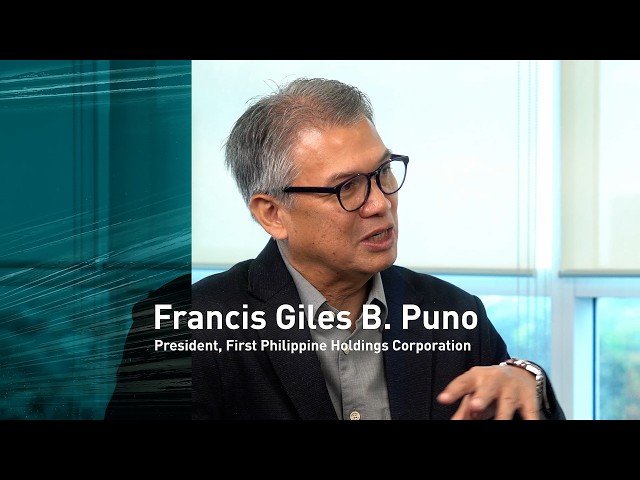
After which got here the element that offers the entire episode its form, straightforward to overlook in 2009 and not possible to overlook now. On the identical assembly, FPH executives mentioned the deleveraging would place the group to hitch the federal government’s coming auctions of state-owned geothermal crops, together with the very Tongonan and Palinpinon services that EDC’s steamfields had been feeding since 1983 however had by no means owned, a legacy of the state’s authentic choice to separate steam from generators. The chief finance officer who articulated that focus on was Francis Giles Puno. EDC received these auctions in 2009 and 2010, shopping for the Tongonan and Palinpinon crops for $220 million and the Bacon-Manito crops for about P1.28 billion, and in doing so grew to become what it advertises right this moment: the world’s largest vertically built-in geothermal firm, proprietor of each the steam and the machines it turns.

Learn in sequence, the report says one thing starker than a debt-management story. The Lopezes bought the electrical utility they’d been recognized with for half a century to be able to preserve, and to finish, the geothermal guess. And the finance officer who did that arithmetic in 2009 is the First Gen president now who might be amongst these fielding questions on whether or not the finished platform needs to be bought to an Indonesian billionaire.
What the guess grew to become
The rebuilt EDC settled, over the next decade, into the palms of simply two house owners. First Gen tightened its grip by way of the 2010s, bought a big minority place in 2017 to a consortium of Australia’s Macquarie and GIC, the funding arm of the Singapore authorities, for about $1.3 billion, and in 2018 took the company off the stock exchange totally so it might plan a long time forward with out the stress of a day by day share value and quarterly earnings studies.
EDC was created in 1976 as a result of a Center East conflict had closed off the world’s oil. The provide for it arrives in 2026 whereas one other Center East conflict has closed the Strait of Hormuz, oil costs are risky, the peso is at report lows, and indigenous baseload energy is as soon as once more a matter of nationwide safety relatively than company technique.”
The association between the 2 house owners is uncommon and value spelling out, as a result of votes and cash are cut up in another way. First Gen is the boss: it controls 65 of each 100 votes in EDC’s boardroom, primarily by way of a particular class of shares that carry voting energy however solely a small declare on earnings. The Macquarie-GIC facet holds just below 35 of each 100 votes, however it’s entitled to the bigger share of the cash: of each P100 of EDC’s worth, about P46 belongs to First Gen and about P54 to the international funds, in keeping with First Gen’s personal disclosures. Put merely, the Lopez facet decides, whereas the foreigners personal barely extra of what’s being determined about.
Below that possession, the corporate grew into an enormous. Rebranded First Gen Renewables in March 2026, on its 50th anniversary, it runs 16 geothermal stations with about 1,300 megawatts of put in capability, roughly 6 of each 10 geothermal megawatts within the nation, plus the 150-megawatt Burgos wind farm in Ilocos Norte, the 132.8-megawatt Pantabangan-Masiway hydro advanced in Nueva Ecija, and a small photo voltaic fleet. Its flagship, Tongonan in Leyte, produces 637.2 megawatts, which already locations it among the many largest geothermal complexes wherever on Earth. Solely a handful examine, led by The Geysers in California at about 1,517 megawatts and Italy’s Larderello, the world’s oldest, at roughly 770.
A P100-billion upgrade now underneath environmental evaluation would elevate Tongonan to 967.2 megawatts, and a separate P25-billion program will drill as much as 43 substitute wells on the 43-year-old Southern Negros subject. This isn’t an organization winding down an previous asset. A geothermal subject, cared for correctly, can preserve producing lengthy after the individuals who drilled the primary wells have retired, which is why First Gen retains spending on fields which might be already 4 a long time previous, and why its administration instructed shareholders this Could that greater than P200 billion has gone into the geothermal portfolio through the years. Within the phrases of Puno, “geothermal isn’t for the faint of coronary heart.”

That’s the firm for which Barito has now floated $5 billion, or greater than P300 billion on the peso’s crisis-weakened degree of about P61.70, greater than 3 occasions the roughly P100 billion price the entire firm was price when the federal government bought and privatized it in 2007.
EDC was created in 1976 as a result of a Center East conflict had closed off the world’s oil. The provide for it arrives in 2026 whereas one other Middle East war has closed the Strait of Hormuz, oil costs are risky, the peso is at report lows, and indigenous baseload energy is as soon as once more a matter of nationwide safety relatively than company technique.
The asset the state constructed to reply an oil disaster, the asset the Lopezes traded Meralco to maintain, is being priced in the midst of the very form of emergency it was constructed for. Regardless of the household, its international companions, and the Indonesian bidder determine, every of them will justify the selection by pointing to a chapter of this identical historical past.
Those that resist a sale will invoke the corporate’s start as a nationwide reply to an oil disaster, and the worth the household already paid, in Meralco, to maintain it. Those that favor one will invoke the older Lopez lesson, that even beloved belongings are generally bought to save lots of the entire. The report helps each arguments, which is strictly why it’s price figuring out in full. – Rappler.com
Sources:
- Presidential Decree 927 (1976) and the PNOC report
- Senate of the Philippines information on the PNOC-EDC privatization and the Joint Congressional Energy Fee (2005-2008): https://legacy.senate.gov.ph/press_release/2007/1213_santiago1.asp and https://www.gmanetwork.com/information/cash/content material/69808/pnoc-edc-goes-to-first-gen/story/. Additionally search legacy.senate.gov.ph’s press launch archive for November 2007 by way of February 2008, and pull P.S. Res. No. 203 (14th Congress, First Common Session)
- “(2009) Lopez household: Sale of Meralco stake ‘a enterprise choice’” and associated 2008-2009 Meralco protection by me
- ThinkGeoEnergy, Could 25, 2009 (Ibañez debt figures, Puno on geothermal plant auctions); https://www.thinkgeoenergy.com/lopez-led-first-philippine-holdings-preparing-to-join-privatization-of-geothermal-plants/
- GMA Information, Could 25, 2009 (Oscar Lopez ASM remarks)
- Lopez e-book: “The audacity DNA: Powering FPH into the brand new millennium” by Raul Rodrigo (Union Fenosa buy)
- First Gen Definitive Data Assertion, April 30, 2026 (EDC possession and financial pursuits)
- Lopez Holdings Type 17-A for 2025 (PREHC tender, delisting, possession)
- First Gen 2026 ASM transcript, Could 28, 2026
- Forbes, January 13, June 5 and July 15, 2026 – https://www.forbes.com/websites/iansayson/2026/06/05/philippine-tycoon-federico-lopez-led-first-gen-to-invest-407-million-in-geothermal-project/ and https://www.forbes.com/websites/iansayson/2026/06/05/philippine-tycoon-federico-lopez-led-first-gen-to-invest-407-million-in-geothermal-project/ and https://www.forbes.com/websites/iansayson/2026/07/15/indonesian-billionaire-pangestu-prajogo-offers-5-billion-to-buy-philippine-geothermal-company/
- First Gen clarification to the PSE, Could 29, 2026.
Lala Rimando wrote about Philippine enterprise, and managed newsrooms, together with Newsbreak, ABS-CBN, Rappler, and Forbes, for over 25 years. She’s now primarily based in La Union, taking good care of her mother with dementia, and dealing on the multimedia biography of the late John Gokongwei.

https://weblog.passive-income4u.com/create-your-very-own-auto-publish-news-blog-site-and-earn-passive-income-in-just-4-easy-steps/
https://www.rappler.com/enterprise/energy-development-corporation-history-lopez-family-gave-up-meralco-takeover-target/