The Sweep
Each morning, Davao Metropolis performs a quiet ritual.
Earlier than daybreak, rubbish vehicles wind by way of neighborhoods, markets, and enterprise districts, lifting black plastic luggage from curbsides whereas most of its 1.8 million residents are nonetheless asleep. Avenue sweepers comply with behind, brushing away leaves, wrappers, and dirt till little stays of yesterday’s waste. By dawn, the streets are clear once more, and the town awakens seemingly untouched by the rubbish it produced solely hours earlier than.
For many years, this routine has helped form Davao Metropolis’s id. Order, self-discipline, and cleanliness have develop into deeply woven into its public picture, alongside its parks, extensive roads, and strict native ordinances. By the acquainted tagline “Davao Life is Right here,” the town tasks a imaginative and prescient of city life through which development, public order, and environmental accountability exist aspect by aspect.
That picture reached a world viewers in 2024, when Numbeo’s Mid-12 months Air pollution Index ranked Davao because the second least-polluted metropolis in Southeast Asia, behind solely Singapore. The rating depends on crowd-sourced perceptions submitted by web site customers slightly than official environmental measurements, but it bolstered a perception lengthy held by many residents: Davao is without doubt one of the cleanest cities within the Philippines.
Each clear road, nonetheless, leads someplace.
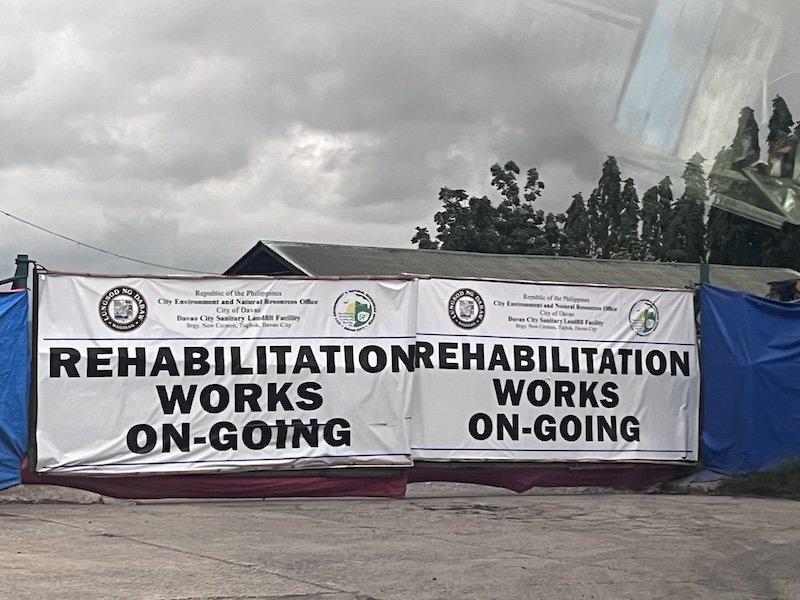
The plastic luggage lifted from curbsides don’t vanish when assortment vehicles draw back. The wrappers swept from sidewalks, the meals discarded from markets, and the family waste left outdoors houses all proceed their journey past the neighborhoods that produced them. For years, most of that journey ended on the Davao Metropolis Sanitary Landfill in Barangay New Carmen, Tugbok District.
On Could 20, 2026, the town was pressured to confront what lay on the finish of that journey.
At round 1:10 p.m., a large mound of rubbish collapsed contained in the landfill, burying roughly 3.72 hectares beneath an avalanche of waste. The trash slide blocked entry roads, broken close by homes, killed two individuals, whereas retrieval groups continued looking for one other lacking particular person within the days that adopted.
In a matter of moments, the collapse uncovered part of Davao Metropolis’s every day life that often remained out of sight. The rubbish collected earlier than daybreak, faraway from streets, and carried away from houses had amassed someplace, and that place had reached a second of catastrophe.
The next day, the Division of Setting and Pure Assets (DENR) suspended landfill operations as search-and-retrieval groups continued their work and authorities performed geotechnical assessments and engineering interventions. The measures aimed to stabilize the location, shield personnel and close by communities, and forestall one other collapse.
The implications rapidly traveled far past Barangay New Carmen.
In response to earlier stories from the Davao Metropolis Info Workplace, the town generates between 700 and 800 tons of stable waste every day. The quantity can enhance to as a lot as 1,000 tons throughout main metropolis occasions corresponding to Araw ng Dabaw and Kadayawan sa Dabaw.
As soon as the landfill stopped accepting waste, the town’s disposal system started to pressure. Assortment slowed, plastic luggage that usually disappeared earlier than dawn remained outdoors houses, and overflowing assortment factors started showing throughout neighborhoods.
For a lot of Dabawenyos, the disruption supplied an unfamiliar sight. Rubbish that had at all times disappeared in a single day all of a sudden stayed the place individuals may see, scent, and confront it. The town’s waste had not elevated in a single day; its ordinary vacation spot had merely develop into unavailable.
Quickly, the disaster spilled into public view.
Davao Metropolis Mayor Sebastian “Baste” Duterte blamed the landfill suspension for the rising rubbish backlog and designated the realm outdoors the Division of Setting and Pure Assets Area -Davao workplace in Lanang as an extra assortment level. Inside days, piles of foul-smelling rubbish amassed outdoors the company’s compound, turning an administrative dispute into a visual image of the town’s worsening waste disaster.

The DENR maintained that landfill operations would stay suspended till authorities accomplished the required engineering and security measures. Its personnel continued conducting slope-stability assessments, leachate monitoring, and website inspections whereas coordinating with the town authorities on rehabilitation work. Round 180 households remained evacuated from high-risk areas surrounding the landfill, whereas authorities restricted entry to the location as retrieval operations continued.
The confrontation dominated headlines, but beneath the general public disagreement between the town authorities and the environmental company lay a deeper query that acquired far much less consideration.
If Davao Metropolis’s cleanliness relies upon closely on a single landfill, what occurs when that landfill can not carry the load of the town’s waste?
The reply doesn’t start on the landfill.
It begins about 15 kilometers away, in houses, markets, eating places, places of work, and streets, each time somebody throws one thing away and watches a rubbish truck carry it out of sight. The waste could disappear from the curb, but its journey continues, and someplace past the town’s clear streets, somebody or one thing should carry its weight.

The Weight
Barangay New Carmen doesn’t announce itself with a welcome signal. It pronounces itself with a scent.
Lengthy earlier than the Davao Metropolis Sanitary Landfill comes into view, the odor reaches the roadside. It hangs over houses, settles round small shops, and travels with the mud stirred by rubbish vehicles transferring one after one other towards the town’s ultimate disposal website. For the households who reside close by, the scent just isn’t an occasional inconvenience. It’s a part of the air they breathe day-after-day.
Within the afternoon of July 11, 100 rubbish vehicles stood bumper to bumper alongside the slim street resulting in the landfill. Their engines hummed beneath the afternoon warmth as drivers waited for repairs on the liner of the brand new sanitary landfill to be accomplished earlier than dumping may resume. Even with disposal operations quickly suspended, the scent already drifted throughout the realm. Every truck held the atypical stays of metropolis life — meals scraps, plastic packaging, paper, bottles, and numerous different gadgets discarded solely hours earlier in houses, eating places, places of work, markets, and business institutions throughout Davao Metropolis.

For many residents within the metropolis, that waste had already disappeared. In New Carmen, it had solely arrived.
The vehicles shaped a protracted line towards the landfill, providing a visual reminder that rubbish doesn’t vanish when it leaves a family. The town collects it, transports it, and delivers it some other place. Each clear road has a vacation spot for what has been swept away, and for years, a lot of Davao Metropolis’s waste has ended its journey right here.
The landfill has develop into woven into the panorama of New Carmen and into the every day lives of the individuals who reside round it. Some residents endure the scent and fixed truck site visitors, whereas others have constructed livelihoods round supplies the remainder of the town has thrown away.
The neighborhood, nonetheless, was there lengthy earlier than the landfill. Residents say households have lived within the space for round 70 years, a long time earlier than the town’s sanitary landfill started working in 2010. Over time, the arrival of Davao Metropolis’s waste reshaped on a regular basis life, bringing rubbish vehicles, persistent odor, environmental dangers, and, for some residents, alternatives to earn from recyclable supplies discarded by others.
For Evelyn, 62, Davao Metropolis’s discarded waste as soon as supplied a method of survival.
For years, she entered the landfill earlier than dawn and searched by way of mountains of rubbish for plastic bottles, scrap steel, and different recyclable supplies she may promote to junk retailers. The work demanded lengthy hours beneath tough and infrequently harmful situations, but each bottle recovered and each piece of steel collected may imply extra cash for meals, electrical energy, or medication.
Her working day started the place the town’s rubbish ended.
When the Could 20 trash slide buried a part of the landfill, authorities prohibited scavenging as restoration operations continued and the location remained closed. Evelyn misplaced, nearly in a single day, the livelihood she had relied on for years.
The rubbish remained. Her revenue didn’t.
“Wala na gyud mi panginabuhi sukad gisirhan nang basurahan. Naga salig na lang mi sa ihatag sa gobyerno nga ayuda. Kung walay muabot, gutom gyud kay kasagaran sa mga tao, mao ra gyud nay panginabuhi diri—mang bote ug bakal ra gyud.” (We not have a livelihood for the reason that landfill was closed. We now depend upon no matter help the federal government provides us. If no assist comes, we go hungry as a result of, for most individuals right here, amassing bottles and scrap steel is our solely supply of revenue), she stated.
Just a few homes away, Sonia, 60, skilled the implications of the collapse by way of a unique form of loss. She owns a modest neighborhood retailer that after served lots of the landfill’s casual waste pickers. They purchased rice, canned items, espresso, cigarettes, and different every day requirements, typically on credit score, then paid their money owed after promoting the bottles, scrap steel, and recyclables that they had recovered.
When scavenging stopped, lots of these funds stopped.
Some prospects disappeared altogether. Others returned solely to clarify that they not had work and will not pay. Sonia’s 38-year-old son had additionally relied on scavenging for revenue, and for the reason that landfill closure, has remained unemployed.
“Daghan sa akong mga suki wala na kabayad kay wala na silay panginabuhi. Ang uban wala na gyud nibalik. Kasagaran man gud sa panginabuhi diri kay mang bote ug bakal ra gyud. Unya gibawalan na man mi nga musulod didto, wa na gyud panginabuhi ang mga tawo diri. Naa ray usahay, panguhaon sa mga bata ang mga basura nga matagak gikan sa trak, pero dili gyud daghan aron makapalit ug bugas ug sud-an. Lisod ug pait gyud kaayo” (Lots of my common prospects may not pay as a result of they not have a livelihood. Some by no means got here again. Most individuals right here depend upon amassing bottles and scrap steel for a dwelling. Now that we’re not allowed to enter the landfill, individuals have misplaced their supply of revenue. Typically the kids accumulate items of rubbish that fall from the vehicles, however it’s by no means sufficient to purchase rice and meals. Life has develop into very tough and painful), she stated.
The collapse buried piles of rubbish, but its penalties reached far past the broken part of the landfill. It disrupted livelihoods, emptied pockets, weakened small companies, and halted a casual economic system constructed round supplies that the remainder of society not wished.
The tragedy additionally uncovered a actuality that always stays absent from conversations about waste administration: landfills are surrounded by human lives.
Communities develop beside them. Households construct houses inside attain of their scent. Kids develop up watching rubbish vehicles move every day, whereas sari-sari shops, junk retailers, drivers, and casual waste pickers depend upon the exercise created by the fixed motion of waste.
When the landfill stopped working, rubbish assortment was not the one system disrupted. An economic system that had quietly supported households for years additionally got here to a standstill.
The distinction is tough to disregard. Individuals who reside closest to the town’s waste typically bear its biggest burdens, although a lot of that waste comes from houses, companies, markets, places of work, and establishments many kilometers away.
Residents of New Carmen reside with what others depart behind.
They breathe the odor. They watch convoys of rubbish vehicles move their houses. They face the environmental dangers of dwelling beside a disposal facility, and when the system breaks down, they stand closest to the implications.
Many of the rubbish arriving in New Carmen comes from elsewhere, but the neighborhood carries its weight day-after-day.
The Could 20 collapse pressured Davao Metropolis to confront a fact that residents of New Carmen had lengthy understood: rubbish doesn’t disappear when the truck drives away. It merely modifications handle.
For years, Barangay New Carmen quietly carried the burden of protecting Davao Metropolis’s streets clear. Then, in a single afternoon, that burden got here crashing down.

Cracks
The tragedy in Barangay New Carmen didn’t start on Could 20.
Its roots reached years earlier, lengthy earlier than the mountain of waste gave manner and compelled Davao Metropolis to confront the strain constructing inside its disposal system.
Talking to reporters on the sidelines throughout a media discussion board in June 2025, Lakandiwa Orcullo, head of the Environmental Waste Administration Division of the Metropolis Setting and Pure Assets Workplace, stated Davao Metropolis’s authentic sanitary landfill had already reached full capability and had continued working past the purpose it was projected to be crammed in 2023.
“We don’t have a selection proper now. We now have to maximise the present landfill,” Orcullo stated.
The numbers underscored the mounting strain on the town’s waste disposal system. In response to the Environmental Influence Assertion for the New Sanitary Landfill Facility, the unique landfill started working in 2010 with a designed capability of between 700,000 and 800,000 metric tons of waste. By 2023, when the town proposed creating a brand new sanitary landfill adjoining to the present website, the outdated facility had already acquired round 900,000 metric tons—surpassing the capability it was initially constructed to carry.
The identical environmental research warned that improper landfill administration may threaten surrounding ecosystems, together with waterways that ultimately drain into the Davao Gulf. But for environmental lawyer Mark Peñalver, govt director of Interfacing Growth Interventions for Sustainability (IDIS), the landfill represents solely the ultimate stage of a for much longer journey.
Talking in the course of the MindaNews Local weather-Setting Subject Reporting Workshop on July 10, Peñalver stated, “The answer isn’t just downstream. The answer is upstream, midstream and downstream.”
The concept is simple: the landfill is the place the waste drawback turns into seen, not the place it begins.
Below Republic Act No. 9003, in any other case often called the Ecological Stable Waste Administration Act of 2000, households, colleges, hospitals, companies, and different waste turbines should segregate rubbish on the supply. Barangays are answerable for managing biodegradable and recyclable supplies by way of Supplies Restoration Amenities, whereas cities ought to accumulate solely residual waste — the portion that may not be reused, recycled, or composted — for ultimate disposal in sanitary landfills.
Republic Act No. 9003 additionally identifies squatting in open dumps and landfills as a prohibited act beneath Part 48. In New Carmen, nonetheless, residents say the encircling neighborhood has existed for round 70 years, a long time earlier than the town’s sanitary landfill started working in 2010. This distinction issues as a result of their presence can not merely be framed as individuals settling round a disposal website; slightly, a significant waste facility turned a part of the panorama of a neighborhood that had already existed for generations.
In precept, New Carmen ought to obtain solely what stays after communities have recovered every part that may nonetheless be composted, reused, or recycled.
In actuality, way more reaches the landfill.
“Once we speak about stable waste administration, it’s a programs method. Everybody has a accountability — the barangay, most particularly the federal government,” Peñalver stated. “The barangay and the town ought to intently coordinate and, in fact, present amenities for the right administration of our waste.”
The cracks in that system start a lot sooner than the landfill gates.
Citing findings from the Fee on Audit, Peñalver stated solely about 124 of Davao Metropolis’s 182 barangays have Supplies Restoration Amenities, and solely 4 have been discovered to be operational. The figures expose a big hole within the infrastructure designed to maintain recyclable and biodegradable supplies away from the landfill. The place amenities don’t exist or fail to perform as supposed, the implications ultimately journey with each rubbish truck sure for New Carmen.
Residents from a number of barangays have additionally noticed that even when households separate biodegradable, recyclable, and residual waste earlier than assortment, collectors typically load the rubbish into the identical truck. As soon as totally different sorts of waste are blended collectively, a lot of the hassle made on the family degree is successfully undone.
“As a result of there’s no correct segregation, no systemic assortment of rubbish, every part is collected and dropped at the landfill,” Peñalver stated.
The result’s a disposal system that buries supplies that ought to by no means have reached the landfill within the first place.
In response to IDIS, roughly 80 p.c of Davao Metropolis’s every day waste is biodegradable. A lot of this materials could possibly be composted and managed inside communities slightly than occupying more and more restricted landfill area. Solely residual waste ought to require ultimate disposal, but biodegradable supplies, recyclables, and residuals typically find yourself buried collectively.
As these supplies accumulate, the issue extends past landfill capability.
Natural waste buried beneath layers of blended rubbish decomposes with out sufficient oxygen and produces methane, a extremely potent greenhouse gasoline. Not like the lengthy strains of rubbish vehicles ready alongside New Carmen’s roads, methane can’t be seen, but it could possibly escape from landfills for years and even a long time after a disposal website has closed.
The local weather consequence could also be invisible, however the course of begins with atypical choices repeated day-after-day: a meals scrap thrown into the improper bin, a recyclable blended with residual waste, a barangay with out a functioning restoration facility, or a set system that mixes what households have already separated.
For Peñalver, efficient waste administration requires society to look past the ultimate vacation spot of rubbish and look at how individuals produce, devour, discard, and assign worth to the issues they use.
He argues that cities ought to transfer towards a round economic system, the place merchandise last more, individuals restore slightly than instantly discard them, communities reuse supplies earlier than changing them, and recycling prevents precious assets from changing into waste. Each bottle reused, each meals scrap composted, and each plastic container recovered means one much less merchandise competing for area inside a landfill already beneath strain.
“The landfill is barely the tip of the story,” Peñalver stated. “If we need to clear up the issue, now we have to begin initially.”
That starting lies removed from the towering piles of waste in Barangay New Carmen. It begins in each house that throws away a plastic container, each restaurant that discards meals scraps, each enterprise that generates packaging, each barangay answerable for recovering reusable supplies, and each authorities choice that determines what occurs after a rubbish truck drives away.
The Could 20 collapse uncovered the bodily failure of a mountain of waste, but the cracks had shaped lengthy earlier than the rubbish got here crashing down.
They appeared wherever segregation failed, the place restoration amenities remained absent or nonfunctional, the place assortment programs blended supplies that ought to have stayed aside, and the place an excessive amount of waste was allowed to achieve the ultimate disposal website. By the point the landfill collapsed, the load had already been constructing for years.

The Reckoning
Davao Metropolis proudly carries the tagline, “Davao Life is Right here.”
For hundreds of thousands of residents and guests, these phrases evoke clear streets, disciplined communities, and orderly public areas. They replicate a picture the town has cultivated over a long time by way of environmental campaigns, native ordinances, authorities packages, and public participation.
In some ways, that picture is deserved.
Avenue sweepers clear public roads. Rubbish vehicles accumulate family waste earlier than daybreak. Environmental insurance policies encourage segregation, recycling, and accountable disposal. For many residents, the system works quietly sufficient that the journey of their rubbish appears to finish the second a set truck drives away.
Barangay New Carmen tells the a part of the story that the town’s clear streets can not.
Right here, Davao Metropolis’s waste completes the journey that begins every morning outdoors 1000’s of houses. Rubbish vehicles arrive one after one other, carrying meals scraps, plastic packaging, bottles, paper, and numerous different stays of every day life from communities many kilometers away.
Residents reside with the odor of a landfill that a lot of the town’s practically 2 million residents hardly ever see. Households have constructed livelihoods round supplies others have discarded, whereas small companies have grown alongside a casual economic system sustained by waste. On Could 20, that very same panorama turned the location of a tragedy that confirmed how harmful the amassed weight of a metropolis’s rubbish may develop into.
The landfill collapse uncovered a bodily catastrophe and the deeper weaknesses of the system that allowed a lot waste to achieve New Carmen. It confirmed how closely Davao Metropolis’s picture of cleanliness depends upon a disposal system whose environmental dangers and on a regular basis burdens stay concentrated in a single neighborhood.
The tragedy additionally pressured tough questions on environmental governance into public view.
Peñalver argued that the continued arrival of blended waste in New Carmen raises questions on how Republic Act No. 9003 and Davao Metropolis Ordinance No. 0361-10 are being applied. The ordinance handed in 2010 declares it the town’s coverage to “undertake and implement a complete, built-in and ecological stable waste administration program” to guard public well being and the setting. But regardless of these nationwide and native insurance policies, blended waste continues to achieve the landfill, and biodegradable supplies that might in any other case be composted or recovered nonetheless occupy precious landfill area. For Peñalver, these situations level to persistent gaps within the enforcement and implementation of the town’s stable waste administration system.
These questions matter as a result of the implications of weak waste administration don’t start on the landfill gates. They start a lot earlier, in each stage the place waste may have been decreased, segregated, recovered, composted, or recycled however was as an alternative allowed to proceed its journey towards ultimate disposal.
For Peñalver, understanding that journey requires stable waste administration as one linked system slightly than focusing solely on the disposal website.
“The answer isn’t just downstream,” he stated.
Waste administration begins lengthy earlier than a rubbish truck reaches the landfill. It begins with the best way merchandise are designed, the alternatives shoppers make, the best way households segregate their waste, the capability of barangays to get well recyclable and biodegradable supplies, and the willingness of native governments to put money into amenities and programs that forestall pointless waste from reaching landfills.
The landfill stands on the ultimate stage of that course of. When failures accumulate upstream, their penalties ultimately arrive downstream.
The Could 20 trash slide made that actuality inconceivable to disregard.
The collapse killed individuals, injured others, displaced households, and disrupted livelihoods. The suspension of landfill operations that adopted left rubbish accumulating in neighborhoods throughout the town, forcing residents to confront what often disappears from view earlier than dawn.
Waste by no means actually vanishes. It strikes.
It strikes from a kitchen bin to the curb, from the curb to a set truck, from the truck to a landfill, and from one neighborhood’s sight into one other neighborhood’s every day life. At each stage, somebody decides about the place it goes, how it’s dealt with, and who carries the dangers that include it.
Maybe that’s the most enduring lesson Barangay New Carmen gives: clear streets alone inform solely a part of the story.
Peñalver argued that efficient stable waste administration extends far past the landfill, starting with waste discount, segregation on the supply, restoration, and correct assortment earlier than rubbish reaches its ultimate disposal website. The experiences of residents in New Carmen reveal what occurs when these programs fail. For households dwelling beside the landfill, the implications are measured not solely within the quantity of waste they obtain, but in addition in misplaced livelihoods, environmental dangers, and the uncertainty that adopted the Could 20 collapse.
Each morning, earlier than dawn, Davao Metropolis’s rubbish will as soon as once more disappear from its streets.
About 15 kilometers away, one other neighborhood will watch it arrive.
Between these two locations lies the journey of the town’s waste—a journey formed by the alternatives of households, the effectiveness of barangay waste restoration, the enforcement of environmental legal guidelines, and the capability of the town’s waste administration system.
For residents of Barangay New Carmen, that journey doesn’t finish when the rubbish truck drives away. It begins when it arrives.
(Audrey Alicaya / SunStar Davao for MindaNews)
(This story was produced in the course of the Local weather Influence and Setting Subject Reporting Lab on July 10 to 13 in Davao Metropolis. It was organized by the Mindanao Institute of Journalism, writer of MindaNews, beneath the Media Influence Philippines mission. That is additionally supported by Worldwide Media Assist (IMS) and co-funded by the European Union and the Danish Worldwide Growth Company (DANIDA))
https://weblog.passive-income4u.com/create-your-very-own-auto-publish-news-blog-site-and-earn-passive-income-in-just-4-easy-steps/
https://mindanews.com/special-reports/2026/07/swept-under-the-citys-rug-where-davao-citys-garbage-goes-and-where-its-clean-image-begins-to-unravel/