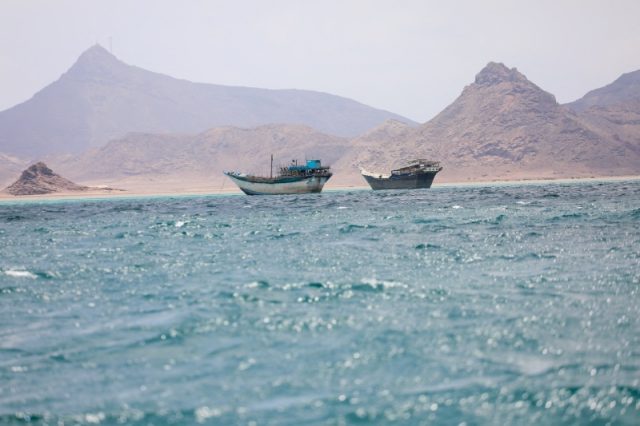
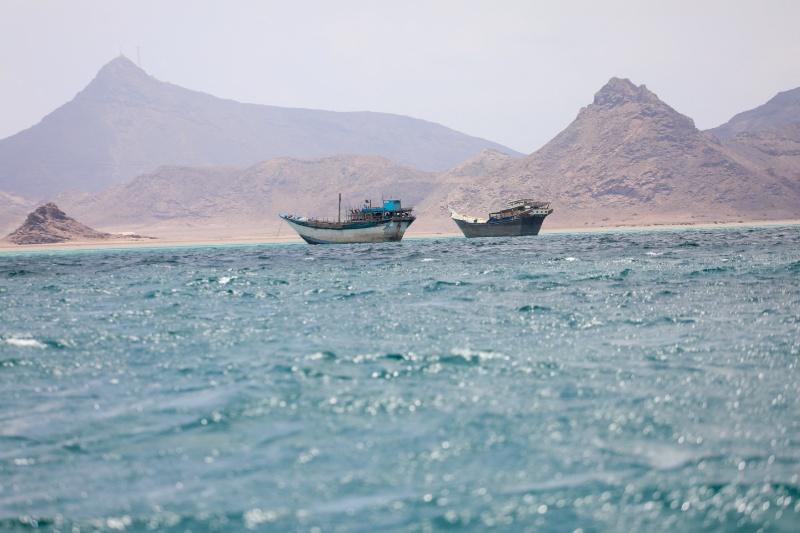
On Monday, the Iran-backed Houthi rebels in Yemen announced they might impose a “maritime embargo” on Saudi Arabia, in what may mark a harmful escalation within the ongoing conflict between the USA and Iran.
The Houthis have indicated they plan to focus on Saudi Arabian vessels touring by the Bab el-Mandeb Straitalso called the “Gate of Tears”, which connects the Pink Sea and the Gulf of Aden.
This escalation threatens to have a major impression – notably for Saudi Arabian crude oil touring by way of the Pink Sea, a lot of which has been not too long ago diverted there to keep away from the Strait of Hormuz.
In a statementSaudi Arabia’s overseas ministry expressed the nation’s “strongest condemnation” of the threats, and stated it might take “all needed measures” to guard its ships. It isn’t clear how efficient this method will likely be.
And as we’ve seen previously, threats alone will be sufficient to disrupt the movement – and price – of delivery actions within the Pink Sea.
The ‘Gate of Tears’
The Bab el-Mandeb Strait, whose title means “Gate of Tears” in Arabic, is a slender waterway positioned between Yemen to the northeast and Djibouti and Eritrea to the southwest.
Collectively, the Bab el-Mandeb Strait, Pink Sea and Suez Canal type a significant maritime channel for international shipments, connecting nations in Europe with these in Asia and the Pacific.
About 10–12% of worldwide maritime commerce passes by the Bab el-Mandeb Strait every year.
Saudi Arabia’s ‘Plan B’
This yr, the Pink Sea has grown much more necessary for international delivery – and Saudi Arabia.
Saudi Arabia is among the world’s largest oil producers. China is the biggest purchaser, however different main patrons in Asia embrace Japan, South KoreaIndia and Singapore.
With extreme, ongoing disruptions within the Strait of Hormuz, which usually carries a few fifth of the world’s oil and gasoline, Saudi Arabia has been diverting exports to the Pink Sea to bypass it.
The nation’s east–west oil pipeline, connecting Abqaiq within the east with Yanbu on the Pink Sea, was restored to full capacity earlier this yr.
The port at Yanbu now reportedly handles more than 70% of Saudi Arabia’s crude oil exports.
The larger danger within the Pink Sea
At this stage, the Houthis have solely declared a blockade on Saudi Arabian ships – not a “closure” of the delivery hall to all site visitors.
If the maritime blockade by way of the Pink Sea is expanded additional to different international locations, international commerce for manufactured items, retail merchandise, electronics and equipment might be severely impacted.
To keep away from the Pink Sea, ships can use another path round South Africa’s Cape of Good Hope. It is a much longer and costlier route.
Attainable hassle for inflation
Insurance coverage prices for ships transiting the Strait of Hormuz have surged because the starting of the battle, reportedly now starting from 3–10% of hull worth (the worth of a ship itself, not the cargo). That additional insurance coverage can add thousands and thousands of {dollars} to every cargo.
Insurance coverage prices for ships transiting the Pink Sea have reportedly already risen within the wake of the Houthis’ announcement.
In the end, greater insurance coverage prices for delivery are usually handed onto finish customers. This could add to inflationary pressures all over the world.
What’s on the horizon
We don’t but understand how efficient a Houthi blockade on Saudi Arabia will likely be. Nor if the scenario will escalate any farther from right here.
For international locations all over the world, this new maritime blockade has doubtless dimmed hopes the financial disruption from the battle within the Center East will likely be over quickly.
Companies and governments must proceed to look at their supply-chain resilience, and contemplate long-term options for sourcing and shipments of key items, together with oil.
Transferring ahead, additionally it is necessary to cut back reliance on fossil fuels and proceed transitioning towards renewable vitality for transport, logistics and manufacturing.
Sanjoy PaulAffiliate Professor in Operations and Provide Chain Administration, UTS Enterprise College, University of Technology Sydney. This text is republished from The Conversation underneath a Artistic Commons license. Learn the original article.
https://weblog.passive-income4u.com/create-your-very-own-auto-publish-news-blog-site-and-earn-passive-income-in-just-4-easy-steps/
https://interaksyon.philstar.com/politics-issues/2026/07/22/316727/why-new-houthi-threats-in-the-red-sea-could-spell-trouble-for-global-oil-prices-and-inflation/