Lengthy often called the “Meals Basket of the Philippines”, Mindanao produces a overwhelming majority of the nation’s high-value crops, fruits, and corn. Nonetheless, post-harvest losses and sophisticated provide chains have traditionally affected each native farmers’ incomes and nationwide meals costs. To mitigate these constraints, large authorities allocation together with an enhanced ₱2.625 billion nationwide price range for Agricultural Meals Hubs are financing strategic, large-scale agricultural facilities designed to consolidate, course of, and distribute meals effectively throughout the area and different areas in Mindanao.
The ₱1.97-Billion Bukidnon Meals Hub
On the middle of this transformation is the flagship Bukidnon Meals Hub a sprawling 39-hectare improvement in Barangay Diclum, Manolo Fortich. It is a partnership between the DA and the Bukidnon PLGU. This facility serves as the principle gateway for Northern Mindanao’s agricultural worth chain.
- Built-in Infrastructure: The ability options chilly storage models, an ice plant, meals dehydrators, and sorting, grading, and automatic packaging tools.
- The Corn Central: A specialised subsection of the hub integrates devoted storage and post-harvest amenities tailor-made for high-volume corn consolidation and buying and selling.
- World Logistics Linkages: Positioned simply exterior Cagayan de Oro Metropolis, the BFH offers farmers a direct path to home and export markets through the Laguindingan Worldwide Airport and the Mindanao Worldwide Container Port.
Increasing the Community: Regional and Provincial Entry Factors
Past the huge advanced in Bukidnon, a decentralized community of interconnected meals hubs is rolling out to seize hyper-local manufacturing:
- Misamis Oriental Improvement Complicated: A secondary, complementary meals hub has been established in Claveria, Misamis Oriental, maximizing the province’s high-altitude vegetable manufacturing.
- Malaybalay and Maramag Chilly Hyperlinks: Localized chilly storage amenities and devoted buying and selling posts have been activated in these high-production cities to deal with contemporary dairy, fish, and perishable produce.
- Grassroots Terminals: The DA screens dozens of barangay meals terminals, municipal meals markets, and natural buying and selling posts operated instantly by farmer cooperatives. This infrastructure bypasses predatory middlemen, permitting farmers to seize higher farmgate costs.

Social Good Integration: The Walang Gutom Initiative
Mindanao’s meals hub infrastructure additionally caters to essential social welfare and catastrophe aid networks. The federal government launched Mindanao’s first Walang Gutom Commissary in Zamboanga Metropolis. Working as a community-based meals financial institution, this facility employs provincial agricultural produce to provide nutritious, free each day meals to households dealing with involuntary starvation. In the identical occasion, regional catastrophe useful resource ware homes make the most of these central meals hubs to pre-position household meals packs, accelerating emergency aid throughout pure catastrophe inclined areas just like the Caraga area.
The Financial Horizon
By consolidating wholesale buying and selling, processing, and tech-driven logistics, Mindanao’s meals hubs can effectively tackle provide chain bottlenecks. For farmer cooperatives, this case gives secure earnings and lowered spoilage of agricultural produce. For customers throughout the nation, these developments provide an environment friendly freeway from Southern fields to Northern eating tables—solidifying Mindanao’s fashionable standing as a secure provide supply on the identical time guaranteeing a greater nationwide meals safety scenario.
Mindanao’s specialised meals hubs are shortly evolving from primary buying and selling posts into high-value processing ecosystems constructed across the area’s most worthwhile agricultural exports. Via chilly chains, high quality grading, and fashionable processing amenities, these hubs assist native farmers transfer up the worth chain—from uncooked materials suppliers to higher-margin world exporters(1)
Strategic meals hub infrastructures are driving development throughout 4 of Mindanao’s most crucial high-value sectors.
- Excessive-Worth Fruits & The Cardava Banana Growth
Cardava or saba bananas is the mainstay of the nation’s profitable banana chip export business. Beforehand, farmer cooperatives and particular person farmers needed to deal with extreme post-harvest discoloration and bruising throughout lengthy journey time(2).
- Preservation at Scale: Specialised fruit hubs, significantly these linked to the Bukidnon Meals Hub (BFH), have the options of automated washing, sorting, and blast-freezing amenities that lock in fruit high quality instantly after harvest.
- Direct Export Pipelines: Consolidated fruit volumes from native “Bagsakan” facilities are dropped at central hubs, the place they’re pre-packed into standardized, export-grade crates. This then creates an efficient provide chain instantly linking Mindanao farms to main snack producers and worldwide consumers.
- Cacao and Espresso: Premium Processing Ecosystems
Mindanao produces over 80% of the nation’s cacao and has premium Arabica espresso plantations in its high-altitude ridges. Nonetheless, smallholder farmers don’t have entry to the best tools wanted to course of uncooked beans into high-value commodities(3).
- Widespread Use Processing Services: These hubs function communal processing facilities outfitted with industrial fermenting beds, mechanical photo voltaic dryers, and exact temperature-controlled roasters(4).
- The Specialty Shift: Through the use of commonplace practices on fermentation and roasting processes at a central hub, native cooperatives can persistently meet world specialty espresso and bean-to-bar chocolate requirements. This permits them to keep away from low-paying bulk commodity markets and have a direct entry to premium costs.
(1) https://www.sciencedirect.com/science/article/pii/S0743016724000858
(2) https://www.ijfmr.com/papers/2026/1/66544.pdf; https://www.potatochipsmachinery.com/uploads/soft/201409/2_25152706.pdf
(3) https://business.inquirer.net/591847/an-agriculture-road-map-like-no-other; https://www.theigc.org/sites/default/files/2018/09/Morjaria-and-Sprott-2018-final-paper.pdf
(4) https://www.scribd.com/document/732135512/Agriculture-Hubs-Case-Studies-of-Precedents-ARC1434-FA2-SEC6-pdf; https://maps.prodafrica.com/ugandan-coffee-nucafe/
- The Halal Meals Commerce & Coconut-Palm Oil Logistics
Via the BARMM, Mindanao is best positioned to get a decent share of the big world Halal market, primarily via its dominant coconut and palm oil sectors(1).
- Strict Traceability Hyperlinks: Specialised meals hubs in areas just like the Bangsamoro Autonomous Area in Muslim Mindanao (BARMM) are designed with devoted Halal-compliant logistics lanes. This ensures that uncooked coconut merchandise, palm kernel oil, and processed meals by no means combine with non-Halal commodities(2).
- Worth-Added Refining: As a substitute exporting uncooked copra or crude palm oil at low margins, built-in meals hubs are incorporating localized milling and packaging amenities. This permits cooperatives to bundle retail-ready, Halal-certified virgin coconut oil and cooking oils instantly from the hub. The tools itself in addition to the processing actions have to be compliant with Halal necessities.
- Highland and Lowland Vegetable Hubs
The high-altitude areas of Bukidnon and Misamis Oriental function the “salad bowl” in Mindanao, planting high-value temperate greens like lettuce, broccoli, carrots, and bell peppers.
- Eliminating the Intermediary: The institution of localized hubs, such because the Claveria vegetable “bagsakan” middle, offers a clear digital public sale and weighing system. Farmers now not depend on arbitrary pricing from predatory merchants.
- The Chilly Chain Lifeline: That is outfitted with a refrigerated storage and refrigerated transport vans that enable vegetable hubs to take care of an unbroken chilly chain. This reduces spoilage charges from a excessive fee of 30% all the way down to single digits, guaranteeing crisp, premium produce reaches city supermarkets in Metro Manila and Cebu.
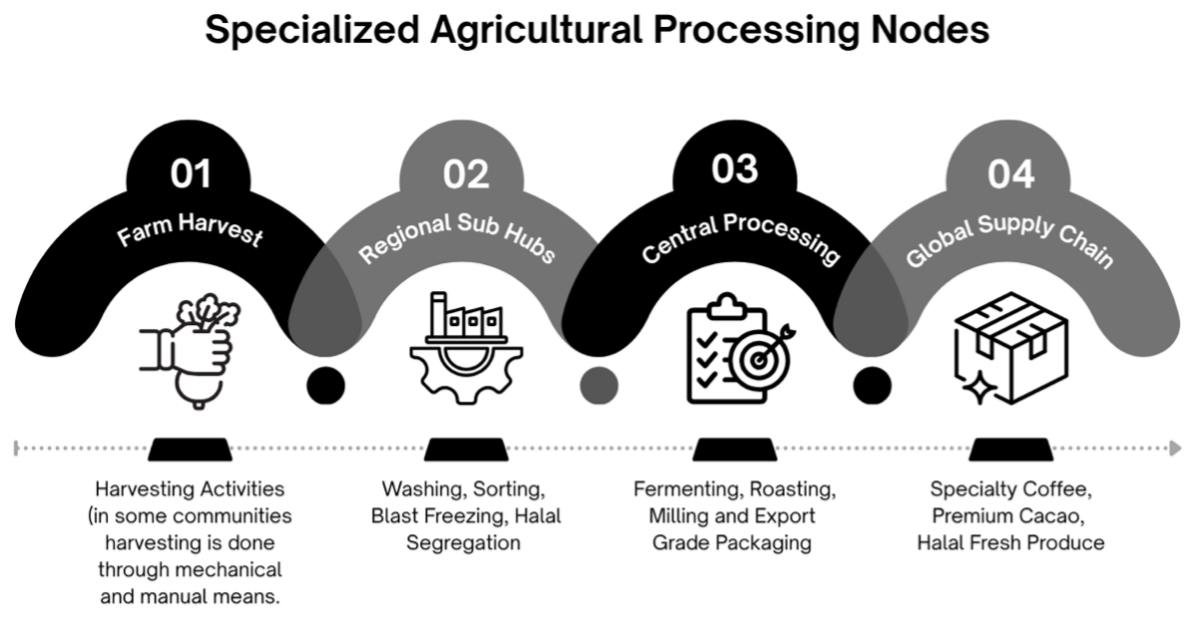
By changing into specialised processing nodes, Mindanao’s meals hubs be sure that the profitability generated by these high-value crops stays with native farmers and rural communities who domesticate them.
Challenges Dealing with Mindanao’s Meals Hubs
Even with their good potential, a number of elements reminiscent of structural, logistical, and environmental constraints proceed to have an effect on the long-term viability and effectivity of those meals hubs.
(1) https://bimp-eaga.asia/articles/tapping-halal-market; https://irdf.org.ph/wp-content/uploads/2024/08/SME-Study_IRDF_EQuisol.pdf; https://aesanetwork.org/development-of-halal-agricultural-production-systems-in-mindanao-philippines/
(2) https://www.emerald.com/bfj/article-abstract/117/8/2143/20687/Drivers-of-halal-orientation-strategy-among-halal?redirectedFrom=fulltext
- Fragmented Infrastructure: Gaps in farm-to-market roads has resulted to distant smallholders having the issue of transporting their crops like cardava(1) bananas or contemporary greens to hubs earlier than spoilage begins.
- Excessive Logistics Prices: Delivery charges within the nation stay costly. Inter cargo of products from Mindanao to Luzon typically value greater than importing crops from neighboring ASEAN international locations(2).
- Unreliable Energy Grid: Electrical cooperatives who function the distribution of electrical energy have been inefficient and unreliable. Meals hubs require fixed electrical energy for blast-freezers, chilly storage, and automatic sorting machines. Frequent energy outages and voltage fluctuations throughout Mindanao put large volumes of perishable meals in danger.
- Digital Literacy Hole: A number of conventional farming cooperatives lack the data of utilizing fashionable stock administration software program and digital crop-trading platforms built-in into meals hubs.
- Local weather Vulnerability: Beforehand Mindanao had nearly excellent climate however prior to now many years the climate sample has shifted and tropical storms have begun to hit Jap Mindanao provinces that’s accompanied by extreme drought circumstances (El Niño). These disruptions can wipe out complete crop harvests, leaving investment-intensive meals hubs underutilized.
Alternatives Forward
Conversely, these identical bottlenecks open the door for high-impact interventions, technological modernizations, and big financial development.
- Non-public Sector Investments: Public-Non-public Partnerships (PPPs) can inject capital into these hubs to increase industrial chilly storage, set up fashionable solar-powered dry milling vegetation, and enhance large-scale distribution fleets.
- Renewable Vitality Integration: Transitioning meals hubs towards devoted off-grid photo voltaic farms and biomass energy vegetation can bypass native grid instability, lower operational prices, and decrease the carbon footprint of Mindanao’s exports.
- World Halal Growth: Correctly licensed BARMM meals hubs can leverage Mindanao’s strategic location to export strictly segregated, licensed Halal coconut merchandise, oils, and snacks on to the $2-trillion world Muslim market.
- Agri-Tech Adoption: Introducing blockchain-based traceability instruments can enable worldwide consumers to trace espresso, cacao, and contemporary fruits from a particular Mindanao farm straight to their cabinets, commanding premium world costs.
- Worth-Added Processing: Shifting from uncooked agricultural delivery to on-site processing (e.g., turning uncooked cacao into premium tableya, or processing surplus greens into dehydrated powders) creates native jobs and minimizes post-harvest monetary losses.
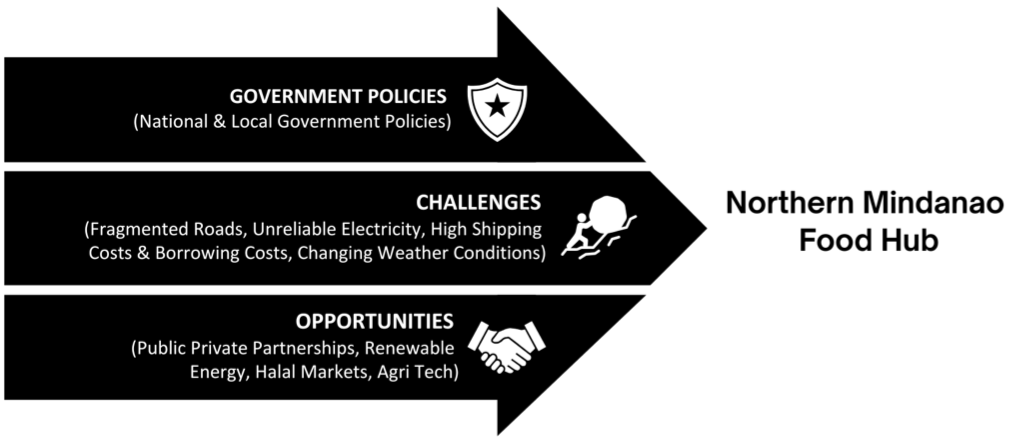
Northern Mindanao stands to realize profound financial, social, and structural benefits by absolutely operationalizing its community of agricultural meals hubs. Transferring past easy buying and selling facilities, these amenities function catalysts that instantly remodel the lives of native populations and safe the area’s financial future.
Mindanao advantages from meals hubs via 5 major avenues:
- Important Discount in Put up-Harvest Losses
Traditionally, Mindanaoan farmers lose as much as 30% of their harvests—particularly perishable crops reminiscent of greens and delicate fruits like mangos, papaya cardava bananas amongst others owing to to unhealthy dealing with and lengthy transit instances given current highway circumstances.
- Rapid Stabilization: Localized meals hubs offering automated washing, sorting, and fast blast-freezing that may preserve contemporary crop high quality instantly after harvest.
- Unbroken Chilly Chain: Centralized chilly storage amenities enable farmers to soundly retailer surplus yields throughout peak seasons as an alternative of being pressured to dump or promote their crops at a loss. This assumes constant electrical energy provide from a dependable supplier.
Smallholder farmers more often than not rely upon merchants and consolidators who purchase uncooked produce at low farmgate costs and in flip promote them at the next revenue in main city cities.
- Direct Market Entry: Usually meals hubs consolidate smallholder harvests into commercial-scale volumes, giving native farmer cooperatives the chance to barter instantly with main supermarkets, meals producers, and different institutional consumers.
- Clear Pricing: Using digital weighing scales, public worth boards, and unified public sale methods built-in into meals hubs give farmers real-time market information, guaranteeing they obtain aggressive shopping for costs.
- Transition to Excessive-Margin Revenue Creation
Delivery uncooked, unprocessed agricultural produce limits the monetary returns that keep inside Northern Mindanao.
- Localized Processing: Via the combination of processing equipment instantly into the hubs, rural communities can ferment and roast cacao into premium tableya, mill uncooked coconuts into licensed virgin coconut oil, or dehydrate surplus greens into industrial powders.
- Rural Job Creation: Working, sustaining, and managing these agro-processing strains creates substantial specialised, off-farm employment alternatives for youth and girls in rural communities.
Comparability of Uncooked Produce Delivery and Meals Hub Processing
| Uncooked Produce Delivery | Meals Hub Processing | |
| Worth Captured | Restricted native worth added; margins primarily accrue downstream. | Greater native worth added via transformation into market-ready merchandise. |
| Spoilage Danger | Elevated post-harvest losses resulting from perishability and longer logistics chains. | Decreased losses through stabilization (e.g., drying, fermentation, oil extraction) and higher dealing with. |
| Revenue Era | Decrease and extra unstable farm-gate returns, susceptible to cost pressures. | Improved and extra secure returns enabled by product high quality differentiation and premiums. |
| Market Entry | Restricted bargaining energy and entry to higher-specification markets. | Higher entry to formal and higher-value markets via high quality management and compliance. |
| Rural Jobs | Minimal off-farm employment past primary crop consolidation and transport. | Higher expert and semi-skilled employment in processing, high quality assurance, and operations. |
(1)https://www.researchgate.net/publication/347541715_Identifying_Potential_Markets_for_African_Leafy_Vegetables_Case_Study_of_Farming_Households_in_Limpopo_Province_South_Africa; https://aesanetwork.org/development-of-halal-agricultural-production-systems-in-mindanao-philippines/
(2) https://www.knowledge-sourcing.com/report/philippines-canned-food-market
This distinction summarizes the benefits that meals hub processing can provide as in comparison with cargo of uncooked produce. Taking a look at these, delivery uncooked produce sometimes captures solely marginal worth and is extra vulnerable to spoilage and modifications in worth, whereas processing via meals hubs has a clearer benefit because it retains extra worth regionally by changing uncooked crops into higher-value merchandise, enhancing earnings, strengthening market entry, and creating rural jobs.
- Capturing World Premium Markets
Mindanao’s geographic location makes it a pure gateway to world markets.
- Halal Certification Lanes: Devoted meals hubs in areas just like the BARMM present remoted, strictly monitored provide chains required for trusted Halal certification, giving a possibility to market to the multi-trillion-dollar world Muslim client market.
- Traceability and Requirements: Centralized grading ensures that high-value crops like specialty Arabica espresso and single-origin cacao persistently meet strict worldwide export requirements, enabling farmer cooperatives and smallholder farmers to get higher world costs.
- Strengthening Regional Meals Safety and Resilience
Northern Mindanao in addition to different components of Mindanao has skilled extreme climate circumstances coming from intense El Niño droughts to typhoons that disrupt agricultural provide chains.
- Strategic Meals Reserves: A meals hub can double as a regional meals financial institution and climate-resilient storage middle, holding dried grains, corn, and processed items safely stockpiled.
- Catastrophe Response Nodes: Throughout emergencies, the organized logistics hub enable authorities businesses and catastrophe aid networks to shortly reply and mobilize, pack, and distribute meals packs throughout affected provinces, saving lives and stabilizing native meals costs.
(Antonio “Tony” S. Peralta is a enterprise and civic chief who serves because the Honorary Consul of Finland in Mindanao and Chairman of the European Chamber of Commerce of the Philippines–Southern Mindanao Enterprise Council, in addition to Company Secretary of the Japanese Chamber of Commerce of Mindanao. His background is in banking, finance, and regional improvement, and he’s concerned in selling overseas funding, sustainable development, and academic hyperlinks between Europe and Mindanao. He additionally serves as Vice Chairman of the Davao Metropolis Media Residents Council, participates in improvement initiatives via ECCP SMBC, and helps initiatives associated to rural improvement, media engagement, enterprise cooperation, and worldwide partnerships within the area.)
https://weblog.passive-income4u.com/create-your-very-own-auto-publish-news-blog-site-and-earn-passive-income-in-just-4-easy-steps/
https://mindanews.com/mindaviews/2026/08/providing-for-the-future-how-the-food-hub-concept-can-modernize-northern-mindanaos-agricultural-economy/