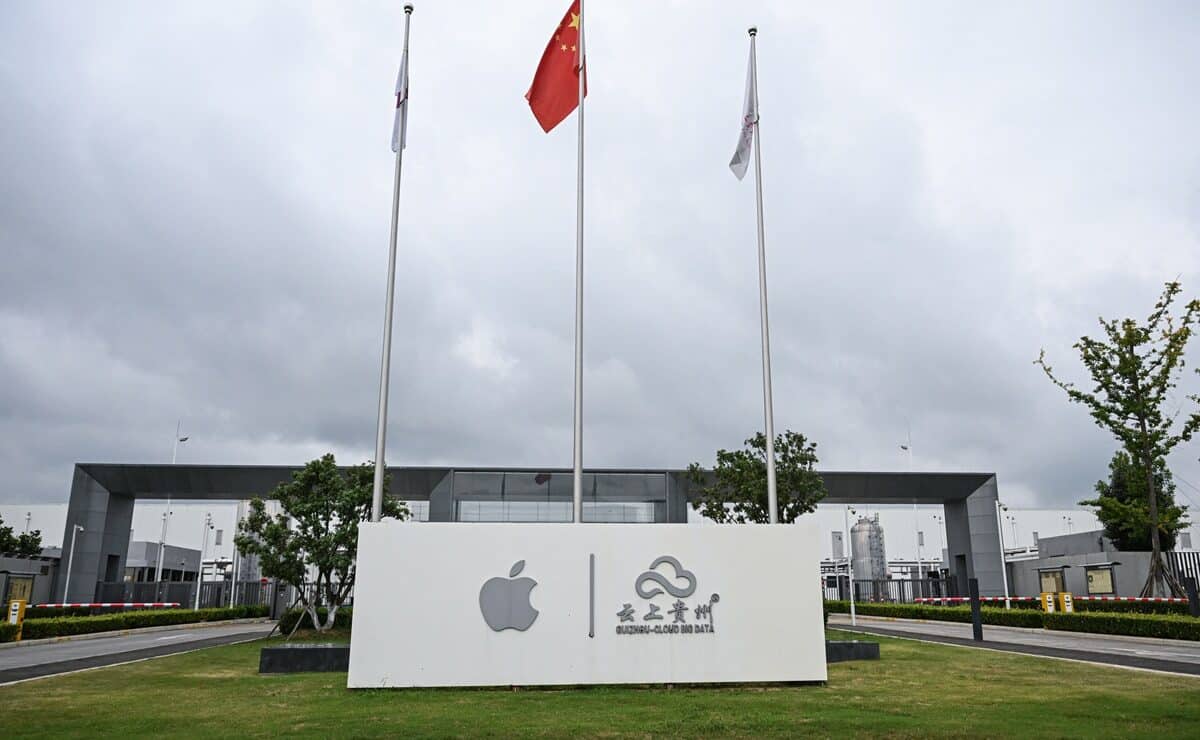
Guian New Space, CHINA—In China’s hilly Guizhou province, a cluster of European-style buildings full with clock tower and multi-arched bridge emits a low, everlasting hum—a clue to its surprising identification as tech big Huawei’s largest information middle.
The town-like complicated is exclusive in design, however not in its placement. Dozens of information facilities have been constructed within the southwestern province lately.
They’re a part of a authorities technique that has seen a lot of the digital infrastructure for breakneck AI growth throughout China’s japanese seaboard established within the nation’s much less populated, rural west.
The build-out is ongoing. China is on target to almost double its information middle capability inside the subsequent 5 years, as a tech race with the US intensifies and nations all over the place attempt to swerve a computing crunch that might stymie AI growth.
The tasks have reworked some locations—comparable to Guian New Space, the place the Huawei information middle and others are situated.
“It was once a barren mountain, however for the reason that space has developed, transportation has grow to be extra handy, commerce has picked up, enterprise alternatives have emerged,” native shopkeeper Shu Peihua stated.
READ: Humanoid robots embodiment of China’s AI ambitions
Enhance to native financial system
When Agence France-Presse (AFP) visited final month, road distributors had been catering to information middle staff on their lunchbreak close to a roadside banner calling for “selling high-quality growth,” a authorities tech coverage catchphrase.
In Europe and the US, information middle development has usually been met with resistance from native communities citing considerations round vitality costs, in addition to environmental points comparable to water utilization and noise.
Dissent in China is tightly managed, nevertheless, particularly round central authorities coverage.
Nonetheless, Guian residents who spoke to AFP had been constructive concerning the adjustments to their space.
A vendor promoting savory pancakes, who didn’t give his identify, stated two universities had been established for the reason that amenities had been constructed.
One other native, Li Xixiu, stated the primary highway had been developed due to the facilities, which normally had “actually boosted the financial system of this complete space.”
READ: Low-cost Chinese AI jolts Silicon Valley
East to west
“All of the villagers in our neighborhood now discover jobs close by, not like earlier than, once they needed to go to different locations,” Li stated.
In 2021, the federal government gave its technique a reputation: “Jap Knowledge Western Computing.”
The logic of development in locations like Guizhou, with its cooler climates, plentiful renewable vitality and empty area, is multifaceted.
AI processing is extraordinarily vitality intensive, and China has demanded that information facilities draw 80 % of their energy from renewable sources by the top of this decade.
That makes areas like Guizhou and Interior Mongolia, which have massively expanded renewable capability like photo voltaic and wind, excellent for operators seeking to meet these commitments, stated Simeng Deng, a senior analyst at Rystad Vitality.
Vitality-guzzling server farms might additionally assist remedy renewables’ situation of curtailment, or the over-production of vitality.
Uncertain ‘spillover impact’
The info facilities “will be an engine to digest or take in the excess of renewable energy technology,” stated Deng.
Creating beforehand uncared for elements of the countryside is one other potential profit.
Regardless of the keenness of the locals AFP met although, some researchers query the general financial positive aspects to host areas.
Knowledge facilities don’t essentially create a “big spillover impact” on native jobs, stated Andrew Stokols from Singapore Administration College.
“The hope is that you should utilize information facilities as an engine for broader digital growth… bringing in industries that can are available in round information facilities,” he stated.
Nevertheless, each in China and elsewhere, “speedy advantages have been elusive.”
‘Restricted’ financial increase
Guizhou has averaged an annual GDP development fee of seven.4 % over the previous decade, however its wage development over the identical interval was second to final nationwide, in line with the Taiwan-based Analysis Institute for Democracy, Society and Rising Expertise (DSET).
“This distinction means that whereas information facilities drive heavy funding in land and gear, their impression on boosting native per capita earnings stays restricted,” DSET researchers Cartus Bo-Xiang You and Angela Glowacki instructed AFP by electronic mail.
Large investments in infrastructure, coupled with coverage incentives to draw information middle builders, have earned Guizhou one of many highest debt burdens within the nation.
In 2024, Guizhou ranked thirtieth amongst Chinese language provinces for its debt-to-revenue ratio, in line with a DSET report, and twenty seventh for its debt-to-GDP ratio.
‘Computing energy’
Nevertheless, the demand for information processing capability as nations scramble for technological supremacy means the constructing will proceed.
Even earlier than ChatGPT heralded the start of the AI growth, Chinese language coverage paperwork had been “speaking about the concept that computing energy is correlated with nationwide energy,” stated Stokols.
“It’s important for nationwide competitiveness within the age of digital know-how… the AI competitors has accelerated that.”
https://weblog.passive-income4u.com/create-your-very-own-auto-publish-news-blog-site-and-earn-passive-income-in-just-4-easy-steps/
https://globalnation.inquirer.web/335256/china-goes-rural-with-data-centers-in-quest-to-power-ai