Financial enlargement, infrastructure funding, and intercity connectivity are steadily reshaping Davao Area, solidifying its place as one of many principal facilities of tourism, commerce, mobility, and residential improvement.
It entered from a considerable base: knowledge from the Philippine Statistics Authority (PSA) present that Davao grew by 5.1 % in 2025, bringing its gross regional home product (GRDP) to roughly PHP 1.14 trillion at fixed 2018 costs. Providers accounted for 62.1 % of output, whereas transportation and storage grew by 8.2 %. Wholesale and retail commerce was the biggest contributor to total development, adopted by monetary and insurance coverage actions and public administration.
The composition of the native economic system is important to actual property improvement: transport, companies, healthcare, and private actions develop enterprise, create employment, and enhance demand for residences linked to tourism locations, development facilities, infralink initiatives, and retail parks. Davao Area additionally represents a large property market: the 2024 Census of Inhabitants positioned it at 5.39 million, equal to about 4.8 % of the nationwide whole. Family inhabitants reached 5.37 million, growing by practically half 1,000,000 individuals between 2015 and 2024.
Enterprise drives residential demand

Strong enterprise exercise throughout the Davao Area is straight strengthening its actual property market. As of March 2025, the area’s 19 working financial zones hosted 55 corporations, using over 50,000 individuals and producing greater than USD 275 million in export income in the course of the first half of the yr.
Whole regional employment reached 2.48 million people, with the companies sector comprising 56.4 % of the workforce. This constant enterprise and job development broadens the property market, fueling robust demand for residential developments located close to core workplaces, industrial facilities, and rising enterprise hubs.
Tourism transforms the regional economic system

Davao Metropolis welcomed over two million guests in 2025, in accordance with the Metropolis Tourism Operations Workplace. Kadayawan Pageant alone attracted greater than 206,000 company in August, demonstrating how main celebrations generate exercise for resorts, eating places, retailers, transport suppliers, and native enterprises.
Throughout Davao Area, practically 2.9 million in a single day vacationers have been recorded in the course of the first three quarters of 2025, representing an 11-percent enhance from the comparable interval a yr earlier. Improved air connectivity, stronger home journey, private-sector funding, and a spread of tourism merchandise have been among the many components supporting the rise.
The area provides a various portfolio, house to sights such because the Philippine Eagle Heart, Malagos Backyard Resort, Eden Nature Park, cultural locations, museums, and main celebrations. Close by Samal Island provides seashores, resorts, marine recreation, and island experiences.
For the property sector, tourism contributes greater than customer spending. A bigger hospitality and leisure economic system sustains job creation, stimulates surrounding companies, strengthens the motion of products and companies, and raises the residential relevance of well-connected, well-planned areas.
Connectivity creates new corridors

This financial and demographic base is supported by a transport community present process appreciable modernization.
Established arteries akin to Daang Maharlika, Davao-Bukidnon Street, and Davao-Cotabato Street hyperlink regional cities and development facilities throughout Mindanao. Street rehabilitation, widening, bridges, bypasses, and complementary infrastructure are additional bettering momentum.
Among the many most vital is the 45.5-kilometer Davao Metropolis Bypass Development Venture, designed to attach Toril in southern Davao Metropolis with Panabo Metropolis in Davao del Norte. The four-lane hall consists of the primary twin-tube mountain street tunnel within the nation. Upon completion, the Division of Public Works and Highways (DPWH) estimates that journey time between Toril and Panabo might lower from one hour and 44 minutes to roughly 49 minutes.
Nearer to the coast, the Davao River Bucana Bridge and adjoining roads forming Phase B of the Davao Metropolis Coastal Bypass Street opened to autos in December 2025, offering one other route between areas historically depending on inland thoroughfares.
Throughout Davao Gulf, building additionally continues on the practically five-kilometer Samal Island-Davao Metropolis Connector Bridge. The venture is anticipated to modernize motion between the 2 areas, strengthening linkages between the metropolitan heart and one of many premier regional leisure locations.
Such infrastructure carries implications past shorter journeys. Higher roads and bridges can develop catchments, enhance logistics, and permit residential demand to increase past established epicenters.
A broader employment base, lively customer economic system, and increasing transport community are widening the vary of areas that may assist residential demand throughout Davao. These situations present the context for Camella, which has constructed alongside the area as its cities, markets, and communities have advanced.
Greater than three many years of constructing properties in Davao Area

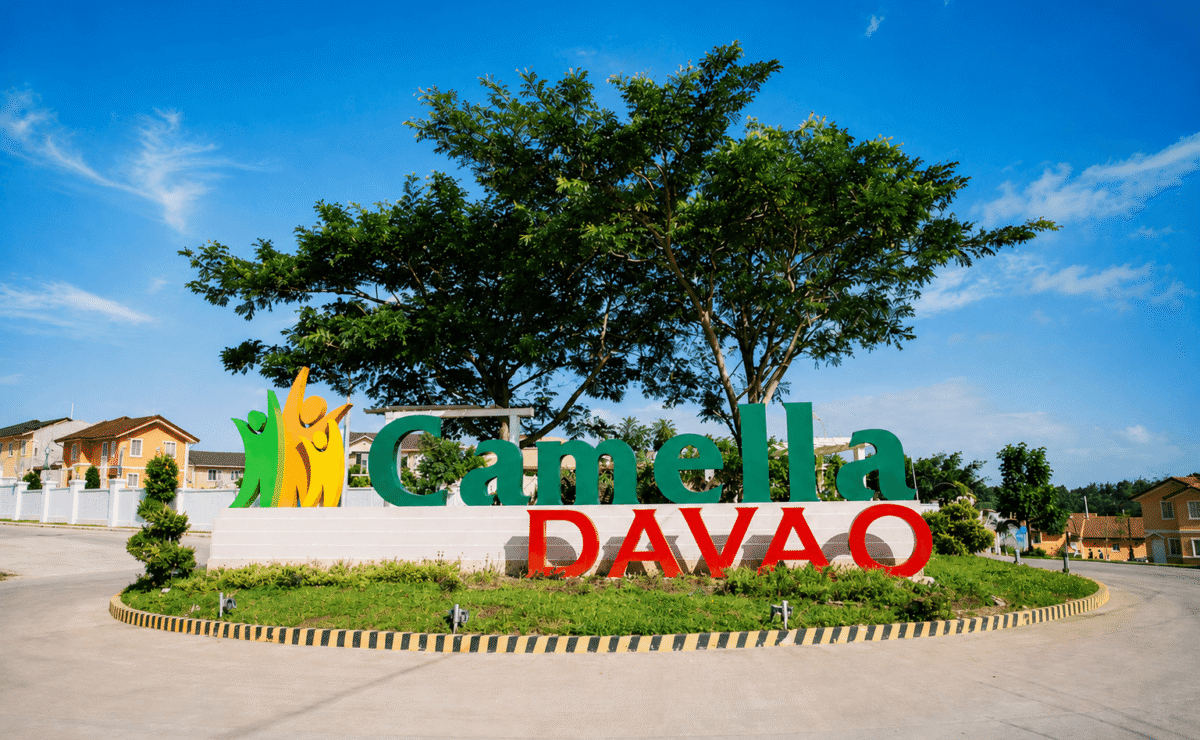
Camella, the Philippines’ most trusted and most well-liked housing model, has grown with Davao Area for greater than 30 years, leaving a footprint alongside its demographic, industrial, and bodily progress.
Camella, the flagship housing model of Vista Land, the nation’s main built-in property, has created communities throughout Davao Metropolis, together with Toril, and Tagum, bringing lifelong homeownership nearer to Abroad kababayans and established Filipinos. This geographic attain displays a long-term method, serving urbanizing districts whereas extending into rising areas because the area expands.
Shifting residential priorities reinforce this route: for homebuyers and buyers, location is measured not just by distance from the metropolitan heart, however by proximity to employment, schooling, and on a regular basis necessities. These issues achieve significance as public works enhance mobility between municipalities, companies construct past metropolis limits, and tourism stimulates native enterprise.
Camella continues to maneuver with this development: its communities are supported by an inclusive economic system, stronger connections, urbanizing livelihoods and existence, and ongoing funding by private and non-private establishments. As Davao develops right into a extra built-in regional community, residential alternatives are rising with it —as prosperity produces prospects, mobility multiplies markets, and communities contribute to sustained development.
The Philippines’ largest homebuilder
For practically 5 many years, Camella has delivered over 600,000 properties in additional than 1,250 communities throughout 49 provinces and 147 key cities and municipalities within the nation. Crafted for the upper- to middle-income section, it locations household and neighborhood life on the heart—making a legacy of worth for generations of Filipinos.
Study extra about Camella communities nationwide. Go to www.camella.com.ph and observe @CamellaOfficial for information and choices. Make your dream house a actuality at present!
ADVT.
This text is dropped at you by Camella.
https://weblog.passive-income4u.com/create-your-very-own-auto-publish-news-blog-site-and-earn-passive-income-in-just-4-easy-steps/
https://enterprise.inquirer.web/607520/davao-region-growth-drives-residential-expansion-with-camella