BATANGAS, Philippines – A century-old pottery custom in San Juan, Batangas, faces the danger of fading into reminiscence.
In Barangay Palahanan, nevertheless, one household stays steadfast, decided to maintain this heritage alive regardless of the challenges of fixing occasions.
Whereas they proceed to form earthenware by hand in makeshift workshops on sunny days, their manufacturing is steadily disrupted by the monsoon season.
Missing kilns, the potters rely fully on daylight to dry their clay, making extended rainfall a big risk to their livelihood.
This wrestle is additional compounded by the rise of mass-produced ceramics, which provide cheaper and sooner alternate options to their conventional craft.
Sustaining the customized
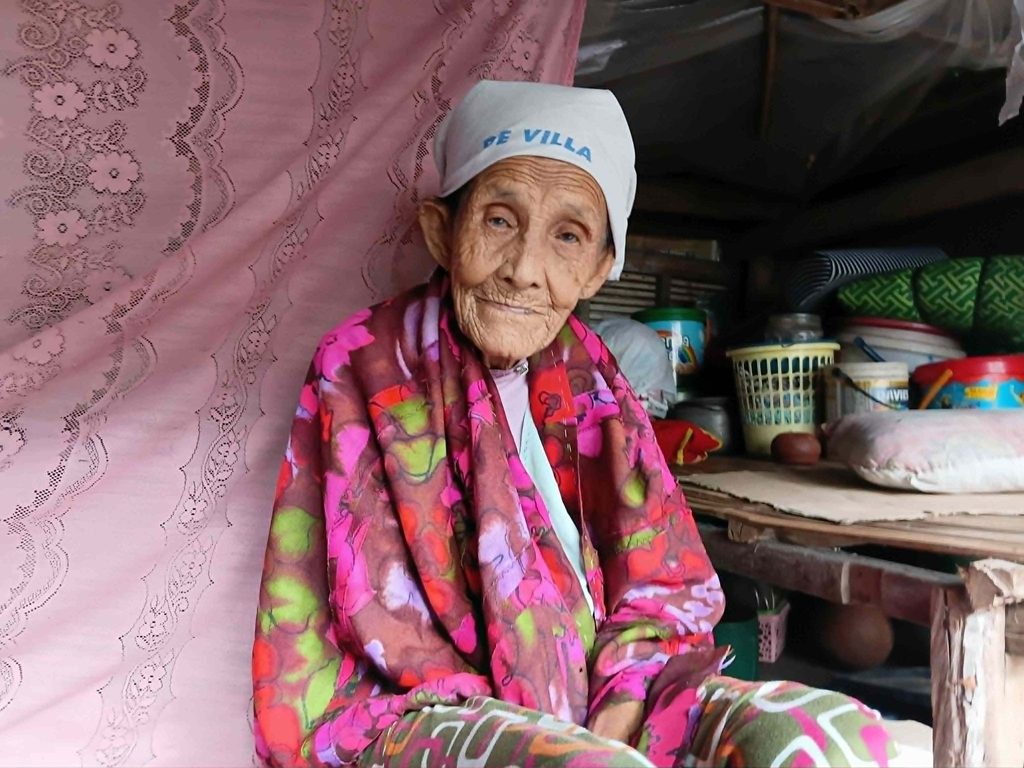
The tradition already existed even earlier than the delivery of Cresencia Panaligan-Ilao, 96, the oldest potter in Barangay Palahanan.
“I began making pottery again after I was 12 years outdated. Earlier than that, my mom taught me to do that,” Ilao mentioned.
Palayukanthe pottery tradition in San Juan, Batangas, took root as a communal livelihood through the Japanese Occupation however bloomed as business work within the late Fifties.
Earlier than making the earthenware, potters harvest clay (clay) from close by riverbanks, grinding it down by foot or with electrical grinders earlier than kneading it with water right into a clean, workable dough.
Artisans use the normal spherical methodology the place they spin the clay on a labbi-ana potter’s wheel product of rock, utilizing delicate hand strain with out counting on electrical energy. They form the vessel with assistance from a standard picket beater known as within the place. After forming the bottom of the pots, the potters type the mouth of the earthenware.
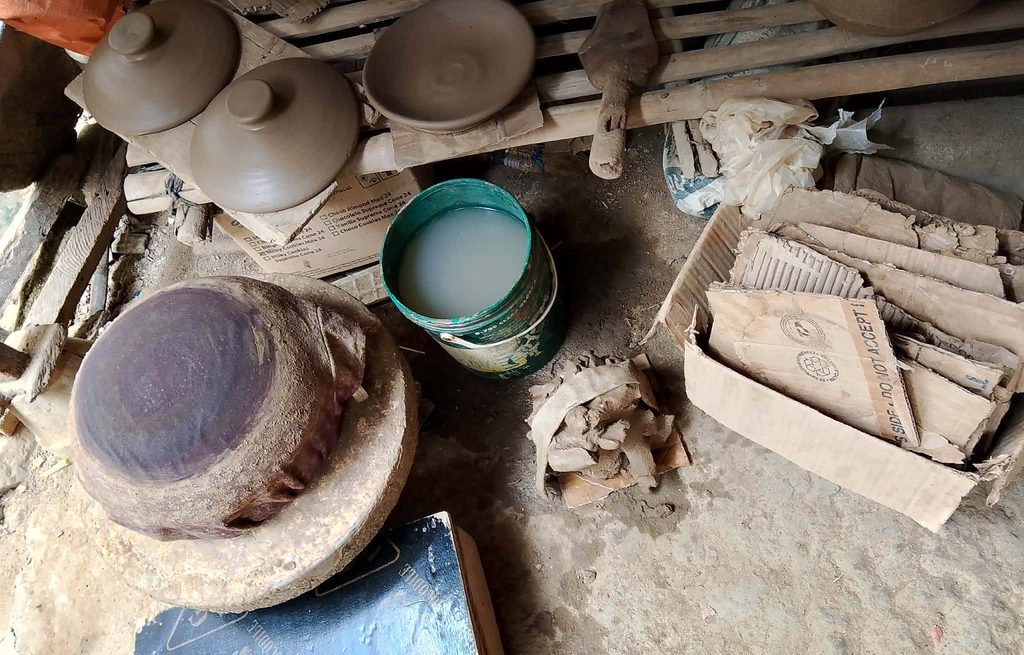
The newly formed moist pots are air-dried below the solar to take away the preliminary moisture and harden the construction for the reason that artisans don’t personal a furnace (kiln). The craft was handed down from mom to daughter, and generally the abilities have been inherited by a daughter-in-law if there was nobody else to obtain them.
The passing of custom was not the most important downside, Ilao emphasised. “It was the truth that the cash we earn in doing this isn’t sufficient.”
In a examine by the College of the Philippines Los Baños, pottery gross sales in San Juan declined considerably when the pandemic struck in 2020. Since then, the monetary challenges have grow to be extra extreme as buyer demand continues to lower.
Regardless of these dwindling returns, it’s Cresencia’s daughter-in-law, Lutgarda Cueto-Ilao, 76, who continues to shoulder the household’s pottery custom.
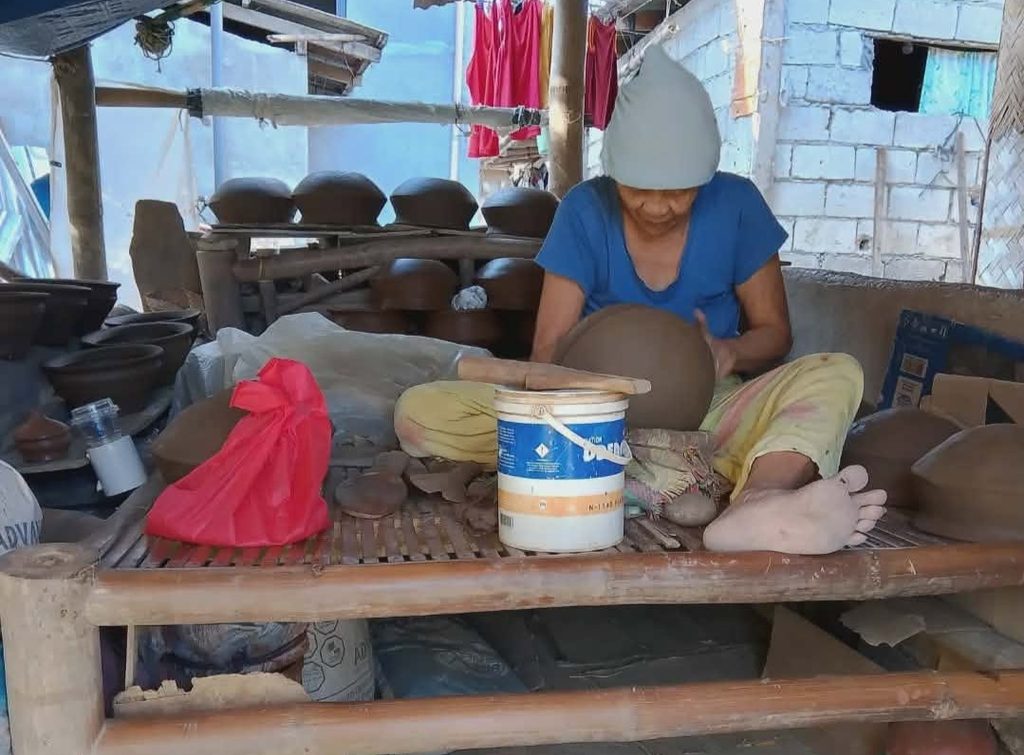
Since Cresencia stopped making pots as a livelihood two years in the past attributable to outdated age, Lutgarda is now the one elder who creates handmade pots in Barangay Palahanan.
“I get up at 8 am to begin making pots,” Lutgarda mentioned.
As a result of in depth course of, it takes 4 to 5 hours to create a totally completed handmade earthenware.
“Our craftsmanship is our pleasure,” she added, “however we promote our uncooked pots for a really low cost worth to retailers.”
“Carrying this custom additionally means carrying the burden that comes together with it,” Lutgarda mentioned. “As a result of this craft is one thing particular to us, but additionally as a result of that is the one approach we survive.”
“The small ones are bought for P30, the medium ones are bought for P50, and the bigger ones are bought for P80 to P100,” she added.
With an preliminary capital of P1,500, a big quantity goes towards paying three staff who acquire the clay, every incomes P300. One other P300 was spent on 50 sacks at P6 every, whereas the remaining P300 goes to renting a jeep to move the clay. By the point the clay reaches the workshop, all the capital has already been spent.
“We tried asking for a elevate after we promote the pots, however the retailers gained’t purchase our merchandise as a result of they mentioned it’s too costly,” Lutgarda mentioned.
Out there, nevertheless, retailers who bake the uncooked pots in kilns promote the completed earthenware for a a lot increased worth.
Discovering a market past Palahanan
For the following era, retaining the custom alive could require greater than merely persevering with the outdated methods.
Monique Ilao-Alvarez, 26, Cresencia’s great-granddaughter, has begun utilizing social media to advertise the household’s pottery.
“I began utilizing social media as a advertising and marketing software to advertise our conventional craft,” Alvarez mentioned.
For generations, the household’s merchandise have been promoted largely by phrase of mouth and native retailers. Alvarez believes that strategy is not sufficient as prospects more and more uncover and buy merchandise by digital platforms.
By selling their earthenware on-line, the household hopes to achieve prospects outdoors their area people and introduce youthful customers to San Juan’s pottery custom.
“The market retains altering, so we have now to adapt to remain aggressive,” Alvarez added
That adaptation additionally consists of making merchandise based mostly on altering demand. Except for their conventional pottery gadgets, Alvarez mentioned her mom now produces burn cowlor pot lids, as demand for them grows.
The modifications don’t imply abandoning the household’s conventional strategies. As an alternative, the household is searching for methods to make the craft extra viable whereas retaining the data handed down by generations.
The query is whether or not these efforts shall be sufficient.
For the Ilao household, pottery is greater than a product. It’s a ability realized from dad and mom, a livelihood sustained by many years, and a hyperlink to the neighborhood’s historical past.
However heritage alone can’t pay for clay, transportation, labor, or meals.
Because the household searches for brand spanking new prospects and new methods to earn from the craft, Alvarez stays decided to maintain the custom alive.
Individuals can assist the San Juan pottery trade by buying genuine earthenware directly from local potters and selling their merchandise by social media.
“We are able to’t let this craft die,” Alvarez mentioned.– Rappler.com
Quotes have been translated into English for brevity.
Christian F. Patulot is a poet-journalist, essayist, researcher, and a Mover based mostly in Batangas. He writes about tradition, language, and the on a regular basis experiences of Filipinos.
https://weblog.passive-income4u.com/create-your-very-own-auto-publish-news-blog-site-and-earn-passive-income-in-just-4-easy-steps/
https://www.rappler.com/individuals/human-interest/family-batangas-keep-generations-old-pottery-tradition-alive/