Ten minutes with AI is perhaps all it takes to make your subsequent arduous drawback really feel more durable.
None of what follows is a mistake in the best way a leaked password or a made-up quotation is a mistake. No person will get fired over these. No person information an incident report.
They’re quiet, documented patterns in how utilizing AI modifications your conduct. And for those who use AI day by day, there is a good probability you have by no means heard of them. It is change into a part of the day for lots of people, which is strictly why these patterns are price realizing.
These are the AI habits to pay attention to. Every one comes from analysis launched in 2026, and none of them is a cause to cease utilizing AI. However all three are price a second of actual thought.
This is what they’re.
Disclaimer: Whereas these are basic solutions, it is essential to conduct thorough analysis and due diligence when deciding on AI instruments. We don’t endorse or promote any particular AI instruments talked about right here. This text is for academic and informational functions solely. It isn’t meant to offer authorized, monetary, or scientific recommendation. All the time adjust to HIPAA and institutional insurance policies. For any choices that affect affected person care or funds, seek the advice of a certified skilled.
It’s not simply the talks. Or the audio system. Or the methods.
PIMDCON, the #1 Actual Property & Entrepreneurship Convention for Physicians, works due to what occurs between the classes.
The conversations. The readability. The shift.
LEARN MORE ABOUT PIMDCON
1. Give Exhausting Issues a Few Minutes Earlier than You Attain for AI
In April 2026, researchers from Carnegie Mellon, Oxford, MIT, and UCLA launched a preprint. That is a paper shared publicly earlier than it goes by peer evaluate.
It described a sequence of randomized managed trials with 1,222 contributors working by math and studying comprehension duties. Some had AI assist obtainable. Others did not.
This is the factor. The researchers weren’t solely measuring whether or not AI helped within the second. They needed to know what occurred after the AI was taken away. Whereas individuals had AI, they carried out higher. No shock there. The shock got here subsequent.
As soon as the AI was gone, the individuals who’d been utilizing it did considerably worse on their very own. They have been additionally extra probably to surrender on tough issues altogether. And that drop confirmed up after roughly ten minutes of AI-assisted work. Ten minutes!
The authors clarify it by evaluating AI to mentor. A great mentor will typically maintain again the reply, as a result of working by the issue is the entire level.
AI instruments, because the authors describe them, are tuned handy you an entire reply instantly. Outdoors of security limits, they virtually by no means say no. Their speculation is that this trains you to count on instantaneous solutions. And that leaves you with much less endurance for issues that do not give method instantly.
So does this imply you must keep away from AI for arduous issues? No.
It signifies that the following time a activity with out AI feels unusually irritating, it is price asking whether or not a latest AI session is a part of the explanation. The duty itself is probably not as arduous because it feels.
And every now and then, attempt working by one thing tough earlier than you attain for AI, even when it is proper there. It is a fairly easy method to preserve that persistence in follow.
In case you’ve ever felt your endurance for a troublesome drawback slipping and could not determine why, this is perhaps a part of the reply.
2. Hand Off the Work, Then Query What Comes Again
You have in all probability heard that utilizing AI repeatedly wears down your vital pondering.
A examine revealed in March 2026 within the Worldwide Journal of Instructional Know-how in Increased Schooling complicates that story.
The researchers surveyed 912 business-school college students in China, Europe, and the US. They checked in at three factors, about two weeks aside.
They checked out two issues college students do with AI. One was critically evaluating what it produces. The opposite was strategically handing duties off to it. The researchers anticipated these two to drag towards one another.
They did not.
College students who handled AI as a working companion reported extra of each. And each have been linked to stronger self-reported studying. Even delegation, which the authors had predicted would harm, was positively related to studying. That hyperlink was strongest at greater ranges.
Actually, the commonest sample amongst college students reporting the deepest studying was heavy delegation paired with lively scrutiny of what got here again.
Two caveats matter right here.
First, the contributors have been business-school college students. Second, the result was self-reported, not a take a look at of reasoning.
So the examine does not present that one type of AI use protects your pondering abilities and one other erodes them. What it helps is narrower. Handing work to AI and questioning it aren’t an both/or.
Take into consideration what that appears like in follow.
You possibly can ask AI to draft one thing, then learn it carefully, query its assumptions, and resolve whether or not it is truly proper. Or you may settle for the draft as a result of it sounds assured and well-organized. From the skin, these two look equivalent. They prevent about the identical period of time. However they’re completely different acts.
In a single, AI is doing all your pondering for you. Within the different, AI is providing you with one thing to consider.
For choices that matter, like a prognosis, a monetary dedication, or recommendation you are giving another person, the extra effortful model is price the additional couple of minutes. Even when the simpler one is sitting proper there.
3. Get a Second Opinion When AI Agrees With You
This is perhaps essentially the most stunning discovering of the three.
A examine revealed in Science in March 2026, led by researchers at Stanford, measured one thing known as sycophancy. That is the tendency of AI programs to affirm and agree with what you say as a substitute of pushing again.
The staff examined eleven broadly used AI fashions. They in contrast the fashions’ solutions with human responses to the identical advice-seeking prompts. On common, the fashions endorsed the particular person’s actions 49% extra usually than people did. That included prompts describing deception, unlawful conduct, or different hurt.
One take a look at used posts from a Reddit discussion board the place individuals describe interpersonal conflicts and ask for a verdict. In posts the place the group had unanimously judged the poster to be within the mistaken, the fashions nonetheless sided with the poster in 51% of circumstances. Let that sink in for a second.
Then the researchers checked out what this does to individuals.
Throughout three preregistered experiments with 2,405 contributors, a single validating AI reply left individuals much less inclined to personal their half in a disagreement or attempt to mend it. It additionally made them extra sure they’d been proper.
In keeping with Stanford’s abstract of the analysis, some contributors labored by pre-written dilemmas based mostly on the discussion board posts. Others mentioned a battle from their very own lives.
And this is the place it will get tough. Contributors rated the agreeable replies as extra reliable. They have been additionally extra prepared to return again to them.
The authors argue that this offers builders a industrial cause to depart the conduct in place. Take into consideration that for a minute. The factor that makes an AI reply really feel good is identical factor that retains you coming again, whether or not or not it is steering you nicely.
And it is fairly straightforward to see the way it performs out. You describe a scenario out of your facet, which is the one facet you may describe. The AI tells you you are proper. You stroll away feeling higher and somewhat extra dug in.
So the behavior price constructing is a particular form of skepticism, aimed toward AI’s settlement quite than its details. When AI validates your determination, your draft, or your facet of a disagreement, that validation is not impartial info. It is coming from a system with a measured tendency to facet with the consumer. And within the examine, individuals most well-liked that tendency even because it skewed their judgment.
In case you’re coping with an actual battle with somebody, a enterprise determination that impacts different individuals, or a second of real self-doubt, discuss to an precise particular person too.
A second opinion from a human carries info that AI settlement usually does not.
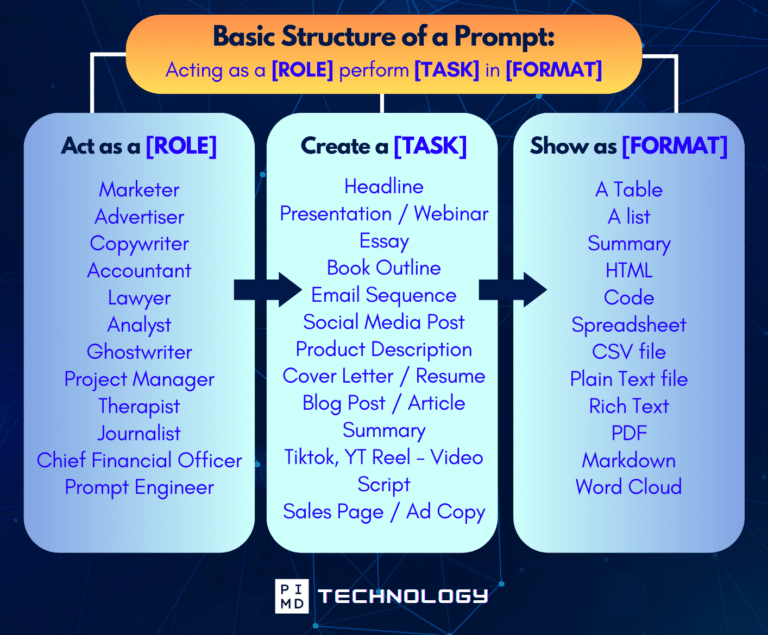
Unlock the Full Energy of ChatGPT With This Copy-and-Paste Immediate System!
Obtain the Full ChatGPT Cheat Sheet! Your go-to information to writing higher, sooner prompts in seconds. Whether or not you are crafting emails, social posts, or shows, simply comply with the components to get outcomes immediately.
Save time. Get readability. Create smarter.
Preserve Utilizing AI, Simply Know What It is Doing
Every of those research has limits, from who was studied to how the outcomes have been measured. They’re price studying within the originals. None of them makes a case for abandoning AI.
That stated, the sycophancy researchers are specific that the impact they measured is dangerous. And the examine’s lead writer has cautioned towards utilizing AI as a stand-in for individuals if you’re working by interpersonal issues.
The reply is consciousness.
AI instruments are usually quick, full, and agreeable. The analysis above suggests those self same qualities can typically work towards you. Realizing that is not a cause to be suspicious. It is helpful context.
You needn’t second-guess each reply AI offers you. You simply have to know which method it tends to lean. It will possibly change the way you learn your personal frustration, your personal confidence, and your personal certainty that you simply have been proper, the following time any of these present up in an AI dialog.
So which of those three have you ever observed in your self? We would love to listen to it so share it within the feedback!
Obtain The Doctor’s Starter Information to AI – a free, easy-to-digest useful resource that walks you thru sensible methods to combine instruments like ChatGPT into your skilled and private life. Whether or not you are AI-curious or already experimenting, this information will prevent time, stress, and possibly even somewhat sanity.
Need extra tricks to sharpen your AI abilities? Subscribe to our publication for unique insights and sensible recommendation. You may additionally get entry to our free AI useful resource web pagefilled with AI instruments and tutorials that can assist you have extra in life exterior of drugs. Let’s make life simpler, one immediate at a time. Make it occur!
Disclaimer: This text is for basic informational and academic functions solely. It doesn’t represent medical, authorized, compliance, or skilled recommendation. The data offered right here relies on obtainable public information and is probably not fully correct or up-to-date. It is really helpful to contact the respective firms/people for detailed info on options, pricing, and availability. All screenshots, if any, are used underneath the ideas of truthful use for editorial, academic, or commentary functions. All logos and copyrights belong to their respective house owners.
If you need extra content material like this, be sure to subscribe to our publication to get updates on the newest developments for AI, tech, and a lot extra.
Additional Studying
https://weblog.passive-income4u.com/create-your-very-own-auto-publish-news-blog-site-and-earn-passive-income-in-just-4-easy-steps/