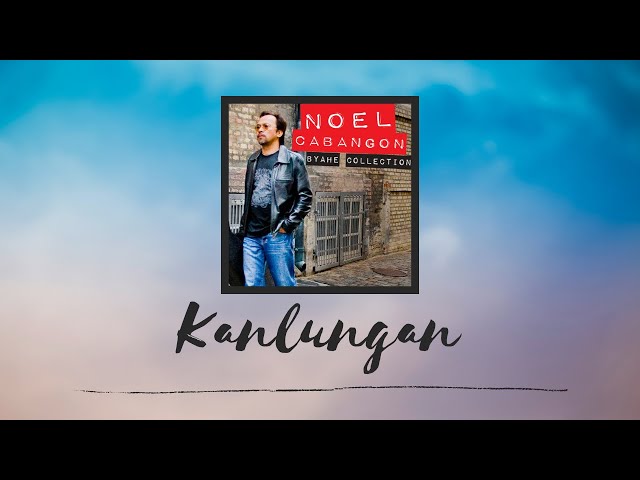
“Kanlungan” stays a permanent staple of Philippine widespread music, acknowledged throughout generations for its emotional weight and social relevance. And whereas Noel Cabangon has develop into synonymous with the tune, few know the story of the person who wrote it.
Rom Dongeto, the composer of “Kanlungan,” traces his inventive origins to the Nineteen Eighties protest motion, recounting the tune’s journey from an obscure monitor within the early Nineties to a timeless anthem.
Tondo roots
Dongeto’s activism started in Tondo, the place he joined pupil organizing efforts at Torres Excessive Faculty.
Throughout these adolescence, he attended a live performance on the College of the Philippines Diliman that includes outstanding protest musicians Jess Santiago, Paul Galang, and Susan Fernandez. Watching them carry out made him understand that music was excess of simply artwork.
“I used to be impressed…I mentioned, ‘That is what I wish to do. That is my vocation as an activist,’” mentioned Dongeto.
(I used to be impressed…I mentioned, ‘That is what I wish to do. That is what I would like my vocation to be as an activist.’)
Later in faculty at Far Jap College, Dongeto based the cultural group Sinaglahi, performing throughout the College Belt and Sta. Mesa.
Throughout this era, he crossed paths with Rene Boncocan, a Positive Arts pupil at UP Diliman and founding father of the artist collective Lingkod Sining.
From Bukluran to Buklod
Within the early ’80s, the artist community gave start to Bukluran ng Musikero para sa Bayan, an alliance of progressive bands, reminiscent of Nuklus Band and UP Sintunado, as a part of the rising motion towards the dictatorship.
As Dongeto described it, “That got here collectively to create progressive songs, carry out at rallies, assist consolidate the protest motion, and encourage many extra residents.”
(They got here collectively to create progressive songs, carry out at rallies, assist consolidate the protest motion, and encourage many extra individuals.)

The political panorama shifted dramatically following the assassination of Ninoy Aquino in 1983. The tragedy quickly accelerated mass mobilizations and galvanized artists, college students, and staff nationwide.
Round this time, Dongeto was launched to folks singer Noel Cabangon by the latter’s activist brother.
“As a result of it is my job to prepare, that is what I did. I went to see him at a live performance in Kamuning. I talked to him,” mentioned Dongeto, recalling how he recruited Cabangon to hitch their rising circle of cultural staff, paving the best way for his or her long-term musical partnership.
(Since my job is to prepare, that’s what I did. I went to see him at a gig in Kamuning. I spoke with him.)
EDSA years and past
The 1986 EDSA Folks Energy Revolution introduced a wave of political uncertainty to the motion, significantly amongst pupil activists. On the time, Cabangon was in Malaysia.
Reflecting on the pivotal night time Ferdinand Marcos Sr. fled the nation, Dongeto discovered himself in Morayta alongside pupil chief Lean Alejandro.
“Lean and I have been collectively in Morayta then…I can nonetheless bear in mind Lean was crying that night time and he mentioned, ‘Let’s not be depressed, the motion will proceed,’” he mentioned.
(Lean and I have been collectively in Morayta again then…I can nonetheless do not forget that Lean was crying that night time, and he mentioned, ‘Allow us to not lose coronary heart, the motion will proceed.’)
Returning house that night time, Dongeto channeled the lingering stress and uncertainty into the lyrics of “Ang Ating Awit,” a monitor that will later seem on Buklod’s second album, triangle (1991).
Within the aftermath of EDSA, Buklod dissolved as an umbrella group. Dongeto famous that fatigue had seemingly set in after years of relentless wrestle, and lots of believed that the combat had ended following the autumn of the dictatorship.
Dongeto, Cabangon, and Boncocan, nevertheless, made a acutely aware choice to hold on as a musical trio, retaining the identify.
“So what we did, we maintained the identify of Buklod as a musical group,” mentioned Dongeto.
(So what we did was, we maintained the identify Buklod as a musical group.)
The phantasm of a democratic transition was shattered in January 1987 when state troops underneath the Aquino administration opened hearth on protesting farmers in Manila — a tragedy now often known as the Mendiola Bloodbath.
This incident, in line with Dongeto, partly impressed the creation of Buklod’s debut album, Farm and Life (1988), a purely acoustic album which he fondly refers to as “traditional Buklod.”
Writing ‘Shelter’
“Kanlungan” would finally develop into a part of Buklod’s third album, On the Content material of Naturen (1992), a challenge supposed to succeed in a wider mainstream viewers whereas increasing their advocacy towards environmental consciousness.
Writing the tune was a fluid expertise for Dongeto, taking him simply two days to compose it. Not like earlier protest tracks like “Tatsulok” — the place he felt the heavy burden of political evaluation by an activist lens — the phrases and melody for “Kanlungan” merely flowed freely and naturally.
Dongeto famous that he didn’t really feel emotionally or intellectually exhausted after finishing it as a result of it got here straight from what he was feeling.
Although the tune’s vivid imagery leads many listeners to imagine Dongeto grew up in a rural coastal city, he clarifies that he wrote it in Tondo utilizing pure artistic creativeness.
For Dongeto, “Kanlungan” is greater than a nostalgic love tune; it’s an ecological lamentation on fragile ecosystems and human accountability.
“He additionally lamented, ‘Tsong, for those who let it go, for those who make a mistake right here, you won’t be capable of come again.,’” he shared.
(It contains a lamentation, ‘Buddy, for those who let this go, for those who make a mistake right here, you won’t be capable of come again.)
Dongeto emphasised the direct hyperlink between human affection and stewardship of nature: “As a result of regardless of how romantic your life is, if a storm hits you, the earth falls, the mountain falls, you are lifeless, proper? You are romantic, however you are lifeless… As a result of our errors can destroy us if we let it go.”
(Regardless of how romantic your life could also be, if a storm hits, if the bottom provides method or a mountain collapses, you’re lifeless, proper? You may be romantic, however you’d be lifeless… As a result of our personal errors can wipe us out if we depart them unaddressed.)
Via its poetic metaphor, the tune serves as an pressing reminder to safeguard our shared surroundings. Ultimately, nobody desires to destroy their very own sanctuary, solely to be left grieving within the ruins and asking, because the tune does: “Can yesterday be introduced again? (Can the previous be introduced again?)”
Industrial shift and controversy
In 2003, whereas finding out in the USA, Dongeto was stunned to obtain a name from the Philippines. It was Cabangon, who wished to debate licensing “Kanlungan” for a McDonald’s commercial. After clearing up considerations relating to copyright, Dongeto agreed.
The discharge of the advert, which reframed the tune round familial homecoming, triggered a backlash from nationwide democratic activists.
Critics referred to as the licensing a sellout, given McDonald’s standing as a logo of US imperialism. The friction was additional heightened by the advert’s visible narrative, which featured a member of the family in army uniform — a stark level of rivalry given the Armed Forces’ lengthy historical past of human rights violations within the nation. Neither Dongeto nor Cabangon knew the business’s particular storyline upfront.
Dongeto shared that he understood and revered the feelings of his fellow activists, however they stood by their choice. They wished to push the tune’s environmental and social themes past progressive circles and into most of the people, believing {that a} far wider viewers deserved to listen to their work.
Past the business
Whereas the McDonald’s business that elevated it to fame has lengthy light into reminiscence, “Kanlungan” transcended generations to develop into one of the crucial beloved Filipino songs. Its mainstream success cemented its standing in Philippine tradition and sealed Noel Cabangon as its definitive voice.
“Noel is definitely the voice of ‘Shelter.’ That is why when individuals say ‘Shelter,’ Noel instantly involves thoughts,” Dongeto acknowledged.
(Noel is really the voice of ‘Kanlungan.’ That’s the reason, each time ‘Kanlungan’ is talked about, individuals instantly consider Noel.)
“Kanlungan” broke into the mainstream by the business world that its creators as soon as stood aside from. Whether or not that journey represented compromise or cultural victory stays a matter of perspective.
However the tune survived the backlash, outgrew the commercial that made it well-known, and purchased a lifetime of its personal — persevering with to resonate as each a tune of longing and a warning towards the destruction of our pure sanctuary. – Rappler.com
https://weblog.passive-income4u.com/create-your-very-own-auto-publish-news-blog-site-and-earn-passive-income-in-just-4-easy-steps/
https://www.rappler.com/individuals/artists/filipino-composer-rom-dongeto-song-kanlungan/