CAINTA, Rizal – Ask residents of Barangay Sta. Rosa the place to seek out “Papay, the sepoy,” and so they can level you to P. Burgos Avenue, to an old-looking home simply earlier than an arch.
At lunchtime, 61-year-old Generoso “Papay” Sumulong carried a bowl of rice to a tiled bench throughout from his household’s home, one of many spots the place neighbors collect to move the time. After returning to the home, he was greeted by a bit of lady who wrapped her arms round his waist from behind and referred to as him “Pappy.”
Sumulong mentioned the nickname “Papay” was derived from Popeye the Sailor Manthe fictional sailor created by American cartoonist E.C. Segar, who first appeared within the newspaper sketch Thimble Theatre in 1929.
Sumulong, in the meantime, has develop into a recognizable determine in his personal group: a relative who as soon as took his niece’s daughter to highschool on his bicycle, a neighbor whom individuals method for instructions, and a longtime performer in Cainta’s senacle (Ardour play).
A dwelling face
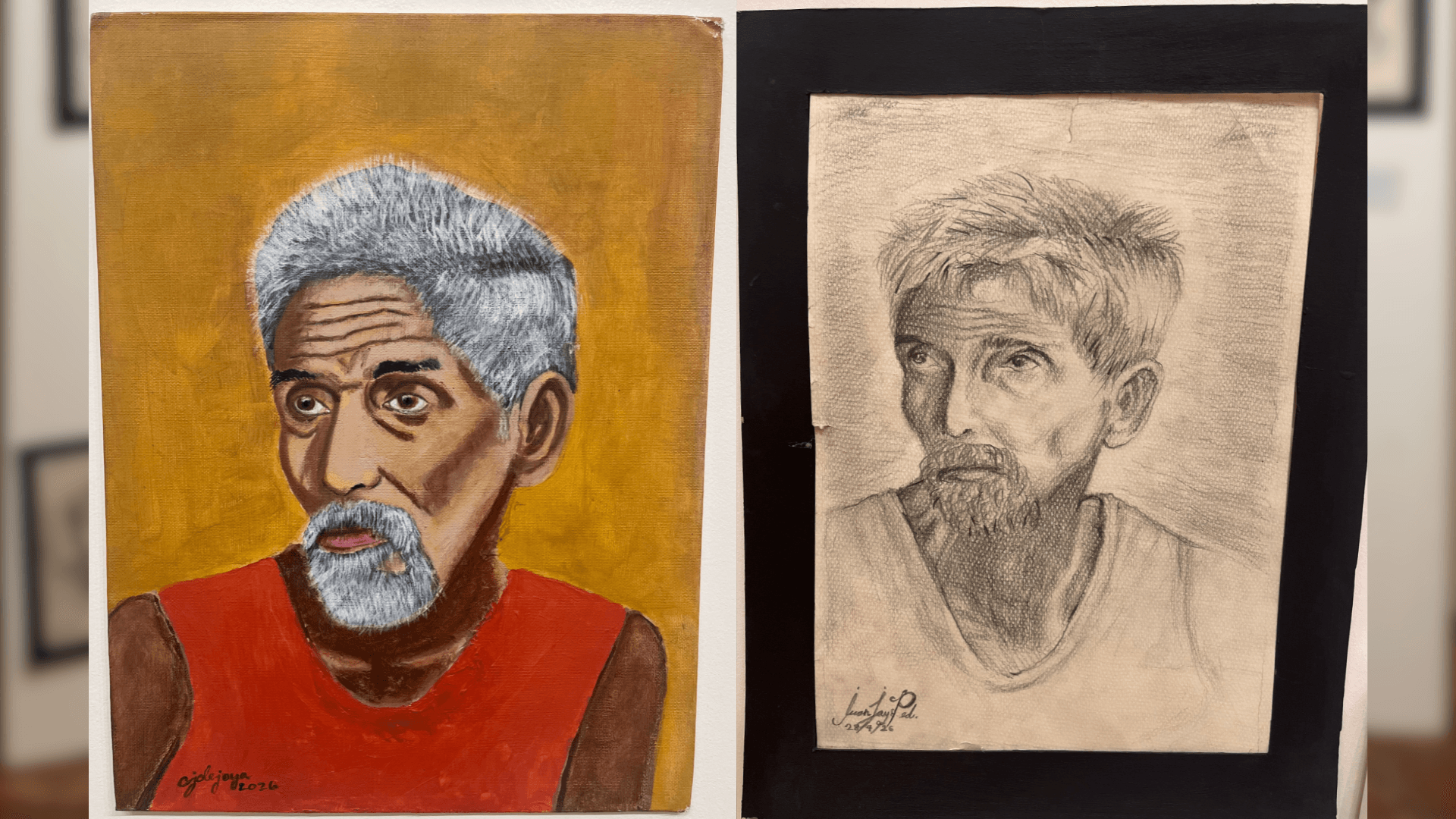
Sumulong’s face now has one other type of public presence. A big portrait of Sumulong hangs on the second ground of Museo Cainta, the place it types a part of the city’s effort to protect its sepoy heritage.
Created by artist Joel Rocafort, the seven-by-5.5-foot art work, titled Sepoydepicts Sumulong utilizing charcoal and turmeric.
In a Fb put up on September 8, Cainta Mayor Johnielle Keith “Equipment” Nieto described the portrait as “a face that represented the historical past of our nation” (a face that represents the historical past of our city).
Rocafort said the charcoal used to attract Sumulong’s face and the turmeric used to paint his headcloth have been supplies related to Cainta’s well-known suman and different conventional rice truffles. His piece went on show on the second ground of Museo ng Cainta when the area opened to the general public in early October.
The portrait drew reward from residents on Fb, with some calling Sumulong a “dwelling legend” (dwelling legend) and others commending Rocafort for bringing native historical past into public view.
However among the many congratulatory messages have been requires Sumulong to obtain an award, pension, or monetary help. Some commenters famous that he now not had common work and requested the native authorities to assist together with his each day bills.
The response raises a query past the art work itself: What does it imply to acknowledge the individuals who embody a city’s heritage, and what does that recognition appear like past a museum show?
Cainta’s historical past
Cainta’s official historical past traces the city’s sepoy heritage to the British invasion of Manila in 1762, when British forces introduced Indian troopers often called sepoys.
In accordance with the municipality’s websiteamong the troopers stayed in Cainta after the British withdrawal in 1764 and settled among the many native inhabitants. Their descendants stay a part of the city’s historic and cultural id.
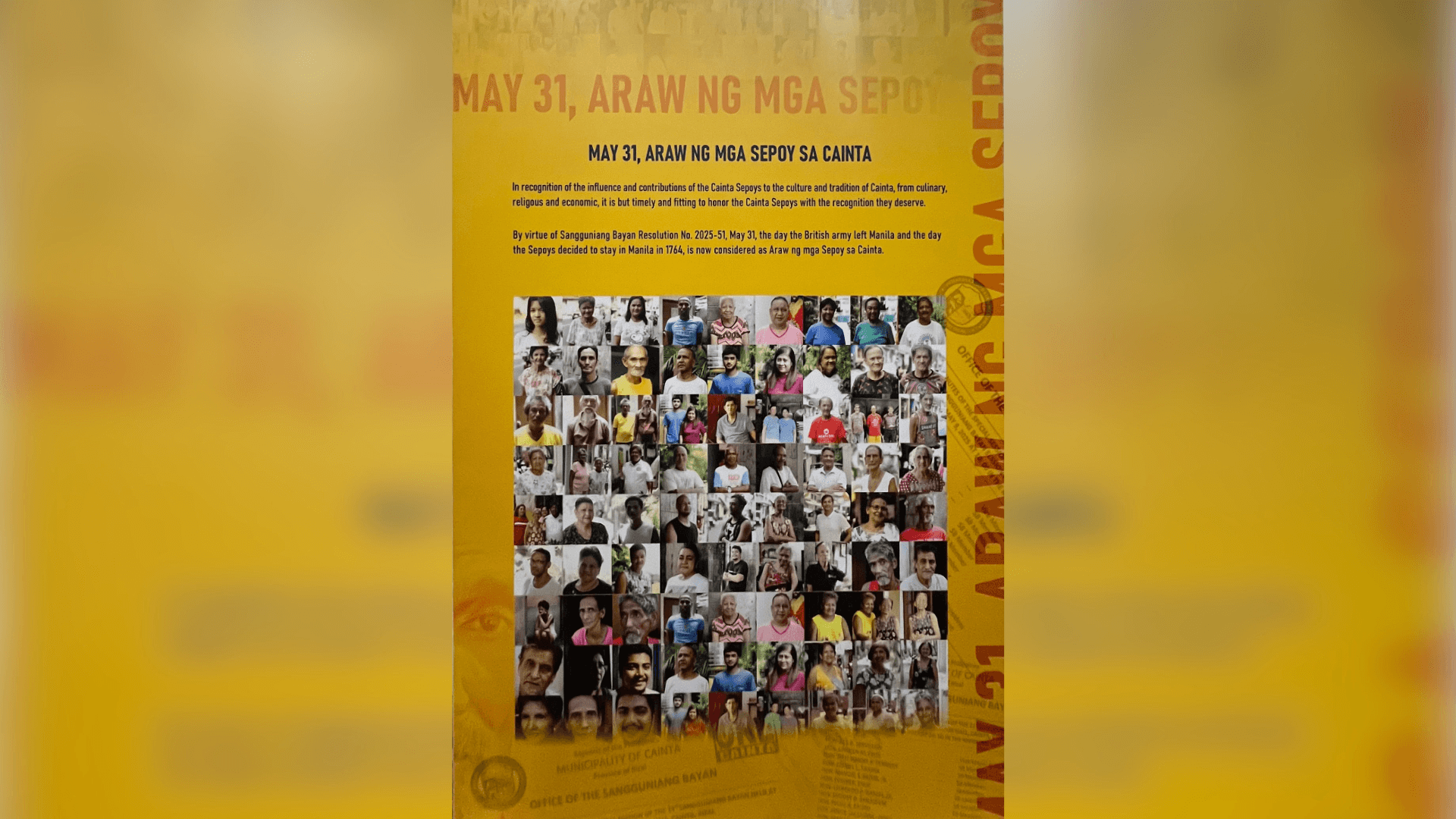
The city has additionally formalized its recognition of this heritage. Museum displays cite Sangguniang Bayan Decision No. 2025-51, which designates Might 31 as Day of the Sepoys in Cainta, in recognition of the group’s contributions to native tradition and custom.
For Barangay Sta. Rosa Chairman Richard dela Cruz, who mentioned his family traces its sepoy ancestry by means of his grandmother, Sumulong is a recognizable consultant of that historical past.
“His face is actually proper (His face is completely excellent for it),” Dela Cruz mentioned.
Older residents with related options had died, he added, leaving Sumulong among the many individuals who stay recognizable to the group.
Dela Cruz clarified, nevertheless, that Sumulong will not be Cainta’s oldest dwelling sepoy descendant. Different households within the municipality have older members, together with individuals of their 80s and past.

Sumulong mentioned his grandmother advised him about their household’s sepoy ancestry when he was a toddler. He may now not recall many particulars concerning the household’s origins, explaining that older family knew extra of the story.
For him, the connection to Cainta’s historical past can also be expressed by means of efficiency.
He mentioned he started collaborating within the senacle in 1976 and helped set up Kabataang Walang Sindak (KWS), his first group, earlier than becoming a member of The Romans Membership. He described the performances as a vow (spiritual vow).
In her e-book Semana Santa: Senacle and Penance within the City of Caintaformer Cainta mayor Atty. Maria Elenita “Elen” Nieto traces the city’s senacle custom to 1904, when residents of Barrio Dayap started staging the Ardour play. Over time, the custom developed into bigger productions involving actors, musicians, artisans and manufacturing groups.
Dela Cruz mentioned Sumulong was identified for portraying the excessive priest Annas and the biblical determine Samuel. Pictures he shared with Rappler present the 2 males throughout a 2009 Lenten observance. Dela Cruz mentioned Sumulong had been performing since his youthful years.

The barangay chairman and Sumulong grew to become pals by means of The Romans Membership, which additionally participates in Cainta’s Lenten spiritual observances.
Dela Cruz described their relationship as shut, saying Sumulong supported him even earlier than he grew to become barangay chairman.
Outdoors the body
Regardless of his longstanding involvement in native traditions, Sumulong has no common supply of revenue. He beforehand took welding jobs, however mentioned sickness and well being limitations have diminished the work he can do.
“Nothing. Generally, referred to as, welding within the solar,” he mentioned when requested about his livelihood.
(Nothing common. Generally somebody calls me to do welding work throughout the day.)
His niece, Evangeline Sumulong Jambalos, mentioned he nonetheless accepts occasional jobs and helps the household when wanted. She operates a small road meals enterprise in entrance of their home.

Jambalos recalled that Sumulong helped increase her daughter, taking her to and from faculty on his bicycle. He additionally helps with errands and arranging items for the household’s enterprise.
“That additionally helped quite a bit (He has additionally helped us quite a bit),” she mentioned.
Jambalos mentioned Sumulong generally receives cash and meals from family. A distant relative dwelling overseas beforehand paid him to have a tendency crops, and relations have contributed to his bills when wanted.
Jambalos recalled that she and her cousins pooled cash to organize a small celebration for Sumulong’s sixtieth birthday.
“Once we discovered (Papay) was a senior, I mentioned, ‘Alright, we’ll stroll with our cousins.’ (With) our cousins in Cogeo, we contributed,” she mentioned.
(Once we discovered that Papay can be a senior citizen, I mentioned, ‘Alright, us cousins will maintain it.’ Along with our cousins from Cogeo, all of us chipped in.)
Sumulong lives within the household dwelling with family from a number of generations. He by no means married, however stays a part of a family the place relations proceed to depend on and take care of each other.
The household was shocked once they realized that Sumulong’s picture can be displayed at Museo Cainta. Jambalos mentioned that they had not identified the municipality supposed to exhibit the art work till different individuals started telling them about it.
“He did not suppose he would come out of that,” she mentioned.
(He by no means anticipated to seem in one thing like that.)
She acknowledged the general public requires help, however mentioned the household was not asking others to solicit assistance on Sumulong’s behalf. Any help, she mentioned, ought to come from the initiative of these keen to offer it.
Sumulong was equally noncommittal when requested whether or not he wished specific help from the native authorities.
“What they’ve to supply. I can not do something anymore. What they wish to give,” he mentioned.
(No matter they provide. There may be nothing I can do about it; no matter they select to provide.)
He added that he would settle for no matter assist was supplied slightly than demand a certain quantity or type of assist.
What recognition means
The requires monetary help have additionally raised questions on what advantages Sumulong could qualify for.
Sumulong mentioned he had accomplished paperwork for help however was advised he may obtain advantages solely at age 65. His niece, in the meantime, mentioned the household understood that he was too younger for the Expanded Centenarians Act money reward, which is reserved for Filipinos reaching the milestone ages of 80, 85, 90, 95 and 100.
These are distinct from the broader advantages out there to senior residents. Republic Act No. 9994 defines a senior citizen as a resident Filipino aged 60 or older, though eligibility for specific types of monetary help is dependent upon this system’s necessities.
For Sumulong’s household, recognition will not be solely about what the native authorities may present. Additionally it is mirrored within the on a regular basis methods Sumulong has contributed to their lives and the neighborhood he has referred to as dwelling since childhood.
For the municipality, his portrait gives a visual solution to protect part of Cainta’s previous. His a long time within the senacle additionally place him inside a convention sustained not solely by museum shows however by individuals who proceed to carry out, manage, and move their practices on to youthful generations.
The portrait offers Cainta’s sepoy heritage a recognizable face. However as residents’ feedback recommend, honoring an individual’s place in historical past and supporting the individual behind that historical past are separate questions. – Rappler.com
Dominique Astucia is a Rappler intern learning BA Journalism on the College of Santo Tomas.
https://weblog.passive-income4u.com/create-your-very-own-auto-publish-news-blog-site-and-earn-passive-income-in-just-4-easy-steps/
https://www.rappler.com/individuals/human-interest/cainta-rizal-sepoy-portrait-heritage/