Key Factors
- The Debt-Free Faculty Act of 2026, S. 5403 and H.R. 10455, would match state funding for public faculties greenback for greenback if states decide to protecting college students’ full unmet want, not simply tuition.
- States must cap tuition will increase at inflation, preserve funding, and undertake five-year plans, whereas a separate $3 billion program would fund need-based help at HBCUs, Tribal Faculties, and different minority-serving establishments.
- The invoice would additionally open Pell Grants and different federal help to sure DREAMers, and it has solely Democratic cosponsors after 4 earlier variations did not advance.
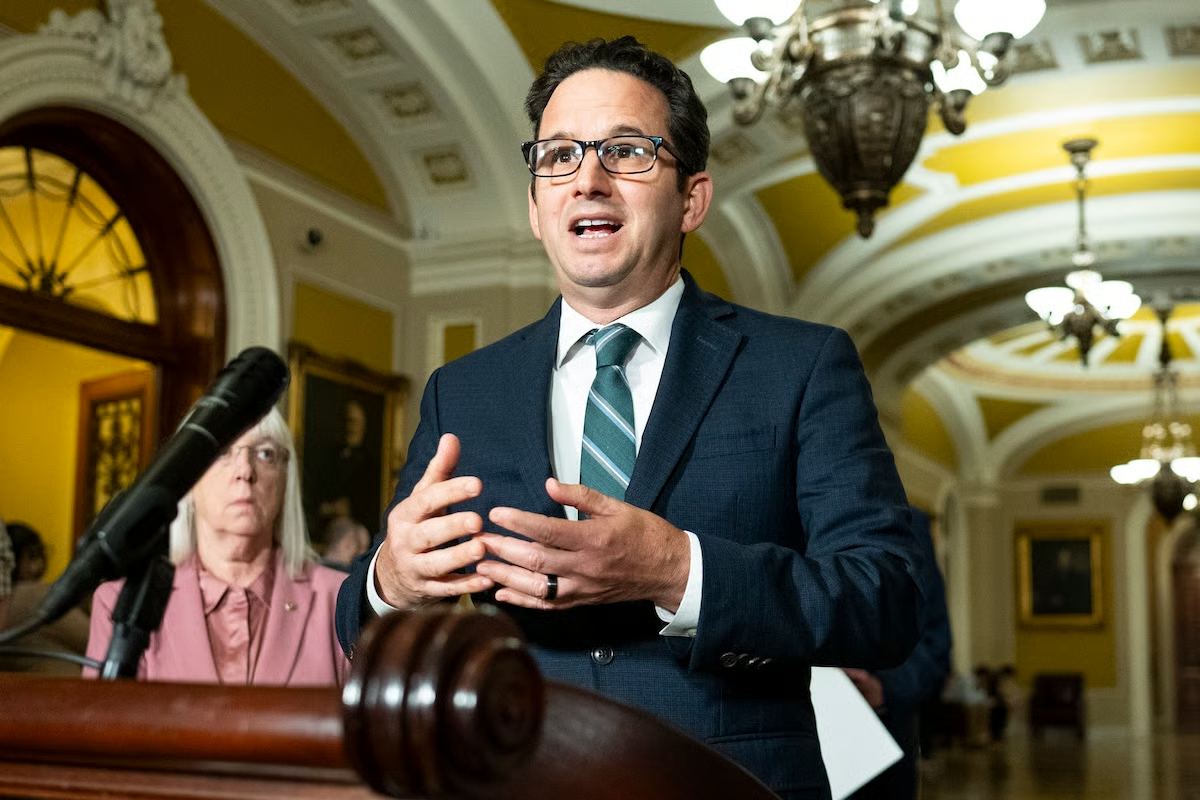
Sen. Brian Schatz (D-HI) launched the Debt-Free Faculty Act of 2026 (S. 5403) final month. Rep. Mark Pocan (D-WI) launched the Home model (H.R. 10455) to be a companion invoice. The payments would create federal-state partnerships so college students can attend public faculties of their residence state with out borrowing, they usually goal serving to households cowl unmet want.
“Scholar debt isn’t nearly tuition—it’s books, housing, provides, and meals,” Pocan mentioned, in line with Maui Now’s report on the invoice. The Senate invoice has 9 Democratic cosponsors, and the Home invoice has 18.
Schatz and Pocan first launched the thought in 2018, as free-tuition proposals gained floor and states started providing free neighborhood school.
Save For Later
Would you want to save lots of this?
Electronic mail AddressSave This
Web site
Why It Issues
Tuition is the one of many least expensive components of the price at public faculties. The Faculty Board places common 2025-26 in-state tuition and charges at public four-year faculties at $11,950, however the full pupil finances is $30,990 as soon as housing, meals, books, and transportation are included. After grant help, common web tuition is just about $2,300, so residing prices drive most borrowing.
That’s why the common price of faculty in 2026 appears so completely different from the sticker tuition.
And pupil mortgage borrowing stays a key strategy to pay for school. In accordance with the Faculty Board, 47% of 2023-24 bachelor’s diploma recipients from private and non-private nonprofit four-year faculties borrowed, averaging $29,560. That’s consistent with the common pupil mortgage debt for current graduates, and it’s the debt this invoice goals to switch with grant help.
How The Federal-State Partnership Would Work
The S. 5403 invoice units up this system like this. States would select whether or not to hitch, so the profit would rely upon the place a pupil lives, very similar to state 529 plan tax advantages do right this moment:
- Federal match: A collaborating state’s grant equals its web state working assist for public faculties. Benefit help, capital initiatives, analysis, hospitals, and athletics don’t rely towards that complete.
- Spending order: Cash first covers unmet want for Pell Grant recipients, then different college students by monetary want. As much as 1% can go to administration, and none can go to endowments or athletic venues.
- Unmet want: Value of attendance at an in-state public school minus the coed’s Scholar Assist Index and federal, state, and native grants.
- Tuition cap: Tuition and charges keep at their degree on the date the invoice turns into regulation, with yearly will increase restricted to inflation.
- Funding ground: State assist per full-time pupil can’t fall under its prior three-year common.
- Advantages outreach: States should assist college students enroll in Medicaid, SNAP, TANF, and WIC (just like what the BASIC Act is proposing).
States would submit five-year plans with yearly benchmarks to achieve debt-free school. The invoice authorizes $84 billion for fiscal 2027, then “such sums as could also be essential” by fiscal 2036.
Congress would nonetheless want to offer that cash annually, the identical finances struggle that has left the Pell Grant program dealing with a shortfall.
.tci-debt-free-college-act{font-family:inherit;coloration:#141414;border:2px strong #141414;border-radius:8px;overflow:hidden;margin:24px 0;background:#fff}
.tci-debt-free-college-act .tci-debt-free-college-act-head{background:#141414;coloration:#fff;padding:14px 18px;font-weight:700;font-size:18px;line-height:1.3}
.tci-debt-free-college-act .tci-debt-free-college-act-head span{coloration:#f6c061}
.tci-debt-free-college-act desk{width:100%;border-collapse:collapse;font-size:15px}
.tci-debt-free-college-act th{background:#f9f7f5;coloration:#55504a;text-transform:uppercase;font-size:12px;letter-spacing:.05em;text-align:left;padding:10px 14px;border-bottom:1px strong #e5e0d8}
.tci-debt-free-college-act td{padding:11px 14px;border-bottom:1px strong #e5e0d8;vertical-align:prime}
.tci-debt-free-college-act tbody tr:nth-child(even) td{background:#fcfbf9}
.tci-debt-free-college-act td.tci-debt-free-college-act-label{font-weight:700}
.tci-debt-free-college-act .tci-debt-free-college-act-yes{show:inline-block;background:#dff3e4;coloration:#14532d;font-size:12px;font-weight:700;padding:3px 10px;border-radius:999px}
.tci-debt-free-college-act .tci-debt-free-college-act-no{show:inline-block;background:#fde2e2;coloration:#7f1d1d;font-size:12px;font-weight:700;padding:3px 10px;border-radius:999px}
.tci-debt-free-college-act .tci-debt-free-college-act-mixed{show:inline-block;background:#f6c061;coloration:#141414;font-size:12px;font-weight:700;padding:3px 10px;border-radius:999px}
.tci-debt-free-college-act .tci-debt-free-college-act-foot{background:#f9f7f5;coloration:#8a8378;font-size:12px;padding:9px 14px}
@media (max-width:640px){
.tci-debt-free-college-act thead{show:none}
.tci-debt-free-college-act desk,.tci-debt-free-college-act tbody,.tci-debt-free-college-act tr,.tci-debt-free-college-act td{show:block;width:100%;box-sizing:border-box}
.tci-debt-free-college-act tr{border-bottom:1px strong #e5e0d8;padding:6px 0}
.tci-debt-free-college-act td{border-bottom:none;padding:5px 14px;show:flex;justify-content:space-between;hole:12px;text-align:proper}
.tci-debt-free-college-act td.tci-debt-free-college-act-label{font-size:16px;padding-top:10px;text-align:left}
.tci-debt-free-college-act td(data-label)::earlier than{content material:attr(data-label);coloration:#55504a;font-size:12px;text-transform:uppercase;letter-spacing:.05em;font-weight:400;text-align:left}
}
How The Debt-Free Faculty Act Would Work
| Provision | What The Invoice Requires |
|---|---|
| Federal Match | Equal to state working assist for public faculties |
| First In Line | Pell Grant recipients with unmet want |
| Lined Prices | Full price of attendance at in-state public faculties |
| Tuition Cap | Frozen at enactment, then inflation will increase solely |
| State Funding Flooring | Per-student assist at prior 3-year common |
| MSI Grants | $3 billion for HBCUs, TCUs, and different MSIs |
| DREAMers | Eligible for Pell Grants and federal help |
| Personal Faculties | Excluded from state partnership |
Supply: S. 5403, H.R. 10455. The Faculty Investor.
Who Would Profit Most?
Pell Grant recipients at in-state public faculties come first below the invoice, so low-income college students would see assist earlier than anybody else. Personal faculties are excluded from the state partnership, which issues for households who already weigh the worth of in-state tuition at public faculties. Neighborhood faculties are included, and the HBCU and minority-serving establishment grants would additionally attain non-public nonprofit faculties the place at the very least 35% of scholars obtain Pell.
Right here’s how the unmet want math may work. A pupil with a $0 or damaging SAI at a public four-year school with the Faculty Board’s common $30,990 finances would obtain the utmost Pell Grant of $7,395 for 2026-27. If the state provides $5,000 in grants, the coed nonetheless faces about $18,600 in unmet want. At this time that hole will get stuffed with loans, work hours, or household assist, and the invoice would purpose to cowl it with grant help as an alternative.
The invoice would additionally broaden federal help to sure DREAMers. Undocumented college students, together with DACA recipients, can’t get federal pupil help right this moment, in line with a Federal Scholar Assist truth sheet.
Beneath the invoice, a pupil who entered the U.S. earlier than age 16 and completed highschool right here, accomplished two years of faculty, or served 4 years within the uniformed companies may qualify for Pell Grants and different federal help. That may present up within the Pell Grant eligibility guidelines for the primary time.
How This Connects
Federal assist would arrive as states pull again. SHEEO reported that state schooling appropriations fell 1.0% to $12,082 per full-time pupil in fiscal 2025, the primary per-student decline since 2012.
States like New Mexico already cowl full tuition and charges at public faculties, however not books or housing. For households dealing with a spot now, our steps to shut a last-minute tuition hole nonetheless apply.
What’s Subsequent
S. 5403 went to the Senate HELP Committee, and H.R. 10455 went to the Home Schooling and Workforce Committee. Schatz and Pocan launched variations in 2018, 2019, 2021, and 2023, and none acquired a committee vote.
No Congressional Finances Workplace estimate is out there. With Republicans controlling each chambers and the 119th Congress ending January 3, 2027, the invoice works extra as a marker for a future Democratic majority than a near-term change. Households ought to preserve planning round present help, beginning with the 2027-28 SAI chart.
Editor: Colin Graves
The submit Debt-Free Faculty Act Returns With A Federal Match For States That Cowl Full Faculty Prices appeared first on The Faculty Investor.
https://weblog.passive-income4u.com/create-your-very-own-auto-publish-news-blog-site-and-earn-passive-income-in-just-4-easy-steps/