Key Takeaways
- Mehul Nariyawala and his cofounder Navneet Dalal wrote a 21-page downside memo specializing in why prospects disliked current robotic vacuums.
- They designed Matic to be a privacy-focused dwelling robotic that simply navigates by way of the spills and messes of a typical family.
- Matic has bought greater than 13,000 robots since its November 2024 launch, producing an estimated $15 million to $20 million in income.
For Mehul Nariyawala, a family product’s pricey mistake was the jumping-off level for a $20 million firm. Nariyawala had a $1,000 robotic vacuum, which he watched destroy a rug in his dwelling whereas he was away. The machine had highly effective suction however wasn’t clever sufficient to free itself from the rug. It acquired caught, saved operating for 45 minutes and tore away a patch of the rug.
“That was a realization that, Wow, this factor is absolutely silly,” Nariyawala tells Entrepreneur in a brand new interview. Worse, he discovered that many robotic vacuums couldn’t reliably return to their very own charging docks. “To me, it’s an oxymoron to name these items robots as a result of if it’s a robotic and it will probably’t even discover its personal dock, what good is it?” he says.
That irritation planted the seed for Matic, the home-robotics firm Nariyawala co-founded with CEO Navneet Dalal after the pair left Google Nest in 2017. Nariyawala is Matic’s president. Their objective was not merely to make one other robotic vacuum. It was to construct a machine that might safely and quietly navigate the dysfunction of an precise dwelling, avoiding pets, toys, cords, spills, furnishings and the folks transferring by way of it.
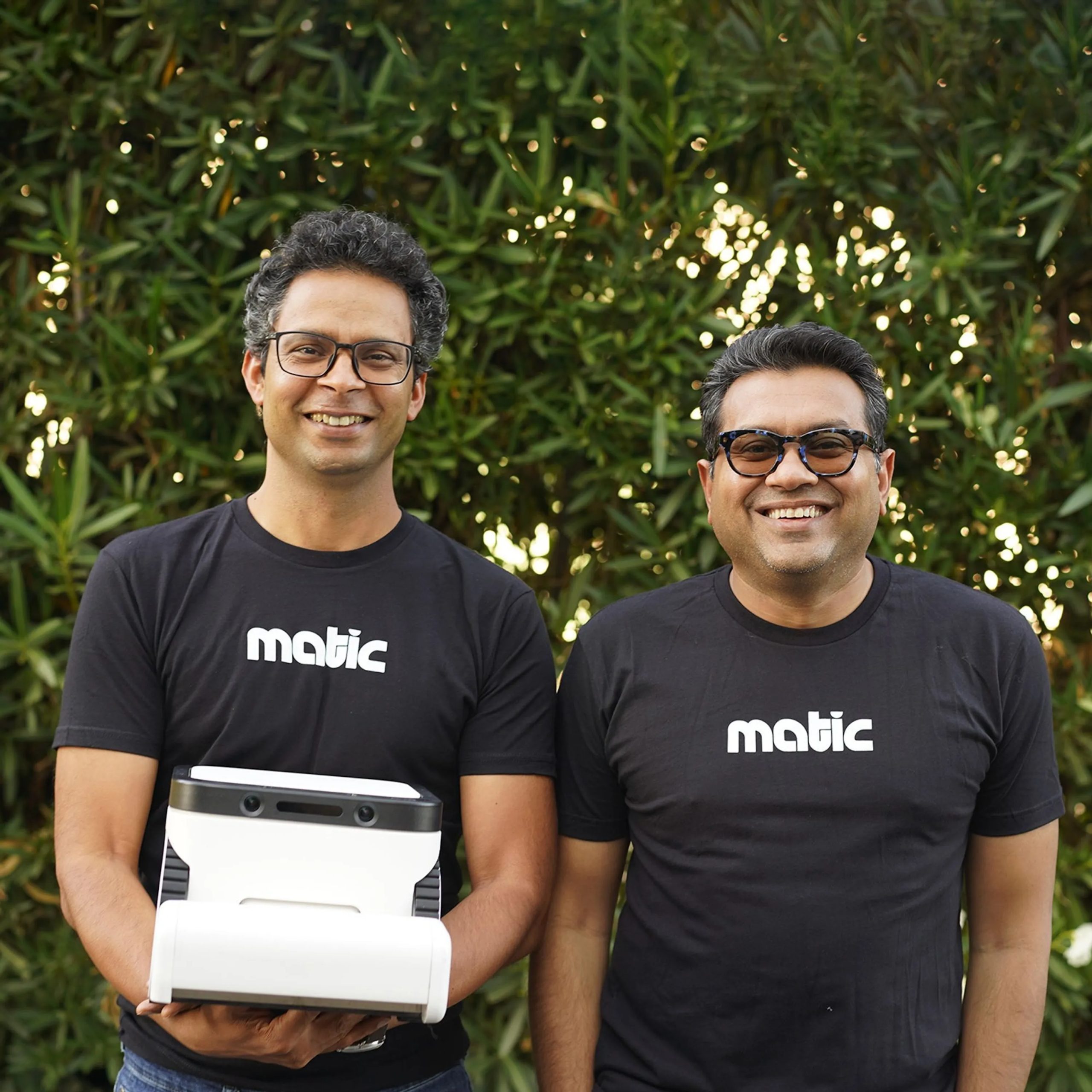
Navneet Dalal (left) and Mehul Nariyawala (proper). Credit score: Matic
Nariyawala says Matic has bought greater than 13,000 robots since its November 2024 launch, producing an estimated $15 million to $20 million in income. Matic’s robotic vacuum prices $1,495. Nariyawala mentioned the corporate employs about 110 folks and is aiming to promote 30,000 robots by year-end.
Outlining the issue
Earlier than they began constructing Matic, the co-founders did one thing much less glamorous: They wrote a 21-page “downside memo.”
As an alternative of leaping to an answer, Nariyawala says, they requested what prospects disliked about present merchandise, why robotic vacuums failed them and what a genuinely helpful dwelling robotic would wish to do.
“We simply saved going many times and once more at each degree till we deeply understood the issue,” he says.
That course of ultimately produced Matic’s first product, a privacy-focused robotic vacuum designed round laptop imaginative and prescient, on-device processing and a extra human-like understanding of a house.
Begin with the issue
Nariyawala’s path to Matic started in India, the place he grew up. He moved to america in highschool and attended the College of Maryland for undergraduate research. After graduating in 1999, he joined a startup based mostly in Northern Virginia that burned by way of $30 million in 11 months.
“It turned out to be a spectacular failure,” he says. “That was my how-not-to-ruin-a-startup 101.”
After a stint in consulting at Accenture and an MBA from Chicago Sales space, Nariyawala joined Like.com in 2005, an early Silicon Valley computer-vision startup. There, he met Dalal, a researcher and engineer whose doctoral work turned influential within the area of classical laptop imaginative and prescient.
Google acquired Like.com in 2010. Nariyawala and Dalal then shaped Flutter, a gesture-recognition startup that permit folks management iTunes and Spotify utilizing a webcam. Customers might wave to vary a track or make a shushing movement to mute audio. The app reached No. 1 in Apple’s Mac App Retailer in 73 international locations in 2012, in response to Nariyawala.
However the founders realized an important product lesson: A flashy interface doesn’t essentially create a enterprise.
“Nobody wakes up within the morning and says, ‘Immediately I’m gonna purchase gestures,’” Nariyawala says. “It’s a extremely cool app however not essentially a product that may probably generate income.”
One other acquisition
Google acquired Flutter in late 2013. The founders later moved to Nest, the place Nariyawala led merchandise within the Nest digicam portfolio, together with the Nest Cam, Nest Good day doorbell and associated gadgets. Dalal led notion and computer-vision work on the identical set of merchandise.
At Nest, Nariyawala realized {that a} product is greater than its {hardware} or software program. It encompasses each level a buyer encounters the corporate, from studying in regards to the product to buying, onboarding, receiving assist and deciding whether or not to remain loyal to the model or not.
“One of many greatest learnings there was that it’s actually nearly the whole expertise of the product,” he says.
Buyer assist, he argues, is particularly necessary for an costly shopper system. “Once they attain out to you, that’s the primary time they’re assembly people behind Matic,” he says. “How we reply to that’s truly actually, actually crucial.”
A privacy-first strategy
Matic’s founding concept grew from each skilled expertise and household life. Whereas engaged on Nest cameras, Nariyawala observed that many indoor cameras have been pointed exterior. He might personally relate. His spouse had finished the identical factor, and after leaving Google, he says she didn’t need any indoor cameras monitoring their dwelling.
“That’s once I realized that for her, privateness mattered,” he says.
The founders concluded they didn’t need to commerce away privateness merely to automate a family chore. They needed a robotic that might course of its understanding of the house regionally quite than function like an always-recording cloud-connected digicam.
“As fathers and householders, we don’t need to jeopardize privateness simply to maintain our flooring clear,” Nariyawala says. “Why would I invite one thing that’s recording them and placing it out onto the cloud?”
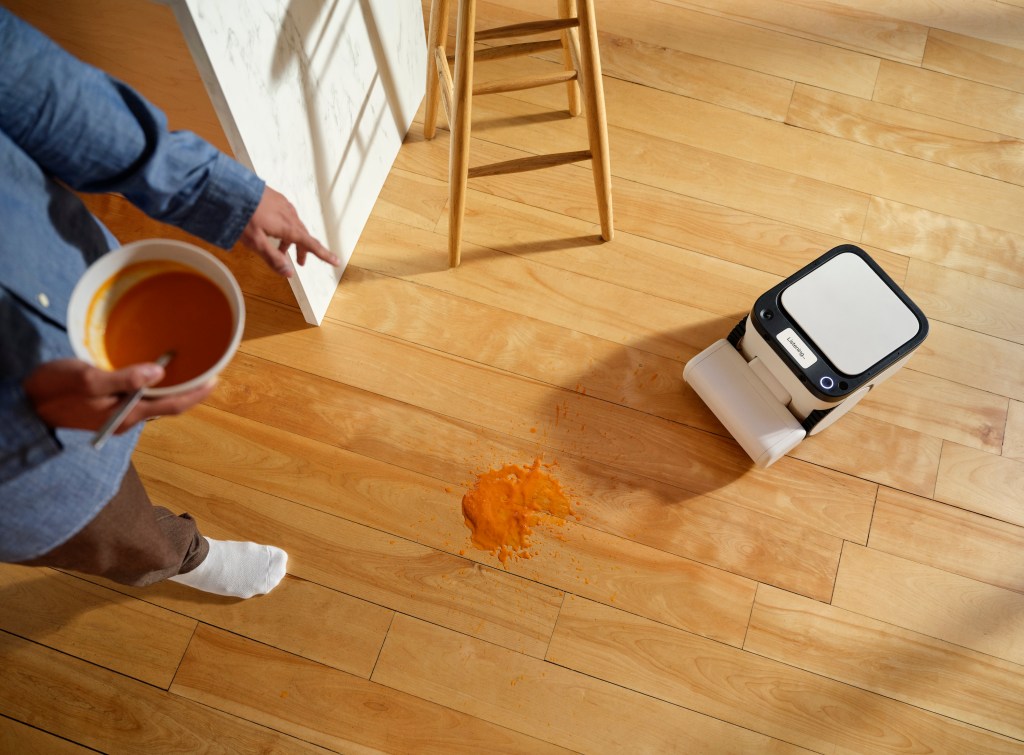 Matic robotic. Credit score: Matic
The pair noticed a broader alternative within the hole between the robotics ambitions rising in self-driving automobiles and the mediocre efficiency of family cleansing robots. If corporations believed they might develop autos able to safely navigating roads, Nariyawala puzzled, why was nobody making a family robotic that might transfer by way of a lounge with out crashing into objects?
Matic’s distinctive reply to cluttered properties
Nariyawala says that properties are among the many most tough environments for robots as a result of they’re cluttered, dynamic, and extremely private. Furnishings shifts. Lighting adjustments. Kids depart toys out. Pets cross a room. A twine could also be on the ground sooner or later and gone the following.
Matic’s reply was a vision-based system constructed round two RGB cameras and native computing. Slightly than use the flat, round form frequent in robotic vacuums, the corporate opted for a taller machine that provides its cameras a extra helpful perspective of the room.
“We needed to construct a vantage level that was rather more like a human crawling youngster,” Nariyawala says.
That idea displays Dalal’s broader philosophy: Don’t wager in opposition to nature. Human beings study to understand their environment earlier than they study extra advanced expertise, Nariyawala says. Younger kids study the place they will stroll, what they need to keep away from, learn how to get from one room to a different, and the way to not fall down stairs. Matic’s early work centered on giving a robotic a few of those self same foundational skills.
“The indoor world is fully constructed by people for people,” he says.
Self-funding the corporate
Nariyawala and Dalal didn’t instantly search enterprise funding. Having based corporations earlier than and seen what occurs after an acquisition, they needed to construct Matic for the lengthy haul. Their ambition prolonged past cleansing flooring.
“We’re actually constructing the Apple of dwelling robotics,” Nariyawala says.
That long-term imaginative and prescient knowledgeable an uncommon early resolution. The cofounders self-funded Matic for roughly its first yr and a half. They agreed to not increase exterior capital till that they had a working prototype and had addressed main technical dangers.
“Elevating funding isn’t straightforward, however when you’ve gotten gone by way of an exit and also you attempt to do a second startup, it’s barely simpler,” Nariyawala says. “However as a result of it’s barely simpler, you don’t truly spend extra time considering by way of and growing your concept, and that generally performs a catastrophic (function).”
The crew centered on proving key capabilities: depth notion utilizing two cameras, voice and gesture recognition, quieter cleansing and a wheel-base design. Its first prototype arrived in 2018. By spring 2019, it had developed an early demonstration during which an individual might communicate to the robotic, level to a multitude and inform it to scrub a selected spot.
Solely then did the founders start elevating cash. “Enterprise capital funding, or institutional funding, is like rocket gasoline,” Nariyawala says. “The very best time to go get rocket gasoline is when your rocket is prepared and docked.”
In 2019, Matic attracted early funding from entrepreneurs together with Jack Dorsey, Stripe cofounders Patrick and John Collison and Nest cofounder Matt Rogers.
An extended journey than anticipated
Matic has raised $115 million in exterior funding up to now, with extra private funding from the founders.
The journey took longer than deliberate. The founders initially thought they may ship round 2020 or 2021. Matic as an alternative started delivery in November 2024.
In August, the U.S. Federal Communications Fee (FCC) banned foreign-made superior robots, together with robotic vacuums. The ruling prohibited new foreign-made fashions from getting future import and gross sales approval.
Nariyawala says that the ban doesn’t have an effect on Matic and as an alternative makes it “simpler” for the corporate to construct robots within the U.S. From day one, the corporate has been centered on safety and privateness, he says. Their current robotic is already grandfathered in on the market within the U.S., and their subsequent set of robots is on target to maneuver by way of the FCC ban. The corporate is set to supply its elements within the U.S.
“We can’t assure the safety and privateness of the robotic until we assemble it in america,” Nariyawala says. “So for us, designing and assembling it right here and placing all of the software program right here was not an optionally available factor. That was one thing we all the time needed to do, and we did that from 2017 onwards.”
Nariyawala says he reached out to the FCC after the ban was introduced and confirmed them a path to how Matic will supply as many elements within the U.S. as attainable transferring ahead.
“The FCC and authorities have been very a lot accommodating and understanding what we’re doing,” Nariyawala says. “Their whole level is that sure, you guys are on target. So so long as it’s on target, we’re supportive of it. We simply have to indicate that we’re pushing in that path.”
An clever machine
Matic now positions its vacuum as an clever, autonomous machine quite than a tool that follows a hard and fast or random cleansing routine. Nariyawala contrasts that imaginative and prescient with early robotic vacuums, which he compares to a blindfolded particular person bouncing from wall to wall.
“{Hardware} is difficult,” Nariyawala says. “If {hardware} is 10 instances more durable than software program, then constructing a robotic is 100 instances more durable than software program.”
Many present robotic vacuums use a type of LiDAR sensing, he says, which may also help a machine detect partitions and sure obstacles however doesn’t present sufficient context to tell apart amongst an individual, a cupboard, a pet, or a pile of garments.
“It has no contextual consciousness,” he says.
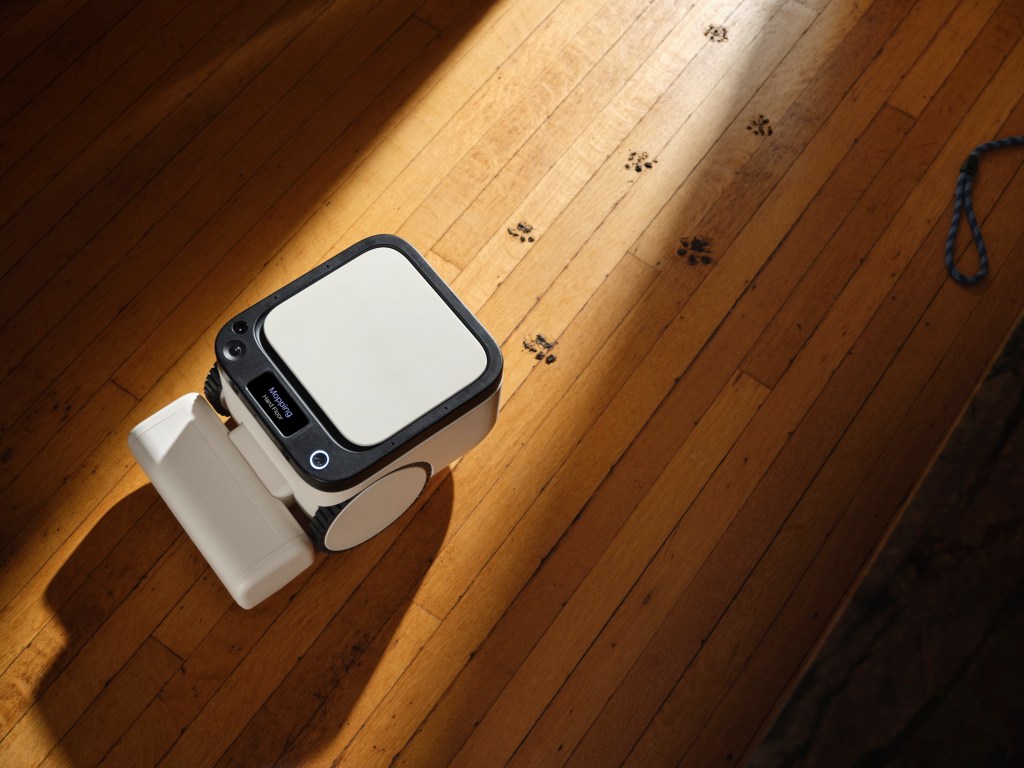 Credit score: Matic
Matic’s system is supposed to create a three-dimensional, evolving understanding of a house. Nariyawala describes this as an “absolute map,” quite than a map that solely orients the robotic relative to its charging dock. The excellence issues, he says, as a result of a robotic ought to be capable of perceive its setting even when the dock is moved.
A game-changing replace
Matic lately launched “Cues,” an replace enabling customers to speak with the robotic by way of voice instructions and gestures. By the replace, the robotic can perceive greater than 70 spoken languages, and customers can level to an space they need cleaned to have the robotic deal with a multitude.
The robotic has an accompanying app that is still essential for onboarding and detailed settings, corresponding to setting no-go zones, however the firm needs routine interplay to really feel extra pure.
“If that is really an clever robotic, then we should always be capable of talk with it in the identical precise manner that we talk with one another,” Nariyawala says.
The strategy is designed for households that embrace kids, older adults, individuals who don’t need to use one other app and members of the family who might not communicate English — customized experiences for various customers.
Progress methods
Matic has centered much less on conventional advertising and marketing than on getting prospects to speak in regards to the product. Nariyawala says roughly two-thirds of orders have come by way of word-of-mouth referrals, and the corporate did little advertising and marketing earlier than this yr.
“The one evergreen advertising and marketing channel is a good product,” he says. “Whenever you construct one thing actually surprising, pleasant that prospects love, they will’t assist speaking about it.”
For Nariyawala, Matic’s floor-cleaning robotic is just the primary stage. The corporate’s roadmap imagines a “trusted organizer” that may deal with easier duties, adopted by a extra succesful family robotic that may tackle advanced planning and execution.
However he returns repeatedly to the identical precept that formed the corporate’s authentic 21-page memo: The know-how is just not the product. The client’s downside is.
“Prospects don’t need {hardware} or robots,” he says. “They need an answer to their issues.”
https://weblog.passive-income4u.com/create-your-very-own-auto-publish-news-blog-site-and-earn-passive-income-in-just-4-easy-steps/