Key Factors
- Obligatory scholar charges can add hundreds of {dollars} on high of marketed tuition. At SMU, the overall scholar payment alone is ready to achieve $8,080 per yr in 2026-27.
- Some public universities cost obligatory athletic charges of $2,000 to $3,000 per scholar. James Madison College pulled in a document $55.53 million from obligatory scholar charges for athletics in 2024, with 73% of its athletic price range lined by scholar charges.
- Many elite non-public faculties require a separate “scholar contribution” of $2,000 to $5,000 a yr that monetary support won’t cowl, even for households with $0 anticipated household contribution.
Households evaluating schools normally begin with the printed tuition quantity. That quantity isn’t what they may really owe. Whereas most households do not pay sticker value, one other line merchandise is turning into a surprising addition: charges.
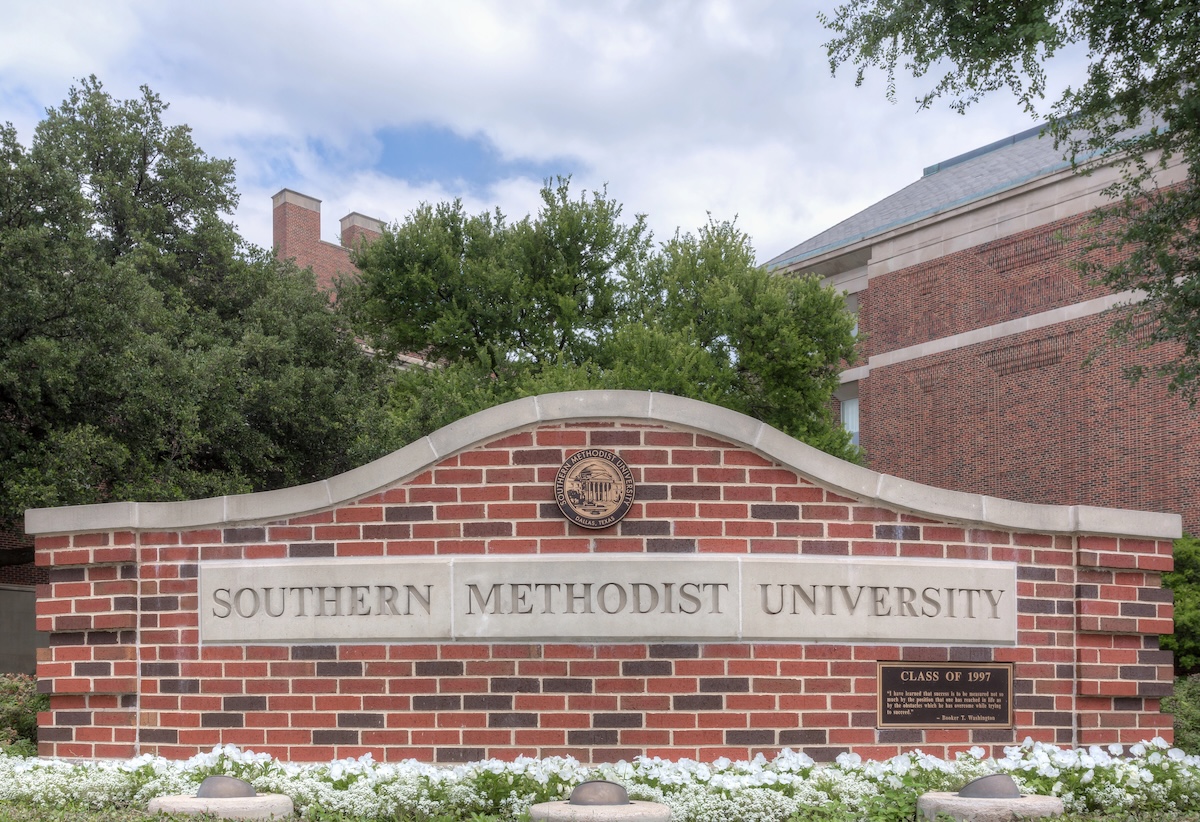
Buried within the fantastic print, the obligatory scholar payment can add $1,000, $4,000, and even $8,000 to the annual invoice earlier than housing and meals. At Southern Methodist College (SMU), the overall scholar payment is rising to $4,040 per time period in 2026-27, or roughly $8,080 throughout two semesters, on high of $63,376 in undergraduate tuition and costs printed for 2026-27.
Stack on the opposite expenses schools escape from headline tuition (recreation charges, scholar well being charges, transit charges, expertise charges, athletic charges) and the hole between sticker tuition and actual out-of-pocket value can run into 5 figures. For households constructing a university price range, the mathematics will get more durable nonetheless when a personal college additionally requires a scholar or guardian contribution that monetary support will not be overlaying.
These are the prices that make true apples-to-apples comparisons between faculties virtually not possible and not using a spreadsheet.
Would you want to avoid wasting this?
We’ll e mail this text to you, so you may come again to it later!
Why Obligatory Charges Exist In The First Place
Obligatory charges will not be new, and most have a selected (and normally useful) function. The College of Pittsburgh’s Computing & Community Companies payment pays for campus Wi-Fi, Canvas Studying Administration prices, cybersecurity, and printing. Transit charges on the College of Colorado Boulder underwrite limitless regional bus and rail passes for college students. Well being and wellness charges fund counseling, psychological well being providers, and on-campus clinics. For instance, Tufts College’s Well being and Wellness Payment is $1,238 for 2025-26 and can’t be waived.
However why not simply roll these into tuition and never shock households? Effectively, a number of forces push faculties to maintain these expenses separate.
The primary is devoted funding. Charges create earmarked income streams that can not be pulled into the overall working price range. Many state legislatures require this separation at public universities. Moreover, many occasions the loans used to fund a venture are primarily based on being repaid by these obligatory charges. For lenders, that is win-win. For schools, it is a simple technique to assure income for brand new initiatives.
The second is governance. At many establishments, obligatory charges are reviewed or authorized by scholar authorities. That provides college students a voice (and generally political cowl for the administration) when charges rise.
The third is rankings and value notion. Most school customers anchor on tuition. By holding the road on tuition whereas letting charges climb, faculties can defend their sticker-price place relative to friends. Increased-education researcher Robert Kelchen has famous that at some establishments, when tuition rises, charges fall (and when tuition is frozen, charges rise) suggesting directors usually deal with the 2 as interchangeable buckets.
A associated power: federal and state “free school” proposals sometimes cowl tuition, not charges. That provides any college working in a free-tuition surroundings an incentive to push extra value into the payment column.
None of that is technically hidden, however it’s hardly ever surfaced in admissions advertising.
Common Payment Vary
The School Board’s Traits in School Pricing report places common printed tuition and costs for the 2025-26 educational yr at:
- $11,950 for public four-year in-state college students
- $31,880 for public four-year out-of-state college students
- $45,000 for personal nonprofit four-year establishments
- $4,150 for public two-year college students
The School Board experiences tuition and costs as a single bundled determine, which is a part of the issue. It makes the payment portion invisible to households operating comparisons. State audits present extra granular knowledge.
A 2024 Virginia legislative evaluate discovered that obligatory non-instructional charges on the state’s public universities averaged $3,502 per yr, roughly one-third of whole in-state tuition and costs.
On the College of Virginia, in-state undergraduates pay $3,870 in obligatory charges on high of $16,843 in tuition for the School of Arts & Sciences in 2026-27. Out-of-state UVA college students pay $4,552 in obligatory charges.
At Auburn College, the Pupil Companies Payment runs $983 per semester, then there are skilled charges or program charges relying in your school.
Non-public faculties usually bundle extra prices into tuition, however not at all times. SMU is one instance. Tufts expenses its well being and wellness payment individually. Different non-public establishments escape exercise charges, expertise charges, and orientation charges that present up solely on the invoice.
Why Households Want To Perceive The Payment Construction
A number of classes of charges deserve a more in-depth look in the course of the school search.
Athletic charges at mid-major public universities are the place the mathematics will get ugly. A Chronicle of Increased Schooling and Huffington Submit investigation discovered that 180 of 201 Division I public athletic departments ran price range shortfalls, with scholar charges and different subsidies overlaying greater than $10 billion of these gaps over 5 years.
James Madison College, for instance, labels it is payment the Complete Payment, which for 2026-26 was $3,111. This payment breaks down as $2,456 for intercollegiate athletics, $1,236 for auxiliary providers, $983 for scholar exercise, $861 for amenities, $306 for scholar well being providers, and $146 for transportation providers.
In response to experiences, the college collected $55.53 million in obligatory athletics charges in 2024 — the very best whole of any public college within the nation. Roughly 73% of JMU’s athletic price range comes from scholar charges.
Previous Dominion College is breaking out out the obligatory complete payment from its tuition for 2026-27. They’re labeling it as a compulsory “Auxiliary Tuition Payment” at $154 per credit score out. The result’s a decreasing of “Tuition” from $408 per credit score hour in 2025-26 to $281 per credit score hour in 2026-27. However these charges will not be optionally available. Including again the charges would really be a $435 per credit score hour tuition price.
Normal scholar providers and program charges can rival a yr of group school tuition on their very own. SMU’s common scholar payment is climbing to roughly $8,080 a yr in 2026-27. The College of Southern California (which ranks #7 on the most costly schools, charing $75,384 in tuition and costs for 2026-27) bundles many providers into its printed quantity however individually expenses program charges that may add hundreds extra.
Specialty charges may also stack up rapidly inside particular faculties. Auburn’s School of Structure, Design, and Building provides a $2,160-per-semester skilled payment or $4,320 a yr. SMU and lots of different non-public faculties layer course charges on high of the overall scholar payment, starting from $50 to a number of hundred {dollars} per class.
Well being, recreation, and transit charges spherical out the image. Tufts’ Well being and Wellness Payment is roughly $1,238 a yr and obligatory for full-time undergraduates. The College of Colorado Boulder expenses a Recreation Middle Enlargement Payment of $106.96 tied to building bonds college students authorized again in 2011 — a price that present and future college students proceed paying. Transit charges, environmental charges, and scholar exercise charges sometimes run $25 to $300 every, however they stack.
The Stanford-Fashion Pupil Contribution Requirement
Even households who assume they’ve cracked the monetary support code might be blindsided by one other class of anticipated cost: the coed or guardian contribution that faculties construct right into a monetary support award and refuse to cowl with their very own college grants.
Stanford College requires a Pupil Accountability of $5,000 a yr for many college students on monetary support. That breaks all the way down to $1,500 the coed is predicted to convey from prior financial savings or summer time earnings, plus $3,500 from part-time work in the course of the educational yr. Stanford additionally expects an asset-based contribution equal to five% of the coed’s reported property annually. Even households incomes beneath $150,000 (who pay nothing towards tuition) nonetheless owe this Pupil Accountability.
Different high faculties have related insurance policies, with various generosity:
- Yale College traditionally expects $1,650 a yr from summer time earnings for freshmen, $2,150 for upperclassmen.
- Brown College units the very best printed summer time earnings expectation within the Ivy League: $2,950 through work-study and $2,700 to $2,900 from summer time earnings.
- Harvard School eradicated its summer time work expectation, however college students nonetheless pay a term-time work expectation towards private bills.
The purpose of those contributions, faculties say, is to offer college students “pores and skin within the sport.” Whether or not or not that philosophy holds water, the sensible impact is actual: even in the event you get a beneficiant monetary support bundle, you should still owe cash.
For households counting on outdoors scholarships, there’s one other twist. Many establishments use these outdoors scholarships to scale back the coed’s mortgage and work-study allocations earlier than touching grant support, which might go away the household no higher off financially. Ensure you perceive scholarship displacement.
What This Means For Households
The headline tuition quantity on a university’s admissions web page is a advertising determine. The actual value lives in your private monetary support award, and it consists of obligatory charges that usually run $2,000 to $8,000 a yr on high of tuition.
For lower-income households, this may be difficult. Obligatory charges don’t scale with potential to pay. A $3,000 athletic payment falls simply as exhausting on a scholar receiving a Pell Grant as on a full-pay household.
Analysis from the Chronicle of Increased Schooling investigation discovered that the 50 establishments with the very best athletic subsidies had 44% extra Pell-eligible college students than the 50 faculties with the bottom subsidies — which means the households with the least potential to pay are sometimes subsidizing sports activities applications probably the most.
For middle- and upper-income households, the difficulty is sticker shock at billing time. A household that picked a college primarily based on a tuition comparability can discover itself owing a number of thousand {dollars} greater than anticipated as soon as obligatory charges, program charges, and the coed duty line merchandise are tallied up.
How Households Can Plan For The Actual Price
Just a few habits can assist households construct the correct school listing from the beginning.
- Ensure you’re wanting on the full potential invoice: tuition, obligatory charges, course charges, housing, meal plans.
- Add charges to your sticker-price comparisons. When evaluating College A in opposition to College B, examine tuition plus all obligatory charges aspect by aspect. At public universities specifically, that comparability can flip the rating on value.
- Learn the monetary support award letter line by line. Search for any “anticipated scholar contribution,” “summer time earnings expectation,” or “term-time work expectation.” These are actual money obligations the varsity won’t cowl.
- Test whether or not the varsity guarantees to fulfill 100% of demonstrated monetary want. Most don’t. The hole is named unmet want, and the household pays it on high of any anticipated contribution.
- Ask about payment waivers and opt-outs. A small variety of charges (medical insurance is the commonest) might be waived with proof of equal protection. Most obligatory charges can not.
The federal Pupil Help Index is a place to begin, not the precise value you may pay for school out of pocket. Tuition isn’t the value of faculty both. The actual quantity is regardless of the college’s billing workplace expenses after charges, program expenses, contributions, and unmet want.
Probably the most helpful quantity to write down down will not be the one printed within the brochure. It’s the entire billed quantity on final yr’s precise scholar account assertion on the faculties in your listing. Some faculties submit pattern payments. The remainder, you must ask or seek for.
Do not Miss These Different Tales:
@media (min-width: 300px){(data-css=”tve-u-19e6033226a”).tcb-post-list #post-46957 (data-css=”tve-u-19e60332270″){background-image: url(“https://thecollegeinvestor.com/wp-content/uploads/2024/07/The_Secret_To_What_Colleges_Want_In_Students_1280x720-150×150.png”) !necessary;}}
What Schools Secretly Look For In College students For Admission
What Schools Secretly Look For In College students For Admission@media (min-width: 300px){(data-css=”tve-u-19e6033226a”).tcb-post-list #post-73914 (data-css=”tve-u-19e60332270″){background-image: url(“https://thecollegeinvestor.com/wp-content/uploads/2026/01/Writing-A-Test-To-Pay-For-School-150×150.jpg”) !necessary;}}
What Households Actually Pay For School Out Of Pocket
What Households Actually Pay For School Out Of Pocket@media (min-width: 300px){(data-css=”tve-u-19e6033226a”).tcb-post-list #post-21868 (data-css=”tve-u-19e60332270″){background-image: url(“https://thecollegeinvestor.com/wp-content/uploads/2024/12/What_To_Do_With_Unused_Financial_Aid_Money_1280x720-150×150.png”) !necessary;}}
How To Learn A Monetary Help Award Letter And Package deal
How To Learn A Monetary Help Award Letter And Package deal
Editor: Colin Graves
The submit How Obligatory School Charges Like SMU’s $8,080 Catch Households Off Guard appeared first on The School Investor.
https://weblog.passive-income4u.com/create-your-very-own-auto-publish-news-blog-site-and-earn-passive-income-in-just-4-easy-steps/