Key Factors
- Starting in July 2026, new federal regulation will cap how a lot graduate college students can borrow, ending the long-standing skill to finance the complete value of attendance with federal loans.
- Roughly one in three current graduate debtors would have exceeded the brand new limits below present borrowing patterns, in accordance with a brand new Federal Reserve evaluation.
- Almost 40 % of these high-balance debtors could battle to qualify for personal loans with out a cosigner, elevating considerations about entry to graduate training.
When Congress handed the One Huge Stunning Invoice Act, it modified a central function of how graduate training in america is financed. For almost twenty years, federal coverage allowed graduate college students to borrow as much as the complete value of attendance by means of the Graduate PLUS mortgage program. That possibility will finish in June 2026.
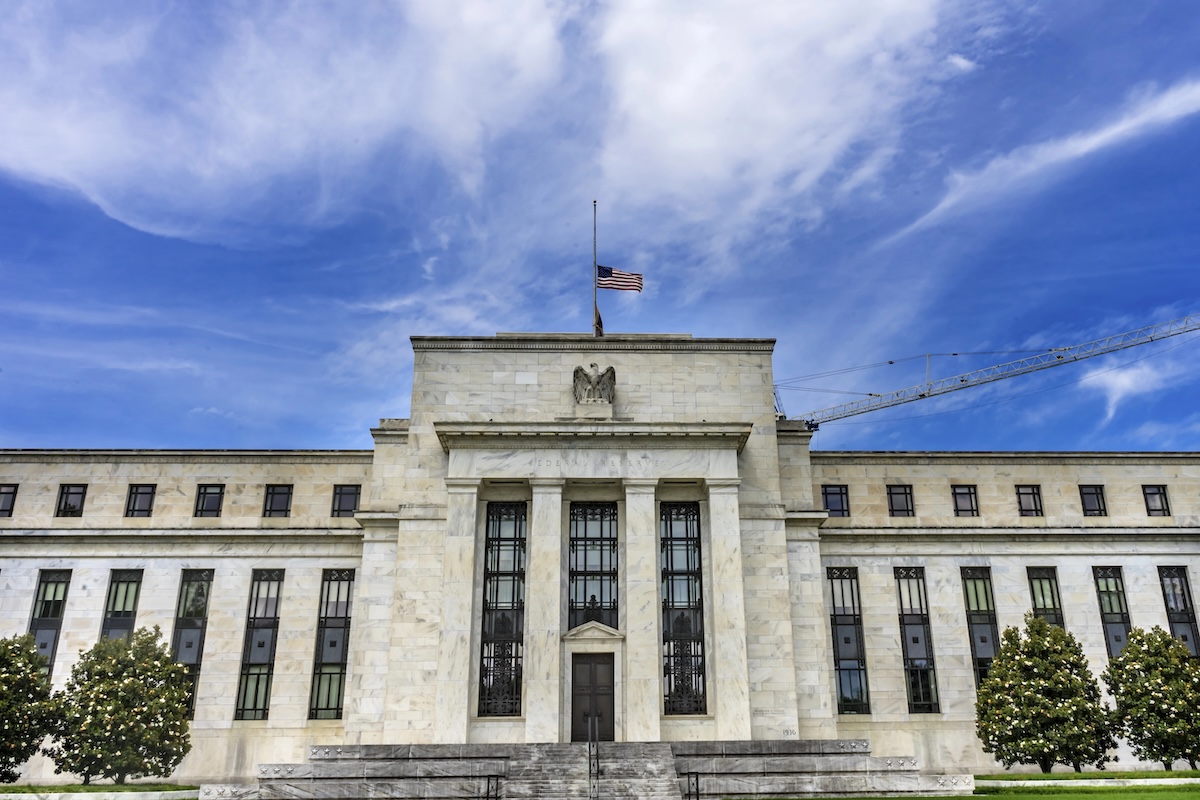
A brand new report from the Federal Reserve Financial institution of Philadelphia’s Shopper Finance Institute (PDF File) affords one of many clearest photos but of what that change might imply for college students, households, and lenders.
The evaluation finds that thousands and thousands of future graduate college students could face a brand new financing hole — and that non-public lenders is probably not prepared or prepared to fill it.
Would you want to save lots of this?
We’ll electronic mail this text to you, so you possibly can come again to it later!
Adjustments To Federal Graduate Scholar Lending
Beneath the brand new regulation, graduate college students can be restricted to $20,500 per 12 months and $100,000 whole in federal loans. College students in skilled applications akin to regulation and drugs may have increased limits ($50,000 yearly and $200,000 in whole) however even these caps are nicely beneath what many debtors presently tackle.
There’s additionally controversy on what counts as graduate faculty versus skilled faculty.
Utilizing anonymized credit score bureau information matched with graduate enrollment data, the researchers examined borrowing patterns amongst college students who entered graduate faculty between 2015 and 2024. The findings recommend that the brand new caps will bind for a considerable share of debtors if previous developments proceed.
About 28 % of all federal graduate debtors borrowed greater than the brand new annual limits. For skilled diploma applications, the share was even increased: greater than one-third of federal debtors exceeded what’s going to quickly be allowed. Doctoral applications additionally confirmed excessive publicity, with roughly 4 in ten debtors surpassing the brand new thresholds.
Even in grasp’s applications (the place borrowing is usually decrease as a result of shorter applications) almost one in 4 federal debtors would have wanted further financing past the brand new caps.
How Huge Is The Funding Hole?
For college students who hit the brand new limits, the hole is just not trivial. The report estimates that debtors exceeding the caps would want, on common, about $21,700 per 12 months in supplemental funding to proceed their applications.
That determine varies by establishment sort and diploma. Grasp’s college students at public establishments would want roughly $15,500 yearlywhereas these at personal nonprofit faculties would face nearer to $23,600. In doctoral {and professional} applications, common gaps usually exceed $25,000 per 12 monthsparticularly at personal nonprofit establishments.
The dimensions of those gaps issues as a result of federal scholar loans include fastened rates of interest, income-driven compensation choices, and scholar mortgage forgiveness applications. That is particularly necessary in fields like training, social work, and well being sciences. Changing federal {dollars} with personal scholar loans might considerably increase prices and monetary danger for college students.
Non-public Loans Are Not A Easy Substitute
One of many report’s central questions is whether or not personal lenders can realistically step in. Traditionally, they’ve performed solely a restricted function in financing graduate training whereas college students are nonetheless enrolled. Our personal conversations with personal lenders have highlighted that usually, no – personal lenders won’t be able to fill within the full hole.
Among the many graduate college students studied, 43 % used federal loanshowever solely 4 % relied on personal loans throughout enrollment. Even amongst those that borrowed privately, most did so with a cosigner. Greater than half of personal graduate debtors had another person backing their mortgage.
Credit score profiles assist clarify why. About 38 % of graduate college students within the pattern both had no credit score rating or a rating beneath 670 — a typical threshold for qualifying for personal scholar loans with out a cosigner. Roughly 13 % additionally met the federal authorities’s “antagonistic credit score historical past” normal, which personal lenders usually view at least display reasonably than a goal.
These patterns turn into extra regarding amongst college students who borrowed above the brand new federal limits. Almost 4 in ten of these high-balance debtors had weak or lacking credit score histories, making them unlikely to qualify for personal loans on their very own.
At for-profit establishments, the chance is much more pronounced. Though fewer college students at these faculties borrowed above the caps, about 60 % of those that did had subprime or nonexistent credit score scores.
What This Means For Future Graduate College students
For college students planning graduate faculty after 2026, the report’s findings level to a number of instant realities.
First, many college students who beforehand relied completely on federal loans might want to line up further financing nicely earlier than enrollment. Which will imply enhancing credit score scores, securing a cosigner, or reconsidering applications altogether.
Second, personal loans for graduate faculty (if obtainable in your program) are more likely to include increased rates of interest and fewer protections than federal loans. College students going through revenue volatility after commencement could discover these phrases more durable to handle.
Third, entry considerations could also be most acute for college students from much less advantaged backgrounds, these with restricted credit score histories, and people whose households can’t present monetary backing.
The report cautions that these college students could possibly be disproportionately deterred from graduate training if financing choices shrink.
Do not Miss These Different Tales:
@media (min-width: 300px){(data-css=”tve-u-19b99e42c3e”).tcb-post-list #post-71313 (data-css=”tve-u-19b99e42c44″){background-image: url(“https://thecollegeinvestor.com/wp-content/uploads/2025/12/Legislation-Faculty-150×150.jpg”) !necessary;}}
Skilled Scholar Mortgage Caps Defined for 2026
Skilled Scholar Mortgage Caps Defined for 2026@media (min-width: 300px){(data-css=”tve-u-19b99e42c3e”).tcb-post-list #post-71282 (data-css=”tve-u-19b99e42c44″){background-image: url(“https://thecollegeinvestor.com/wp-content/uploads/2025/12/Graduate-Studnt-Mortgage-Limits-150×150.jpg”) !necessary;}}
Graduate Scholar Mortgage Limits for 2026: What Debtors Have to Know
Graduate Scholar Mortgage Limits for 2026: What Debtors Have to Know@media (min-width: 300px){(data-css=”tve-u-19b99e42c3e”).tcb-post-list #post-67228 (data-css=”tve-u-19b99e42c44″){background-image: url(“https://thecollegeinvestor.com/wp-content/uploads/2025/10/Scholar-Mortgage-Adjustments-Coming-150×150.jpg”) !necessary;}}
What’s Altering For Scholar Loans In 2026?
What’s Altering For Scholar Loans In 2026?
The put up New Federal Examine Warns On Grad Mortgage Entry appeared first on The School Investor.
https://weblog.passive-income4u.com/create-your-very-own-auto-publish-news-blog-site-and-earn-passive-income-in-just-4-easy-steps/