Key Factors
- A $5 match for each $1 saved: Sen. Jeff Merkley’s Homeownership Promise Act would give first-time homebuyers as much as $50,000 from HUD on prime of $10,000 they save themselves, for as a lot as $60,000 at closing.
- Limits on who and what qualifies: Patrons have to be 18 or older, have by no means owned a house and end HUD-approved housing counseling. The house can’t value greater than the world’s median single-family worth, and the invoice units no revenue restrict.
- Nonetheless a protracted shot: The invoice has two Democratic sponsors and no greenback determine or value estimate. It wants Republican assist to maneuver within the Senate earlier than the 119th Congress ends in January 2027.
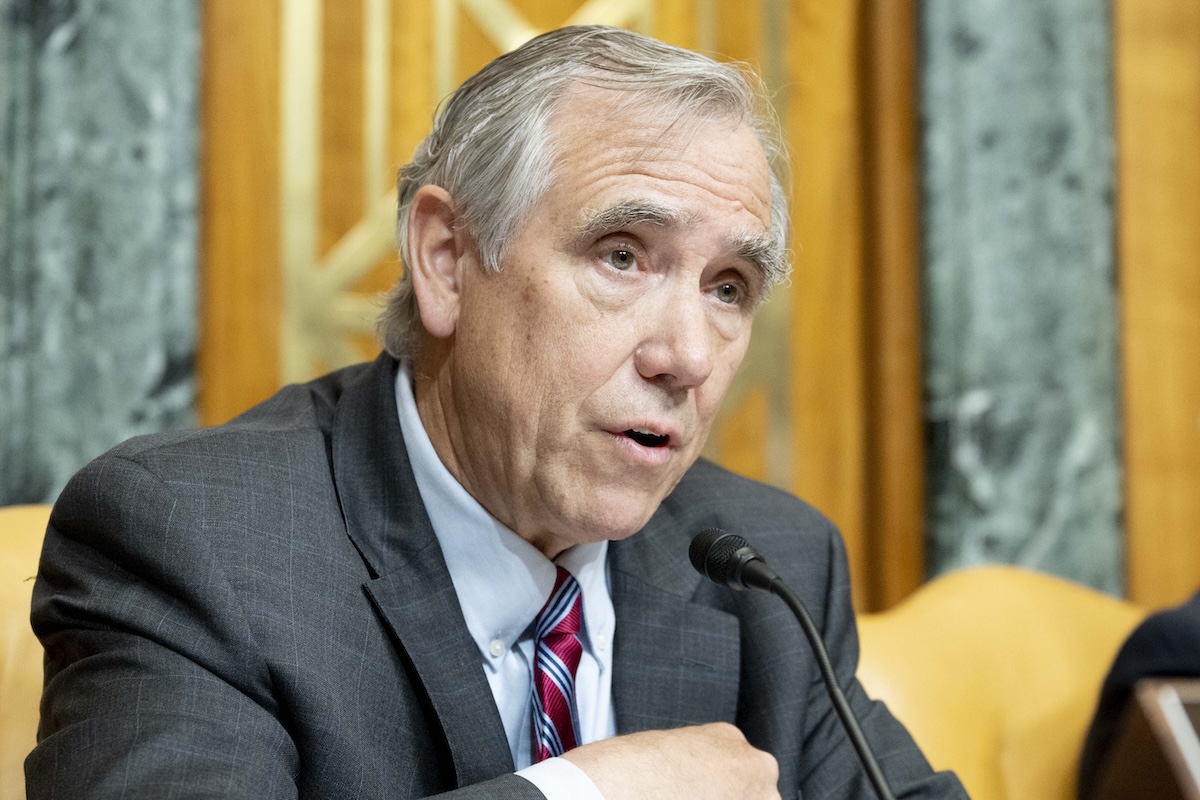
Sen. Jeff Merkley launched the Homeownership Promise Act (PDF File) on September 23, 2026, a invoice that will have the federal authorities match first-time homebuyers’ down cost financial savings at a 5-to-1 price. A saver who places away the $10,000 most would obtain as much as $50,000 from the Division of Housing and City Improvement (HUD), for a mixed $60,000 at closing. Sen. Ron Wyden is the lone cosponsor, in response to Merkley’s announcement.
The brand new Homeownership Promise Accounts would perform as financial savings accounts with a big federal grant paid out on buy day. The idea resembles the match Lobby presents on residence down cost financial savings and the $1,000 federal Saver’s Match coming to retirement accounts in 2027, however at a far bigger a number of.
The invoice defines an “eligible household” as one or two first-time consumers, so a pair shopping for collectively would share one account and one $60,000 cap reasonably than every opening their very own (one other marriage penalty).
Would you want to save lots of this?
We’ll e mail this text to you, so you may come again to it later!
Why It Issues
The standard first-time purchaser is now 40 years previous, the oldest on file, and first-time consumers accounted for simply 21% of purchases (a historic low) in response to the Nationwide Affiliation of Realtors’ 2025 Profile of Dwelling Patrons and Sellers. Merkley’s said objective is a reputable path to a modest residence by age 30. Youthful consumers carrying scholar mortgage debt face a second squeeze, since scholar mortgage funds depend towards your debt-to-income ratio when a lender figures out how a lot mortgage you may qualify for.
The greenback quantities present why a 5-to-1 match is the correct match. The median existing-home worth was $429,100 in August 2026, and NAR experiences first-time consumers put down a median 10%, or about $42,900 at that worth. A maxed-out $60,000 account would cowl that with room to spare, equal to roughly 14% of the median residence.
Constructing the identical steadiness alone in a high-yield financial savings account would take most younger households years longer.
The Particulars
Right here’s how the accounts would work:
- Eligibility: One or two first-time homebuyers age 18 or older who’ve by no means owned a principal residence and have accomplished a HUD-approved housing counseling program.
- Dwelling worth cap: The acquisition worth, excluding closing prices, can’t exceed the median single-family worth for the world as decided by HUD.
- Earnings limits: None seem within the invoice textual content (that is uncommon).
- The place accounts reside: Any taking part Group Improvement Monetary Establishment (CDFI), which should pay curiosity similar to its unrestricted financial savings accounts. Many CDFIs are credit score unions.
- Contribution caps: $10,000 mixed from private, employer, and nonprofit sources, plus as much as $50,000 in federal matching funds.
- What will get matched: The invoice ties the 5x grant to non-public contributions solely. Employer and nonprofit cash counts towards the $10,000 cap however, as written, doesn’t draw its personal match. A employee whose employer chips in $4,000 may personally save $6,000 and accumulate $30,000 in federal funds.
- Emergency entry: Savers can withdraw their very own contributions at any time, for any cause, in any quantity. The abstract provides that matching grants would pay out solely after the complete contribution steadiness is restored.
- Payout timing: HUD’s grant executes on the closing settlement, and as much as two eligible households can apply their accounts to the identical buy.
How This Connects
Congress has floated a number of first-time purchaser proposals this 12 months. A bipartisan Senate invoice launched in August would let savers pull as much as $35,000 tax-free from a 529 plan for a primary residence, supplied the account has been open a minimum of 15 years.
Present regulation already permits a $10,000 penalty-free IRA withdrawal for a primary residence buy, although that choice requires having retirement financial savings to faucet within the first place.
Merkley’s method stands aside as a result of it provides new federal {dollars} reasonably than unlocking tax breaks on cash households already saved, placing it nearer to the $1,000 Trump Account deposit for newborns than to a deduction.
Housing has been a long-running focus for Merkley, who ran Portland Habitat for Humanity earlier than coming into the Senate. His workplace credit him with the predatory mortgage ban within the 2010 Dodd-Frank Act and with the hedge fund single-family residence buy ban within the twenty first Century ROAD to Housing Act, which just lately turned regulation.
What’s Subsequent
The invoice continues to be only a proposal. It solely has on cosigner and there’s no indication the Republican-controlled committee will even think about it. With out consideration, the proposal would expire when the 119th Congress ends in January 2027.
Till then, consumers can estimate how a lot home they will afford utilizing financial savings they management at present.
Editor: Colin Graves
The put up New Senate Invoice Would Give First-Time Homebuyers $5 For Each $1 They Save appeared first on The School Investor.
https://weblog.passive-income4u.com/create-your-very-own-auto-publish-news-blog-site-and-earn-passive-income-in-just-4-easy-steps/