Key Factors
- The College students Not Income Act of 2026, would take away for-profit schools from the federal definition of an eligible faculty, ending their entry to Pell Grants and federal pupil loans.
- The invoice would additionally tighten the principles for for-profit faculties that convert to nonprofit standing, cap distance training enrollment at 50%, and make some faculty homeowners personally accountable for closure and fraud losses.
- About 1.1 million college students attended for-profit schools in fall 2024, however the invoice has no Republican cosponsors and dies if it doesn’t go by January 3, 2027.
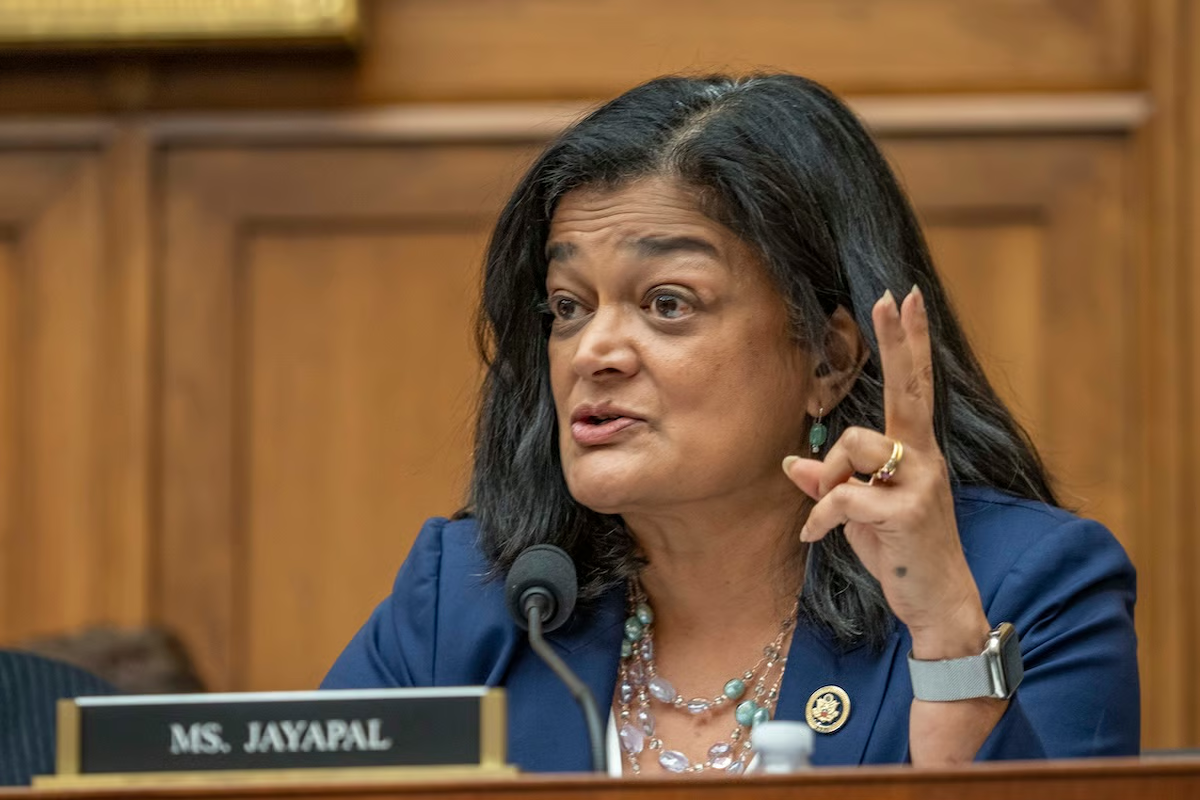
Rep. Pramila Jayapal (D-WA) launched the College students Not Income Act of 2026 (H.R. 10562) on September 24, 2026. The invoice would strike the “proprietary establishment” class from the Increased Training Act, which is how for-profit schools qualify for federal pupil help as we speak. With out that class, for-profit faculties might not obtain Pell Grants or Direct Pupil Loans on behalf of their college students.
In her announcement, Jayapal stated Congress “should act to guard college students from the exploitative practices of for-profit company universities.” Reps. Jesús “Chuy” García, Chellie Pingree, Ayanna Pressley, and Rashida Tlaib signed on as cosponsors.
The American Federation of Lecturers, The Century Basis, and Defend Debtors endorsed it, teams which have lengthy pushed for stronger borrower protection to reimbursement guidelines.
Save For Later
Would you want to save lots of this?
E mail AddressSave This
Web site
Why It Issues
For-profit schools enrolled 1,111,466 college students in fall 2024, or 5.6% of U.S. school enrollment, in keeping with IPEDS knowledge. These college students lean on federal pupil help excess of the typical pupil. Amongst first-time, full-time undergraduates in 2023-24, 70.2% of for-profit college students acquired a Pell Grant to assist cowl school prices, in contrast with 41.3% throughout all schools.
Pupil mortgage borrowing follows the identical sample. Practically 70% of these for-profit college students took federal loans, with a mean mortgage of $7,149, in contrast with $5,479 in any respect schools.
For-profit college students have additionally filed the majority of fraud claims. The Century Basis discovered that 98.6% of borrower protection claims filed by means of August 2017 concerned for-profit faculties. A lot of these faculties seem on our record of for-profit schools tied to mortgage forgiveness.
What The Invoice Would Change
The invoice textual content goes past ending for-profit eligibility. It additionally rewrites the principles for the nonprofit and public faculties that stay, together with some practices which have lengthy set for-profit schools aside from nonprofits:
- Enrollment caps: Colleges might enroll not more than 50% of scholars in distance training, not more than 25% incarcerated college students, and not more than 50% college students with no highschool diploma or equal.
- Chapter and fraud: A faculty would lose eligibility if it or sure associates filed for chapter, or if homeowners or executives had findings of fraud, misrepresentation, or predatory practices.
- Tuition sharing: Colleges would face limits on paying exterior recruiters a share of tuition.
- Private legal responsibility: Individuals with substantial management over a college can be personally accountable for sure losses from closures and profitable borrower protection claims.
.tci-for-profit-aid-reliance{font-family:inherit;coloration:#141414;border:2px stable #141414;border-radius:8px;overflow:hidden;margin:24px 0;background:#fff}
.tci-for-profit-aid-reliance .tci-for-profit-aid-reliance-head{background:#141414;coloration:#fff;padding:14px 18px;font-weight:700;font-size:18px;line-height:1.3}
.tci-for-profit-aid-reliance .tci-for-profit-aid-reliance-head span{coloration:#f6c061}
.tci-for-profit-aid-reliance desk{width:100%;border-collapse:collapse;font-size:15px}
.tci-for-profit-aid-reliance th{background:#f9f7f5;coloration:#55504a;text-transform:uppercase;font-size:12px;letter-spacing:.05em;text-align:left;padding:10px 14px;border-bottom:1px stable #e5e0d8}
.tci-for-profit-aid-reliance td{padding:11px 14px;border-bottom:1px stable #e5e0d8;vertical-align:prime}
.tci-for-profit-aid-reliance tbody tr:nth-child(even) td{background:#fcfbf9}
.tci-for-profit-aid-reliance td.tci-for-profit-aid-reliance-label{font-weight:700}
.tci-for-profit-aid-reliance .tci-for-profit-aid-reliance-yes{show:inline-block;background:#dff3e4;coloration:#14532d;font-size:12px;font-weight:700;padding:3px 10px;border-radius:999px}
.tci-for-profit-aid-reliance .tci-for-profit-aid-reliance-no{show:inline-block;background:#fde2e2;coloration:#7f1d1d;font-size:12px;font-weight:700;padding:3px 10px;border-radius:999px}
.tci-for-profit-aid-reliance .tci-for-profit-aid-reliance-mixed{show:inline-block;background:#f6c061;coloration:#141414;font-size:12px;font-weight:700;padding:3px 10px;border-radius:999px}
.tci-for-profit-aid-reliance .tci-for-profit-aid-reliance-foot{background:#f9f7f5;coloration:#8a8378;font-size:12px;padding:9px 14px}
@media (max-width:640px){
.tci-for-profit-aid-reliance thead{show:none}
.tci-for-profit-aid-reliance desk,.tci-for-profit-aid-reliance tbody,.tci-for-profit-aid-reliance tr,.tci-for-profit-aid-reliance td{show:block;width:100%;box-sizing:border-box}
.tci-for-profit-aid-reliance tr{border-bottom:1px stable #e5e0d8;padding:6px 0}
.tci-for-profit-aid-reliance td{border-bottom:none;padding:5px 14px;show:flex;justify-content:space-between;hole:12px;text-align:proper}
.tci-for-profit-aid-reliance td.tci-for-profit-aid-reliance-label{font-size:16px;padding-top:10px;text-align:left}
.tci-for-profit-aid-reliance td(data-label)::earlier than{content material:attr(data-label);coloration:#55504a;font-size:12px;text-transform:uppercase;letter-spacing:.05em;font-weight:400;text-align:left}
}
For-Revenue School College students And Federal Help
| Measure | For-Revenue Schools | All Schools |
|---|---|---|
| Obtained Pell Grant | 70.2% | 41.3% |
| Took Federal Loans | 69.8% | 41.3% |
| Common Federal Mortgage | $7,149 | $5,479 |
First-time, full-time undergraduates, 2023-24. Supply: IPEDS by way of PNPI. The School Investor.
What Would Occur To Present For-Revenue College students?
The invoice doesn’t say. H.R. 10562 has no teach-out, grandfathering, or phase-in language for the roughly 1.1 million college students now enrolled at for-profit faculties. With out federal help, most of these faculties must reduce costs sharply, convert to a non-profit underneath the brand new guidelines, or shut. College students would then face the identical selections as these at a university that shuts down or misleads its college students.
Shedding federal monetary help eligibility is completely different from a closure underneath present legislation. A closed faculty discharge wipes out federal loans solely when a college closes whereas the coed is enrolled or shortly after they depart.
A faculty that stays open with out federal help wouldn’t set off it, so college students would possible must switch, and credit from for-profit faculties don’t all the time carry over.
A pupil who used Pell at a for-profit faculty would maintain their remaining lifetime Pell eligibility for a public or nonprofit school. Any model that advances would want transition guidelines to deal with these college students.
How Would It Deal with For-Revenue Conversions?
Changing to nonprofit standing would not be a simple escape hatch. A GAO evaluation discovered 59 for-profit-to-nonprofit conversions between January 2011 and August 2020, and about one-third concerned insiders who saved a monetary stake. The Century Basis calls these faculties covert for-profits, and fraud claims at former for-profit faculties have pushed up mortgage forgiveness claims at nonprofit schools.
Below H.R. 10562, a changing faculty would want to show it’s a 501(c)(3) and that it didn’t overpay former homeowners for property or companies. No board member might obtain a considerable financial profit, and no exterior for-profit firm might management core capabilities like recruiting or curriculum.
Permitted converters would keep underneath for-profit guidelines for at the least 5 years, they usually couldn’t name themselves nonprofit till the Training Division, accreditor, state, and IRS all signed off. College students weighing a not too long ago transformed faculty can test the way it ranks in borrower fraud claims by school.
How This Connects
The Training Division is already transferring on for-profit accountability, although in a unique route. Its earnings accountability rule, finalized in 2026, replaces gainful employment with a single earnings take a look at that covers each for-profit program, with the primary lack of mortgage eligibility anticipated in 2028. The division additionally loosened its 90/10 rule steering in March 2026. These program-level exams matter for college students weighing short-term choices like Workforce Pell Grants, which may fund packages at for-profit faculties.
What’s Subsequent
H.R. 10562 went to the Home Training and Workforce Committee, which Republicans management. Jayapal launched an earlier model in 2019, and it by no means acquired a vote, although its conversion provisions went into Home Democrats’ 2019 Increased Training Act rewrite.
With no Republican cosponsors and the 119th Congress ending January 3, 2027, this model is unlikely to advance. College students at for-profit faculties as we speak ought to test how their faculty ranks in pupil mortgage forgiveness claims by school earlier than borrowing extra.
Editor: Colin Graves
The submit Proposed Invoice Would Reduce Off Federal Pupil Help To For-Revenue Schools appeared first on The School Investor.
https://weblog.passive-income4u.com/create-your-very-own-auto-publish-news-blog-site-and-earn-passive-income-in-just-4-easy-steps/