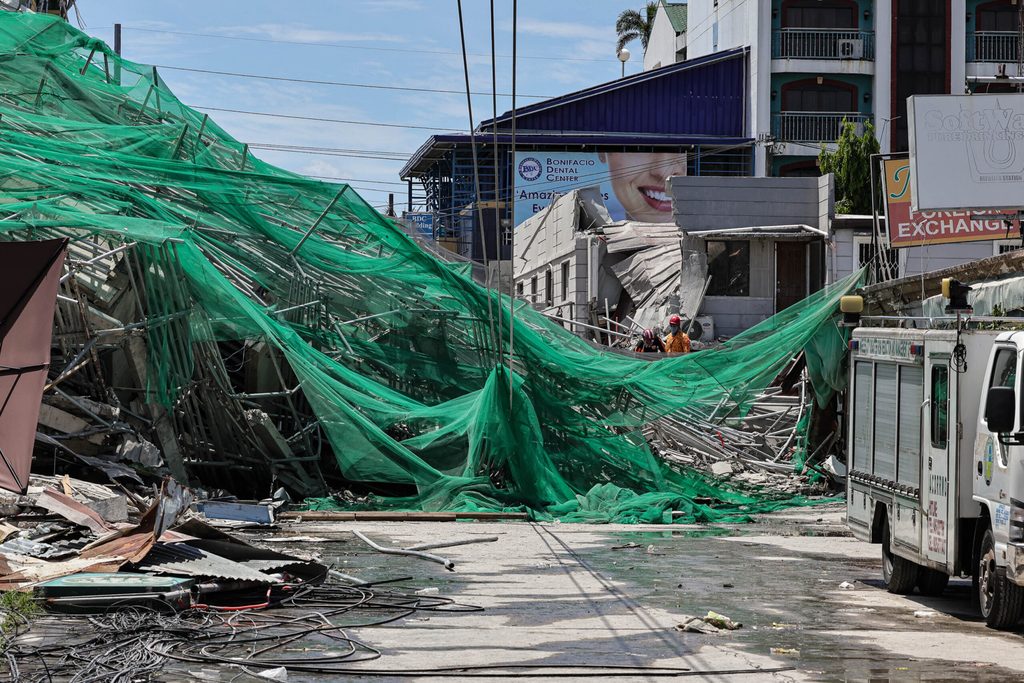
MANILA, Philippines – In lower than 4 weeks, the Philippines noticed buildings crumble to the bottom – first, in Pampanga the place a nine-story constructing beneath building collapsed, then in Mindanao the place a robust earthquake struck Sarangani.
These current incidents have triggered questions on structural integrity of most buildings within the Philippines and the rules which can be supposed to make sure this and shield communities.
What are the teachings discovered right here?
Consultants mentioned there’s a have to replace the Nationwide Structural Code of the Philippines, shut gaps between the issuance of constructing permits and precise building, and make sure the strict implementation of current rules.
Nonetheless beneath probe
Authorities are nonetheless trying into the reason for the constructing’s collapse in Angeles Metropolis, Pampanga. Retrieval and clearing operations have tapered off because the incident on Could 24.
The Affiliation of Structural Engineers of the Philippines (ASEP) instructed Rappler in an electronic mail that it will be untimely to conclude the reason for the collapse with out a full assessment of authorized plans, building data, and website situations.
Nonetheless, ASEP mentioned the collapse of a constructing is more than likely attributable to a mixture of things, together with insufficient structural design—a results of non-compliance with the Nationwide Structural Code of the Philippines—unauthorized modifications, insufficient foundations, or “overloading of partially accomplished structural parts.”
ASEP mentioned it has already dedicated “readiness to assist” the native authorities and the Division of Public Works and Highways within the investigation.
However a key takeaway has come into sight: structural security doesn’t finish with the issuance of a constructing allow. Some malpractices within the area, the group mentioned, embrace the usage of substandard supplies, altering plans with out correct approval, and the shortage of documentation for such adjustments.
“The authorized design should be adopted, any adjustments should be correctly reviewed, and building actions should be supervised by competent professionals,” ASEP mentioned. “For buildings beneath building, each the everlasting construction and the momentary works should be handled as life-safety issues.”
No quake-proof buildings
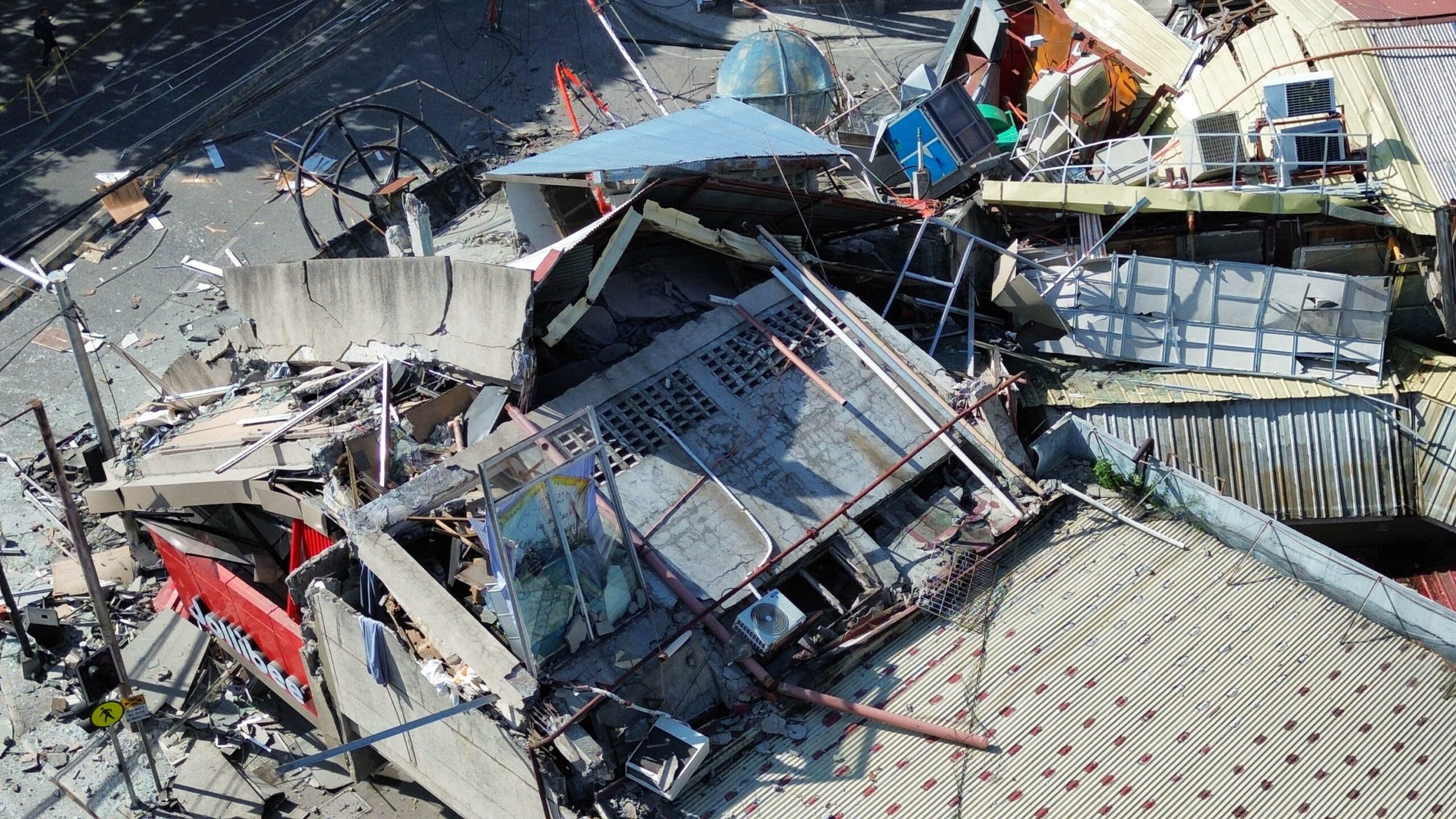
Within the aftermath of the magnitude 7.8 earthquake in Mindanao, the Philippine Institute of Volcanology and Seismology (Phivolcs) discovered that 38% of villages in Basic Santos Metropolis are on unstable floor.
To make earthquake-resistant buildings one monitor is to replace the Nationwide Structural Code with trendy requirements (or ASCE 7 methodologies) “to higher mirror the present understanding of seismic dangers,” mentioned Rhommel Grutas, a science analysis specialist from Phivolcs.
However Grutas added that there is no such thing as a earthquake-proof buildings, as earthquakes range considerably.
“Fashionable seismic design goals as a substitute to create earthquake-resistant or seismically resilient buildings that may shield human life and decrease injury throughout robust floor shaking,” Grutas mentioned. “Updating the constructing code is critical to mirror improved seismic hazard knowledge, extra correct fault and floor movement fashions, and evolving building applied sciences.”
Grutas had been working in Basic Santos Metropolis after the earthquake hit on June 8, conducting constructing injury inspections following the quake.
In line with Grutas, upgrading requirements will “present a extra rigorous framework primarily based on probabilistic seismic hazard evaluation, site-specific floor movement characterization, improved remedy of near-fault results, up to date response spectra, and refined seismic force-resisting system necessities.”
Constructions constructed utilizing older seismic codes, in the meantime, ought to be retrofitted as wanted. The rules accessible can allow totally different outcomes: defending constructing occupants from severe damage whereas permitting injury, offering security for continued use.
“Making use of these efficiency goals helps prioritize retrofit methods primarily based on the significance, occupancy, and performance necessities of the construction,” mentioned Grutas.
The most important problem, Grutas mentioned, lies not in engineering information or requirements, however within the implementation of what’s already mandated. Grutas cited gaps within the enforcement of rules, systematic retrofitting, and the regulation of casual building.
Value to communities
Broken infrastructure resulting from accidents and disasters finally price communities lives, houses, jobs, and safety.
The loss of life toll in Angeles Metropolis, Pampanga, rose to 30 and included an toddler and a Malaysian.
In Mindanao, no less than 61 deaths had been counted by the Nationwide Threat Discount and Administration Council as of Sunday, June 14. Greater than a thousand are injured and 40 are lacking. The price of infrastructure injury is pegged at P1 billion.
The Mindanao State College in Basic Santos Metropolis reported injury costing P870 million. In line with Shidik Zen Abantas, the campus’ chancellor, the Division of Public Works and Highways will deal with the quick retrofitting and repairs the campus wants.
“It breaks our hearts to see that our buildings have suffered in depth injury,” Shidik Zen Abantas, the campus’ chancellor, wrote on June 9. “For the primary time, our earthquake-tested buildings confirmed weak spot when confronted with a magnitude 7.8 earthquake.” – Rappler.com
https://weblog.passive-income4u.com/create-your-very-own-auto-publish-news-blog-site-and-earn-passive-income-in-just-4-easy-steps/
https://www.rappler.com/newsbreak/explainers/pampanga-sarangani-needed-resilient-buildings/