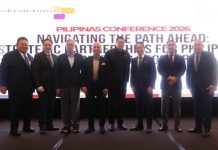
At 9:05 pm on Friday, July 17, an electronic mail arrived at First Philippine Holdings Company (FPH) from the Securities and Change Fee’s (SEC) “Advert Hoc Committee on Issues In regards to the Lopez Group of Firms.” FPH’s annual stockholders’ assembly (ASM), scheduled for July 27, must be rescheduled to a date inside 60 days. And a board election, which the committee had already advised FPH it may maintain on July 27, would nonetheless have to occur, simply not on that date.
Two days earlier, FPH’s listed mother or father, Lopez Holdings Company, had filed its personal discover with the change. Its annual assembly, already pushed as soon as from June to August, was being postponed once more, this time to September 14, so the corporate may reply a contemporary spherical of questions the SEC had raised in regards to the paperwork it should give shareholders earlier than a vote.
And weeks earlier than both of these filings, on July 2, media group ABS-CBN Company advised the change that its personal assembly would transfer from July 24 to August 19, for a cause that wanted no additional clarification to be alarming: The media large had acquired zero nominations for its board of administrators.
Three Lopez corporations, three postponed conferences. And now, sitting on high of all of it, a US$5 billion provide for the group’s most dear asset that none of those corporations is at the moment positioned to simply accept or refuse.
Why a household battle reaches the facility sector
These postponements matter to anybody with cash in these corporations, and to anybody merely attempting to know why a household argument in a Mandaluyong courtroom reaches the nation’s vitality sector.
The Indonesian firm PT Barito Renewables Vitality desires to purchase Vitality Improvement Company, or EDC, the geothermal producer that generates most of First Gen Company’s income (associated story beneath). Any actual model of that deal will want approval from the businesses that sit above First Gen within the Lopez possession chain. These are First Philippine Holdings and Lopez Holdings Company. Neither board has been capable of maintain an election this 12 months.
What a lacking election really means
Below the Revised Company Code, an organization’s administrators are elected for a one-year time period, however the regulation provides a vital phrase: they serve for that 12 months “and till their successors are elected and certified.” That phrase is what attorneys name the holdover rule: If an annual assembly is postponed, or if an election can’t be accomplished at that assembly, the sitting board doesn’t vacate its seats. It merely retains governing, unelected for an additional cycle, till stockholders lastly get to vote.
Boards nonetheless governing with no contemporary vote usually are not inherently an issue. Firms generally delay conferences for routine causes. The difficulty begins when a board stays in energy for an prolonged stretch with out dealing with shareholders. A board that makes choices cycle after cycle with no present vote is operating on inertia moderately than a stay mandate. That is the scenario now at FPH and Lopez Holdings, and it’s the context through which a $5-billion provide has landed. (READ: (Vantage Point) When independent directors stop being neutral)
The household struggle is the set off
These ASM postponements are taking place within the middle of a family war. The battle is among the many third era of Lopezes, the cousins now operating a conglomerate that spans media, energy, infrastructure, actual property, and extra. Their fathers, the second era, are gone. Learn towards that backdrop, the postponements look much less like routine scheduling and extra like one other symptom of the inner dispute.
ABS-CBN‘s case makes that time most clearly. Lopez Inc., the non-public holding firm on the middle of the struggle, controls 78.4% of ABS-CBN’s voting shares. When an organization’s dominant shareholder can’t or won’t put ahead a single nomination for its personal board, that isn’t stockholder apathy. It’s a controlling household too divided to agree on who ought to characterize it.
Lopez Holdings‘ hassle had a clearer paper path. Two of its three unbiased administrators, Roberto Panlilio and Consuelo Garcia, resigned inside days of one another in early Could, each citing private causes, each declining to be nominated for an additional time period. Impartial administrators exist particularly to provide minority shareholders and the investing public a set of eyes within the boardroom that doesn’t reply to the controlling household. Shedding two, in the identical week, on the peak of an intra-family battle over board management, is the sort of exit that invitations the very query the corporate by no means needed to reply on the document: what did they see, and why go away now? (READ: When the ASM has no election: What the Lopez family dispute means for every investor)

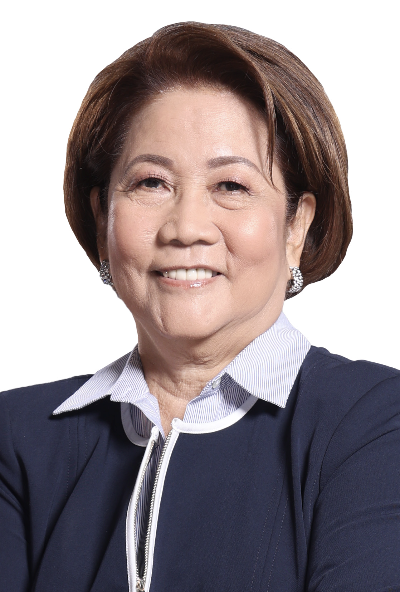
The primary postponement, from June to August, was meant to provide Lopez Holdings time to seek out replacements the SEC would settle for. The second postponement strikes the assembly to September due to a separate SEC overview of its disclosure paperwork. That’s two postponements in a single 12 months, each tied to the identical underlying drawback: the corporate can’t but put collectively a board its regulators are happy with.
FPH‘s story is essentially the most telling of the three, as a result of the principles saved transferring. On July 2, the SEC advised FPH that it may go forward with its deliberate annual assembly on July 27, offered it adopted that Mandaluyong courtroom order protecting Federico “Piki” Lopez’s position. FPH started making ready and coordinating with the SEC committee, attempting to steadiness these authorized necessities towards the deadline.
Then, on that Friday night time at 9:05 pm, the SEC despatched a second letter. This time the committee didn’t change the principles for the election, however it did transfer the date, ordering FPH to push the assembly again to a brand new date throughout the subsequent 60 days. The SEC stated this was to provide the corporate “adequate time to undertake the steps obligatory” for the assembly, a phrase FPH’s personal official submitting leaves unexplained. The impact is hanging: for weeks, regulators had been pushing for this board election to occur, but FPH, for causes not spelled out in public, wanted extra time to get it performed.
First Gen Company is the one firm within the group that has prevented all these. It held its annual assembly on Could 28 as scheduled and elected a brand new board. It’s the solely listed Lopez firm the place the present administrators had been confirmed by a shareholder vote this 12 months. It is usually chaired by Piki Lopez, the cousin the bulk is attempting to take away.

Now add Barito
First Gen can also be the corporate that acquired the Barito provide.
On July 15, First Gen confirmed that Barito had made an unsolicited, indicative, and non-binding bid price greater than $5 billion, roughly P308 billion, for EDC, the geothermal subsidiary that produced P48.6 billion in income final 12 months, 87% of every little thing First Gen earned. First Gen added that there have been no discussions between the events, no agreements signed, and no advisors appointed. Buyers reacted instantly: First Gen’s share value jumped as a lot as 33% intraday earlier than closing decrease, a swing that reveals buyers are excited in regards to the value however uncertain the deal can really occur.
First Gen controls how EDC is run, holding 65 out of each 100 votes on its board, by way of an organization it owns referred to as Pink Vulcan. If Barito desires management of EDC, and never only a slice of it, the deal has to undergo First Gen, and thru the businesses up the possession chain that management First Gen: FPH and Lopez Holdings. Each of these boards are at the moment governing with no contemporary vote, their elections postponed.
There’s a second, narrower path. EDC’s remaining shares are held by Philippine Renewable Vitality Holdings Company, a car collectively owned by Australia’s Macquarie Group and Singapore’s sovereign wealth fund GIC. Collectively they maintain roughly 35% of EDC’s votes however about 55% of the cash EDC makes, a typical cut up the place one aspect steers the corporate and the opposite primarily collects the returns. Barito may purchase that stake instantly from Macquarie and GIC with out asking a single Lopez firm for permission, since these are keen sellers underneath no obligation to the household. On paper, it might appear like a easy change of international fingers, one set of abroad buyers changed by one other.
What Barito traditionally desires
Would Barito really accept that?
Legally, sure. Barito may purchase the Macquarie and GIC stake and easily maintain a big minority place in an organization nonetheless managed by First Gen. However Barito’s personal document suggests this isn’t how the corporate operates.
Each main transfer Barito has made in renewable vitality has been about attending to majority or full possession, not staying a minority associate. In 2018, Barito Pacific purchased 66.67% of Star Vitality Geothermal for $755 million, a controlling stake from the beginning. In 2022, it purchased the remaining 33.33% from Thailand’s BCPG for $440 million, taking full possession. Information protection on the time described it plainly: Barito had gotten full management. In its Salak-Darajat and Wayang Windu geothermal belongings, Barito saved elevating its stakes over time and has acknowledged publicly that it desires to personal 100% of Star Vitality Geothermal outright. Even its transfer into wind energy adopted the identical sample: Barito Wind purchased 99.99% of an working wind farm in Sidrap, and 51% of three others nonetheless underneath growth.
The sample is constant. Barito buys to run the belongings, to not gather a verify from the sidelines. Macquarie and GIC are monetary buyers. Their enterprise is to carry a stake and finally promote it for a return. Barito is totally different. It’s an operator that consolidates geothermal fleets and runs them.

That distinction issues for what occurs subsequent. A minority stake in EDC would give Barito a share of the income however no say over how the corporate is run. That isn’t the sort of deal Barito’s historical past suggests it desires. To get the operational management that matches its sample, Barito wants First Gen to promote down its stake or comply with cooperate, and that call runs straight up the Lopez possession chain, from First Gen to FPH to Lopez Holdings to Lopez, Inc., the identical chain at the moment caught in holdover boards and a courtroom injunction.
Put merely: the minority path is obtainable to Barito, however it doesn’t match what Barito traditionally desires. The trail that does match runs instantly into the household battle.
Why Barito desires EDC
Barito is the renewable vitality arm of the Indonesian conglomerate Barito Pacific, and it already controls Star Energy Geothermal, Indonesia’s largest geothermal producer. What it lacks is scale past its house market.
EDC would ship that in a single stroke. It runs 16 geothermal stations with roughly 1,300 megawatts of put in capability, about 6 of each 10 geothermal megawatts produced within the Philippines, plus a wind farm, a hydro complicated, and a small photo voltaic fleet. Its flagship Tongonan area in Leyte produces 637.2 megawatts by itself, placing it among the many largest geothermal complexes on Earth, behind solely The Geysers in California and Italy’s Larderello (associated story beneath). That is baseload renewable energy: electrical energy that runs across the clock no matter climate, the type a fast-growing area hungry for clear, regular provide prizes most.
Combining Star Vitality and EDC would hand Barito the most important geothermal footprint in Southeast Asia directly, together with 5 a long time of drilling knowledge, confirmed reservoirs, and working experience that will take a era to construct from scratch. For a corporation racing to increase its renewables portfolio throughout a area hungry for clear baseload energy, EDC will not be a cut price hunt. It’s Barito’s quickest obtainable path to regional scale.

The place this leaves the household
That is additionally, in plain phrases, the enterprise that pays First Gen’s payments. EDC generated P48.6 billion in income final 12 months, 87% of every little thing the mother or father First Gen earned. Promote it, and First Gen sells the engine that funds almost every little thing else the group does, the identical engine the household as soon as gave up its oldest enterprise to complete constructing. That’s the scale of determination now sitting in entrance of boards which might be both unelected, delayed, or working underneath a courtroom order.
Piki Lopez has saved telling workers and buyers that First Gen’s worth comes from years of affected person, disciplined progress. An out of doors purchaser naming a premium value for the corporate’s most dear asset, with out being requested, is the sort of validation no press launch may produce. However a praise will not be a mandate. The identical week that validated his technique is the week that uncovered how few individuals round him are at the moment ready to behave on it, as a result of the boards that must approve or block a deal this measurement are both unelected, delayed, or sure by a courtroom order that limits what they will determine.

The quantity itself measures how far EDC has come for the reason that household first purchased it. Barito’s provide values the corporate at greater than P300 billion. When the Philippine authorities privatized EDC in 2007, the entire firm offered for P58.5 billion. No matter else is unresolved within the Lopez group, the geothermal wager the household offered Meralco to finish has grown greater than fivefold for the reason that day they purchased it.
That progress can also be why the query this story retains circling again to has no straightforward reply. FPH and Lopez Holdings, the 2 boards positioned to weigh in on any actual model of this deal, can’t at the moment maintain an election. Barito has put a quantity on the desk regardless, and began the clock. The household now has to work out, board by holdover board, whether or not it’s in any place to reply. – Rappler.com
Lala Rimando wrote about Philippine enterprise, and managed newsrooms, together with Newsbreak, ABS-CBN, Rappler, and Forbes, for over 25 years. She’s now based mostly in La Union, taking good care of her mother with dementia, and dealing on the multimedia biography of the late John Gokongwei.

https://weblog.passive-income4u.com/create-your-very-own-auto-publish-news-blog-site-and-earn-passive-income-in-just-4-easy-steps/
https://www.rappler.com/enterprise/lopez-firms-postpone-board-elections-barito-billion-offer-energy-development-corporation/