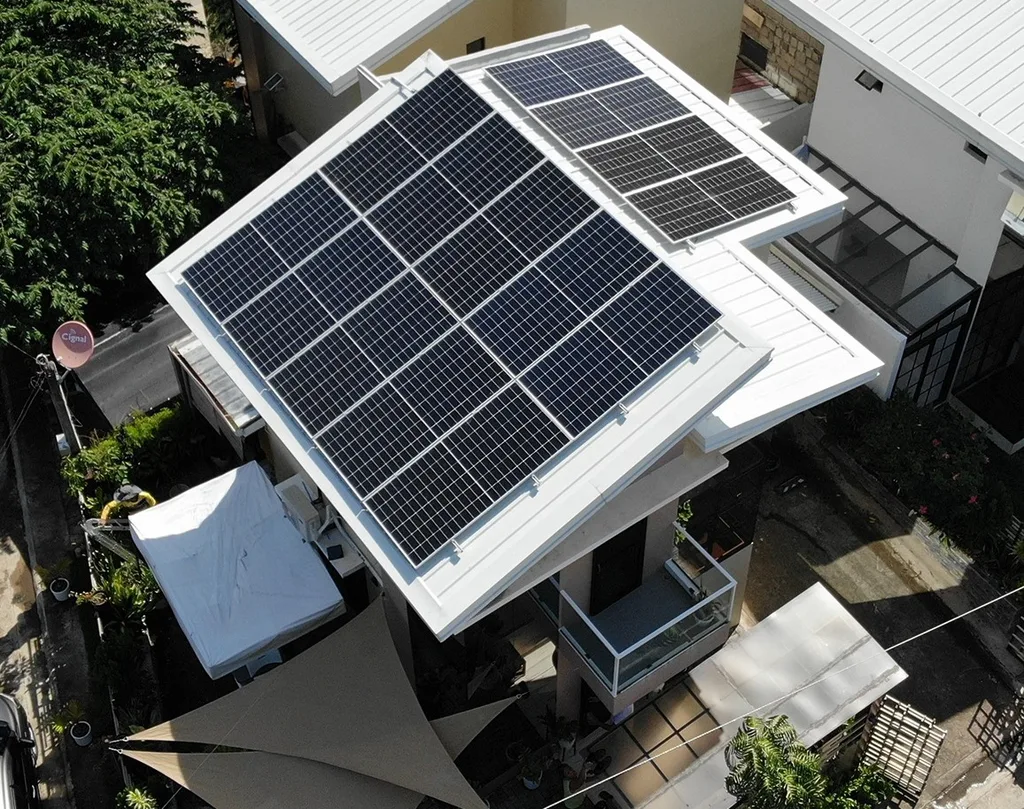
The nation continues to face excessive electrical energy prices, recurring provide constraints, and an power system closely depending on imported fuels. These situations have formed public perceptions of photo voltaic power, significantly on the family degree, the place questions on value, reliability, and practicality are most fast.
In response to the continuing power disaster triggered by the war in the Middle Eastthe federal government issued Executive Order No. 110, s. 2026declaring a state of nationwide power emergency and directing businesses to speed up the event of renewable power throughout sectors, together with photo voltaic.
On the identical time, analysts such because the Institute for Local weather and Sustainable Cities (ICSC) have pointed to structural points within the power system. In a recent analysisthe group famous that reliance on imported fossil fuels exposes the nation to world value volatility, affecting each electrical energy prices and provide stability.
This disaster has sparked a pointy improve in shopper curiosity in solar energy. Cris Tagupa, who has been operating a photo voltaic set up enterprise since 2024, famous that every day inquiries have jumped from simply two to as many as 30 for the reason that struggle began. Which means the market is at the moment searching for different power options.
Even with this rising demand, a number of frequent issues about solar energy stay.
Family prices and financial savings
Photo voltaic rooftops within the Philippines usually use photovoltaic (PV) panels that convert daylight straight into electrical energy. That is the kind most households, companies, and industries set up, fairly than photo voltaic thermal programs that produce warmth.
For a lot of Filipino households, the primary query is whether or not PV photo voltaic can really decrease electrical energy payments. These programs generate electrical energy throughout daylight, serving to offset grid consumption for a lot of the day.
On the system degree, rising renewable power provide has been related to declining wholesale electrical energy costs. Data cited by Reuters exhibits charges falling from P5.58 to P4.14 per kWh between 2024 and 2025.
Nevertheless, the extent of financial savings varies. Households proceed to pay distribution and different fastened fees, and outcomes rely on system measurement, electrical energy utilization patterns, and internet metering preparations.
In an interview with Rappler, Tagupa defined that households primarily generate electrical energy in the course of the day, which shapes how financial savings are realized. “You solely harvest electrical energy in the course of the day…so you continue to want the grid at night time until you will have a battery or internet metering.”
Web metering underneath Part 10 of the Renewable Energy Act of 2008 permits households to ship extra electrical energy from rooftop photo voltaic programs again to the grid in change for credit that can be utilized to offset future consumption.
He added that internet metering performs a key function in lowering payments by permitting extra daytime era to offset nighttime consumption. “In case you have internet metering, the surplus power you generate in the course of the day can offset your utilization at night time.”
Tagupa cited his personal family for example, noting that he makes use of grid electrical energy primarily at night time whereas exporting extra solar energy in the course of the day. Over time, these credit can offset consumption, and in his case, have resulted in no electrical energy payments for greater than a yr.
A report from the Philippine Photo voltaic and Storage Vitality Alliance (PSSEA) confirms that whereas photo voltaic saves cash, its development is slowed by sensible hurdles. The group warned that inconsistent set up requirements and low-quality tools available on the market can damage system efficiency and, in the end, harm shopper belief within the know-how.
Households that use extra electrical energy in the course of the day have a tendency to learn extra from photo voltaic, whereas these with greater nighttime use stay extra depending on the grid — until they’ve a solar-powered battery to retailer extra power.
In impact, photo voltaic includes a better upfront value, however can scale back reliance on grid electrical energy over time resulting in decrease long-term bills. The precise financial savings additionally rely on utilization patterns, system high quality, set up requirements, and entry to dependable tools.
Upfront prices and entry
The price of putting in rooftop photo voltaic stays a major issue for Filipino households. Estimates from native pricing instruments, such because the Pinas Photo voltaic calculatorpresent that an ordinary residential setup usually ranges from P275,000 to P500,000, relying on the system’s capability and the standard of kit used.
These programs are usually grid-tied and don’t embrace battery storage, which may considerably improve prices. Whereas value estimation exhibits that photo voltaic programs can get well their funding inside three to seven years, upfront financing stays a serious barrier.
In line with Tagupa, prices additionally differ relying on system sort. “The most cost effective possibility is grid-tied photo voltaic with out a battery. Hybrid or off-grid programs with battery backup can value round 20 to 40 p.c extra.” He famous that for a typical residential setup of 6 kW, grid-tied programs usually value between P200,000 and P300,000 relying on the particular set up necessities.
Regardless of rising curiosity, adoption stays uneven. “Most of our shoppers are middle- to upper-income households,” Tagupa stated, pointing to affordability as a key barrier.
A current report by Rappler highlights an adoption hole the place there’s sturdy public curiosity in rooftop photo voltaic however comparatively low set up charges, pointing to financing constraints, consciousness gaps, and upfront prices as key components.

This implies that whereas photo voltaic could also be cost-effective over time, entry stays uneven throughout earnings teams.
Reliability and on a regular basis use
Considerations about photo voltaic reliability usually stem from its dependence on daylight, significantly throughout cloudy situations, typhoons, or nighttime hours.
Analyses from Carbon Brief present that even when photo voltaic output varies, it doesn’t routinely imply energy is unreliable as a result of grids can use different power sources and storage to maintain electrical energy flowing.
The Division of Vitality (DOE) not too long ago reported that 250 megawatts of photo voltaic capability, paired with 450 megawatt-hours of battery storage, have been added to assist grid stability within the nation.
On the family degree, most rooftop programs stay grid-connected and don’t embrace battery storage. In apply, this implies photo voltaic usually dietary supplements grid electrical energy in the mean time fairly than absolutely changing it.
Knowledge from SPECTRUMa venture by ICSC and Tara that makes use of satellite tv for pc imagery and machine studying to map photo voltaic installations, reveals that the Philippines has an estimated whole capability of three,093.32 MW throughout 236 cities and municipalities.
Whereas this means a robust shift towards renewable power, the distribution exhibits that rooftop potential for houses and companies stays largely untapped.
Large utility tasks at the moment dominate the panorama, accounting for 81.07% (2,507.73 MW) of whole capability. In distinction, residential setups make up solely 12.02% (371.8 MW) of the combo, whereas business installations signify simply 6.91% (213.78 MW) of the nationwide whole.
This knowledge means that whereas photo voltaic is well-established on the utility degree, there’s important room for development in localized power manufacturing for Filipino households and enterprise institutions.
Efficiency in a tropical local weather
Questions have additionally been raised about how photo voltaic performs underneath tropical situations.
Research point out that photo voltaic panels proceed to generate electrical energy underneath partial cloud cowl and that total efficiency relies upon extra on daylight protection than temperature.
Nevertheless, excessive temperatures can scale back effectivity. Extraordinarily scorching situations can barely decrease power output even on sunny days as a result of photo voltaic panels work greatest after they keep cool. Whereas they want gentle to make energy, the warmth really makes it more durable for electrical energy to circulate via the panel’s inner elements. Primarily, the warmer the panel will get, the extra it struggles to maneuver the power it has collected.
Environmental components comparable to humidity and mud can also have an effect on efficiency over time, whereas typhoons pose dangers if programs are usually not correctly put in.
System high quality and set up requirements are due to this fact important. “Model issues. It impacts effectivity, reliability, and after-sales assist,” Tagupa stated.
He added that correctly put in programs are designed to final many years, with photo voltaic panels usually lasting 25 to 30 years and inverters and batteries round 10 to fifteen years.

Business and industrial functions
Photo voltaic power within the Philippines is transitioning from a supplementary energy supply towards a purposeful spine for large-scale infrastructure. Current knowledge exhibits that main telecommunications firms, together with Globe and PLDT, are efficiently integrating hybrid photo voltaic setups to assist energy-intensive amenities like knowledge facilities and cell websites.
In line with an evaluation by Dhruv Soni, APAC Head of Telco & Media Consulting at Indra Group, this shift is pushed by efficiency fairly than simply sustainability targets. Globe is solarizing 53 websites to save lots of P24 million and PLDT reaching a 35% renewable power combine. These hybrid programs assist hold operations operating easily even throughout energy outages and storms.
At a broader degree, newly added photo voltaic capability and storage tasks contribute to each residential and industrial power provide. Nevertheless, large-scale operations usually depend on a mixture of power sources fairly than photo voltaic alone.
Photo voltaic power can also be being explored in transport and public infrastructure, together with solar-assisted electrical autos. These functions are in early levels and rely on additional infrastructure improvement and coverage assist.
Vitality analysts proceed to level to structural challenges within the Philippine power system. In line with ICSC, short-term interventions to stabilize costs might not tackle underlying vulnerabilities linked to import dependence. – Rappler.com
https://weblog.passive-income4u.com/create-your-very-own-auto-publish-news-blog-site-and-earn-passive-income-in-just-4-easy-steps/
https://www.rappler.com/newsbreak/explainers/can-solar-save-philippines-how-much-gaps-promise/