MindaNews / 27 June 2026 – On June 8, 2026, a Magnitude 7.8 earthquake struck Sarangani in Mindanao, killing and injuring a number of individuals not simply within the province but additionally in different areas in neighboring Davao Area.
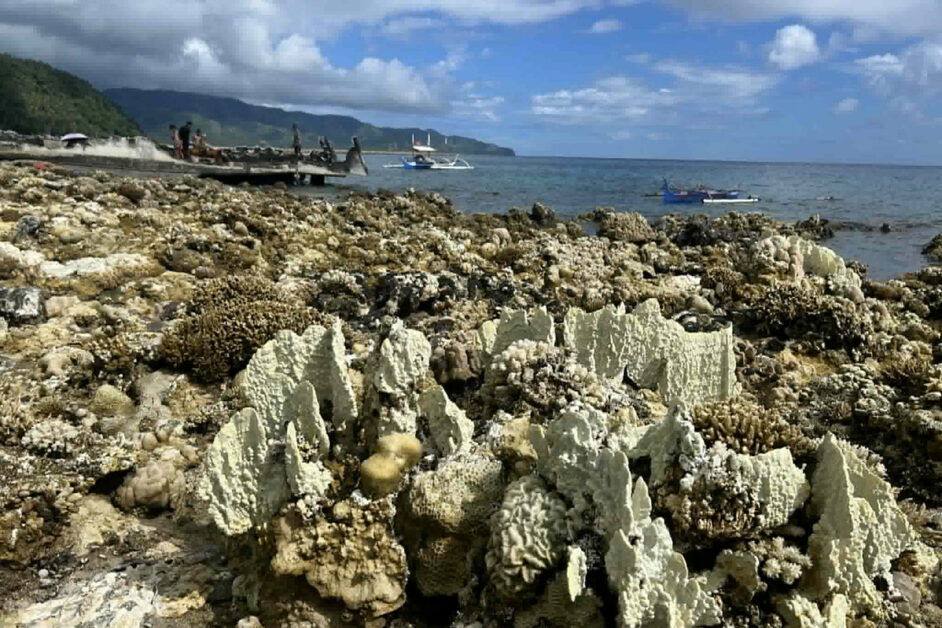
As well as, the tremor prompted a coastal uplift within the cities of Glan in Sarangani and Jose Abad Santos in Davao Occidental, exposing coral reefs close to the shore. Uncovered corals will die alongside their resident marine organisms comparable to coral fish and shells.
Nevertheless, coastal uplifts resulting from geological occasions are usually not the largest threats to coral reefs. A report printed on forbes.com on February 24, 2020 stated that over the following 20 years, scientists estimate about 70 to 90% of all coral reefs will disappear primarily on account of warming ocean waters, ocean acidity, and air pollution.
By 2100 there shall be almost zero appropriate coral habitats remaining, eliminating almost all residing coral reef habitats, based on the identical report.
What are coral reefs?
Coral reefs thrive in shallow, tropical waters created by large colonies of organisms referred to as coral polyps. Labeled as animals, coral polyps – distant family of jellyfish and anemones – kind each the arduous and tender coral present in reefs. Briefly, a coral reef is a residing creature.
As defined in an article on reef-world.org, “Arduous coral varieties when polyps take the calcium from the water and rework it into large skeletal, limestone constructions. Consider these because the constructing blocks of coral reefs! Smooth coral, then again, is rather more floaty, plant-like and, properly, tender! That is the kind of coral you’ll see colorfully swaying with the ocean present. They don’t have stony skeletons just like the arduous coral. As an alternative, they develop wood-like cores for help and so they thrive in nutrient wealthy waters.”
Threats to coral reefs within the Philippines
The Philippine archipelago is situated on the Northern nook of the Coral Triangle. Coral reefs within the Philippines account for 593 species of arduous corals (IUCN, 2021). Essentially the most considerable kind of reef is the fringing reef, which develops alongside the coastlines, though barrier reefs, atolls and patch reefs are additionally present in Philippine waters.
Stressors affecting the well being of coral reefs embody overfishing, air pollution and unsustainable tourism practices. Put merely, coral reefs are susceptible to human exercise.
A research was performed on the state of coral reefs within the Kalayaan Island Group within the West Philippine Sea in 2022. Amongst different findings, the research discovered that coral variety there was “typically low… indicating the degraded state of those reefs.”
“The first elements contributing to the noticed decline in coral cowl and variety seem
to be a mix of pure and human-induced stressors. The presence of lifeless corals, rubble, and the reported prevalence of blast fishing suggests ongoing damaging practices that threaten reef resilience,” based on the research.
One other study made in 2021 notes: “Coral reefs within the Philippines are primarily threatened by overfishing and damaging fishing practices. Coastal improvement and watershed-based air pollution, which result in siltation, additionally signify an extra supply of anthropic stress for coral reefs. By way of pure threats, coral reefs within the Philippines are additionally topic to thermal stress and coral bleaching. As well as, the nation is situated within the storm belt, and cyclonic storms are frequent within the space.”
What occurs if coral reefs are misplaced?
As proven by the research cited above, the threats to coral reefs are actual. Under are among the results as soon as they’re broken or misplaced:
Lack of habitat for marine life
Often called the “rainforests of the ocean,” coral reefs present habitat for over a million species regardless of overlaying lower than 1% of the ocean. They supply meals, shelter and the spawning grounds wanted for his or her species’ survival. Their loss will imply the disappearance of many fish, turtles and different creatures.
Collapse of coastal fishing industries
The disappearance of coral reefs will have an effect on round one billion individuals who rely on them for meals and livelihood. It would additionally imply a scarcity of seafood provide that may put stress on land-based meals manufacturing to make up for the shortfall.
Within the Philippines the fisheries sector is a crucial part of the financial system, offering meals, income, and employment. It instantly or not directly employs 2.29 million individuals in in seize, aquaculture, fish processing, packaging, and transportation (BFAR, 2024). Though the gross home product (GDP) contribution in fishing was circuitously reported, the agriculture, forestry, and fishing sectors collectively contributed 8.6 % to the nation’s GDP in 2023 (PSA, 2024).
Coastal tourism economies would shrink
Coral reefs entice vacationers to over 100 nations and territories worldwide, producing round $36 billion in income per 12 months, based on a 2017 study. With out these colourful reefs to go to, vacationer arrivals would drastically lower. This might imply an affect on native companies like eating places, motels, distributors, tour guides, and different sectors that rely on tourism.
Much less oxygen
On land it’s the bushes that play a serious function in producing oxygen within the ambiance. The oceans, nonetheless, produce round 50-80% of oxygen on the planet by plankton and different photosynthesizing micro organism. In flip, this oxygen is consumed by marine life and by people too within the air we breathe. This implies a wholesome ambiance wants a wholesome ocean, and a wholesome ocean wants wholesome coral reefs. (Analysis by H. Marcos C. Mordeno/MindaNews)
References:
https://reef-world.org/blog/no-coral-reefs
https://www.seafdec.org/fisheries-country-profile-philippines
https://www.sciencedirect.com/science/article/pii/S0308597X17300635
https://oceanservice.noaa.gov/facts/why-care-about-ocean.html
https://weblog.passive-income4u.com/create-your-very-own-auto-publish-news-blog-site-and-earn-passive-income-in-just-4-easy-steps/
https://mindanews.com/top-stories/2026/06/explainer-what-happens-when-coral-reefs-disappear/