
MANILA, Philippines – A mortgage software within the Philippines doesn’t all the time include crisp financial institution statements and full payslips.
It could as a substitute be a blurry rural financial institution type, a handwritten document folded one too many instances, or screenshots of GCash transactions from somebody exterior the formal banking system. However someplace in that jumble could possibly be proof that the borrower can repay.
Younger Filipino founder Carmel Limcaoco needs AI to do the digging.
Limcaoco and her co-founder — longtime finest good friend and Stanford classmate Rhea Malhotra — based Kita, a synthetic intelligence platform that helps banks, fintech firms, microfinance establishments, and different lenders course of mortgage functions.
Kita is just not a lender. Working behind the scenes, its “AI credit score officer” requests paperwork primarily based on a borrower’s circumstances, spots lacking data, and follows up by means of Viber, WhatsApp, or SMS.
“Lenders within the Philippines face two issues directly. They’re badly backlogged, they usually lack adequate knowledge to determine with confidence. We handle each,” Limcaoco instructed Rappler in an interview.
Kita stated its expertise can learn greater than 50 forms of paperwork, from PDFs and e-wallet screenshots to handwritten notes and photographs of crumpled paper. Utilizing vision-language fashions, it will possibly perceive Tagalog, Taglish, and Cebuano, alongside Spanish, Bahasa, and different languages.
“We learn paperwork the way in which an individual does, from what’s on the web page, so a rural financial institution’s handwritten passbook or a format no one has encoded works on first submission,” Limcaoco stated.
Kita extracts the figures, flags inconsistencies, applies the lender’s credit score guidelines, and drafts a credit score memo for human assessment. Every determine is linked again to its supply doc.
In its first 5 months, Kita stated it processed greater than $130 million in mortgage quantity, over 60% of it from the Philippines.
One shopper is TRBank, a rural financial institution whose 4 years of lending historical past sat in hundreds of paper folders. Kita stated it transformed the archive into searchable knowledge in underneath three days, with accuracy verified at above 97%.
From a one-bedroom residence to Y Combinator
Kita started with a friendship, a shared one-bedroom residence in Boston, and finally, a visit to Manila.
Limcaoco and Malhotra met in 2020, when the pandemic threw them into unusually shut quarters. They later studied pc science at Stanford and started trying to find one thing they may construct collectively. In Manila, they discovered it in an unlikely place: mortgage paperwork.
Raised in Manila, Limcaoco obtained United Nations recognition at 16 for her work with One Million Lights Philippines. She later studied at Stanford, labored on audio and music merchandise at Apple, and helped launch Kaya Founders’ fellowship for aspiring product managers.
Malhotra entered analysis at 13, contributed to Pfizer’s COVID-19 vaccine effort at 17, and studied pc imaginative and prescient and robotics at Stanford. She deferred a Princeton doctorate in AI to construct Kita.
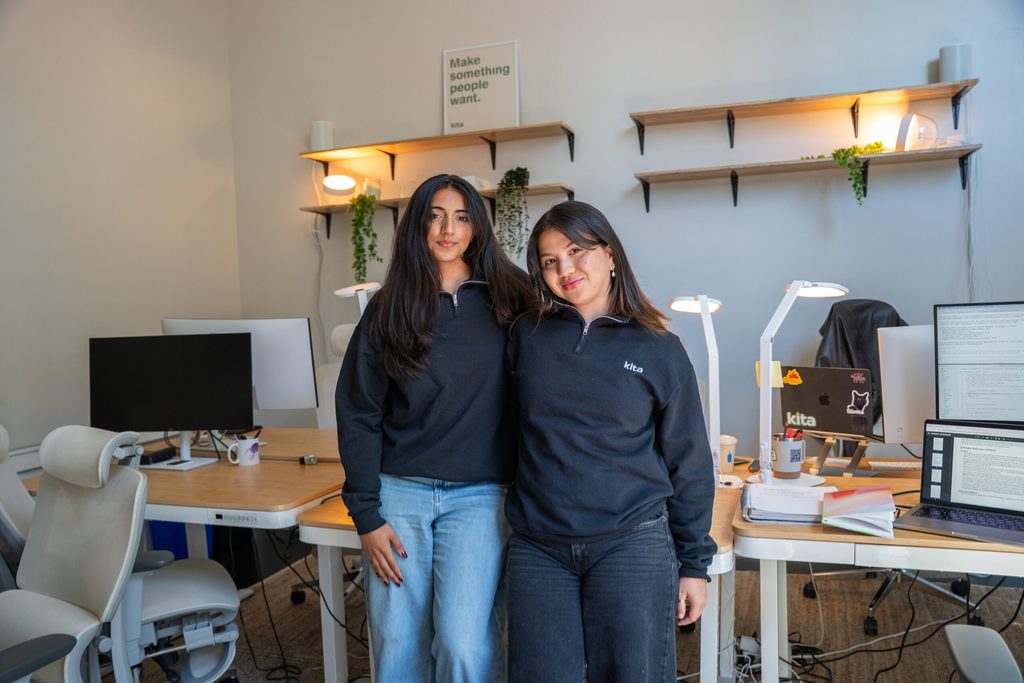
That pedigree has attracted some heavyweight believers. Kita raised $4.5 million in a seed spherical led by BoxGroup, with Lisa Gokongwei-Cheng becoming a member of as an angel investor alongside Kaya Founders, the enterprise capital agency she co-founded and whose funds her household helped anchor. Different backers embody Apex Star Capital, the household workplace of Xiaomi co-founder Lin Bin.
Kita additionally handed by means of Y Combinator, the start-up kingmaker that backed Reddit, Airbnb, and Stripe at their earliest phases. The corporate says Limcaoco is the primary Filipina founder admitted to YC in over 5 years.
How far will Kita go?
However competitors is already brewing, typically underneath the identical investor’s roof. Kaya Founders additionally backs Moneta, an AI platform that helps banks analyze company debtors’ paperwork and produce lender-ready credit score assessments. Not precisely the identical however fairly near Kita’s turf.
Limcaoco isn’t too bothered.
“We’d anticipate any fund critical about fintech infrastructure to take a look at a couple of firm in a class this measurement,” she stated.
She argues that Kita stands aside by studying unfamiliar codecs with out advance configuration, tracing each output to its supply, and selecting “the toughest path first” by working with conventional banks and huge microlenders carrying many years of legacy information.
Kita will stay near San Francisco’s AI expertise pool whereas hiring within the Philippines, the place it says it’s investing most intentionally. Its new funding will broaden its engineering workforce and strengthen its underwriting and fraud-detection instruments because it pursues clients throughout Southeast Asia, Latin America, the US, and Africa.
“A rural financial institution within the Philippines and a microlender in Mexico aren’t the identical establishment, however the sequence they transfer by means of is analogous sufficient that classes carry,” Limcaoco stated.
Even with these international ambitions, the founders draw a line round what the expertise ought to do. Sure, AI can learn the rumpled notes, discover the lacking figures, and write a digestible credit score memo. Tedious work, however largely routine.
What AI mustn’t have is the ultimate phrase on a choice that would form somebody’s monetary future.
“Selections that deeply have an effect on folks’s livelihoods ought to all the time contain human oversight,” Malhotra stated. – Rappler.com
Finterest is Rappler’s sequence that demystifies the world of cash and offers sensible recommendation on managing your private funds.
https://weblog.passive-income4u.com/create-your-very-own-auto-publish-news-blog-site-and-earn-passive-income-in-just-4-easy-steps/
https://www.rappler.com/enterprise/young-filipina-carmel-limcaoco-teaching-ai-loans-kita/