GENERAL SANTOS CITY (MindaNews / 25 November 2026) — 4 writers from Mindanao, together with three Moro writers, had been among the many awardees of the 76th Carlos Palanca Memorial Awards for Literature, bringing tales formed by the area’s assorted experiences to the nation’s literary stage.
Gutierrez Mangansakan II gained the Grand Prize for Novel in English for Faramanis, whereas Mubarak Tahir acquired Second Prize in each Desk of Contents and Bones of Youngsters.
Jade Mark Capiñanes of Davao Metropolis gained Second Prize in Essay, whereas Ruby Ahaja of Tawi-Tawi acquired Third Prize in Quick Story for Youngsters.
For Tahir and Mangansakan, each Maguindanaon writers, their recognition displays alternative ways of drawing from private and collective experiences to create literary works.
Tahir stated his two successful works had been largely influenced by private experiences, though they demanded totally different approaches due to their literary varieties.
His one-act play, Ang Huling Panawagan sa Pagdarasal, attracts from the on a regular basis experiences of abnormal Moro folks in public markets which, he stated, typically go unnoticed by politicians.
His assortment of kids’s poems, in the meantime, attracts from his childhood experiences earlier than he moved to Davao due to the persevering with battle in Maguindanao.
”Private expertise has a major affect on each successful works,” Tahir stated.
He likened expertise to the flesh of a literary work, with literary gadgets giving it form and kind.
”If these works had been a physique, lived expertise can be the flesh, whereas their varied shapes, sizes, lengths, and varieties signify the literary gadgets that helped improve the work,” he stated.
Regardless of their shared basis in private expertise, Tahir stated he approached the 2 works in a different way.
Writing youngsters’s poetry required cautious consideration of the phrases used, notably the capability of younger readers to know the poems and kind clear photographs from them.
“One have to be extra cautious when crafting poetry for youngsters; past choosing phrases suited to their studying comprehension stage, additionally it is important that they will simply grasp the message and kind clear psychological photographs—the extra lyrical, the higher),” he stated.
The play, in the meantime, required a extra philosophical and religious remedy of language, with its political message supposed not solely to be understood via studying but in addition felt by audiences when carried out.
”In the meantime, within the play, the association of phrases is extra philosophical and religious as that is the topic of the work; it requires extra in-depth understanding, not due to the phrases used, however their which means by way of weight and what they convey to the viewers when it’s carried out. Greater than that, it’s extra political – it rattles the System (In the meantime, in a play, the association of phrases is extra philosophical and religious, as this constitutes the very topic of the work; it calls for a deeper stage of understanding—not essentially due to the particular phrases used, however due to the burden and influence these phrases carry for the viewers throughout a efficiency. Moreover, it’s inherently extra political—difficult the system),” he stated.
For Mangansakan, writing can also be an act of confronting questions on reminiscence, historical past, and the methods Mindanao is represented.
He stated he repeatedly returns to questions that haven’t any simple decision, together with who will get to inform the story of Mindanao, whose reminiscence turns into historical past, and what occurs when the grand narratives of nation, faith, battle, and politics enter folks’s intimate lives.
”I’m within the hole between the Mindanao that’s imagined from elsewhere and the Mindanao that I’ve really recognized,” he stated.
He stated he has all the time been fascinated by the contradictions of a spot that carries the burden of generations of battle however remains to be full of individuals worrying about lunch, falling in love, gossiping about their neighbors, going to the market, watching Fb reels, or dreaming of leaving and returning dwelling.
”These abnormal particulars are usually not peripheral to historical past, moderately they’re the place historical past really lives,” he stated.
For Mangansakan, filmmaking and writing are additionally acts of remembrance, formed by what he inherited from his grandparents, what he chooses to recollect, and what he intentionally forgets.
”As a Maguindanaon and Bangsamoro author, I can not separate these questions from the bigger histories of colonization, displacement, the Moro wrestle, and the difficult formation of the Philippine nation,” he stated.
”However I don’t need literature to turn out to be merely an archive of grievances or a listing of struggling. I wish to discover the total humanity of people that occur to reside in a spot that has so typically been decreased to battle.”
Mangansakan additionally questioned the expectation that literature from Mindanao should all the time clarify the area to readers elsewhere within the nation.
He stated tales from the South are sometimes learn ethnographically, as if each work should operate as a cultural briefing about battle, poverty, Islam, insurgency, or Indigenous life.
”These items are vital, in fact, however literature is extra unruly than anthropology or journalism,” he stated.
”A novel or a movie also needs to be allowed to be unusual, humorous, erotic, philosophical, absurd, formally experimental, intimate, or just about two folks having a troublesome dialog.”
For him, Mindanawon writers must be allowed to write down from their very own histories and locations with out feeling obliged to signify a whole area.
”I believe the very first thing is for us to cease apologizing for the place the story comes from,” he stated.
”A narrative from Mindanao shouldn’t must turn out to be much less Mindanawon as a way to be thought-about a part of Philippine literature. It must be allowed to hold its personal languages, histories, humor, silences, landscapes, and methods of understanding the world.”
He stated the specificity of a narrative isn’t a limitation however exactly what offers literature its energy.
”A deeply explicit story can turn out to be common not by eradicating its cultural specificity, however by rendering that specificity honestly and imaginatively,” he stated.
Mangansakan’s successful novel, Faramanis, itself underwent a change earlier than changing into a literary work.
Initially conceived as a screenplay, the challenge was developed via worldwide packages, together with the Locarno Open Doorways Script Mentorship Program and the Asia Pacific Display Awards–Movement Image Affiliation Movie Fund.
Nevertheless, producing the historic interval piece proved difficult, prompting him to show the screenplay right into a novel.
A filmmaker, fictionist, essayist, and editor, Mangansakan has labored throughout literature and cinema for greater than 20 years. He based the Salamindanaw Asian Movie Competition and Bidadali Press and edits the Bangsamoro Literary Evaluate.
Tahir, a professor of Filipino at Mindanao State College-Normal Santos, writes poetry, drama, essays, analysis, and translation. He beforehand gained a Palanca Award in 2017, receiving Third Prize in Narrative for Aden Bon Besen Uyag-Uyag (Might Buhay Pa Pala).
Each writers additionally served as panelists within the inaugural Bangsamoro Writers Workshop, the place they engaged and mentored rising writers from throughout the Bangsamoro area.
The popularity of the 4 writers highlights the vary of literary work rising from Mindanao, from tales knowledgeable by private reminiscences and historic experiences to works that discover the area past acquainted narratives of battle.
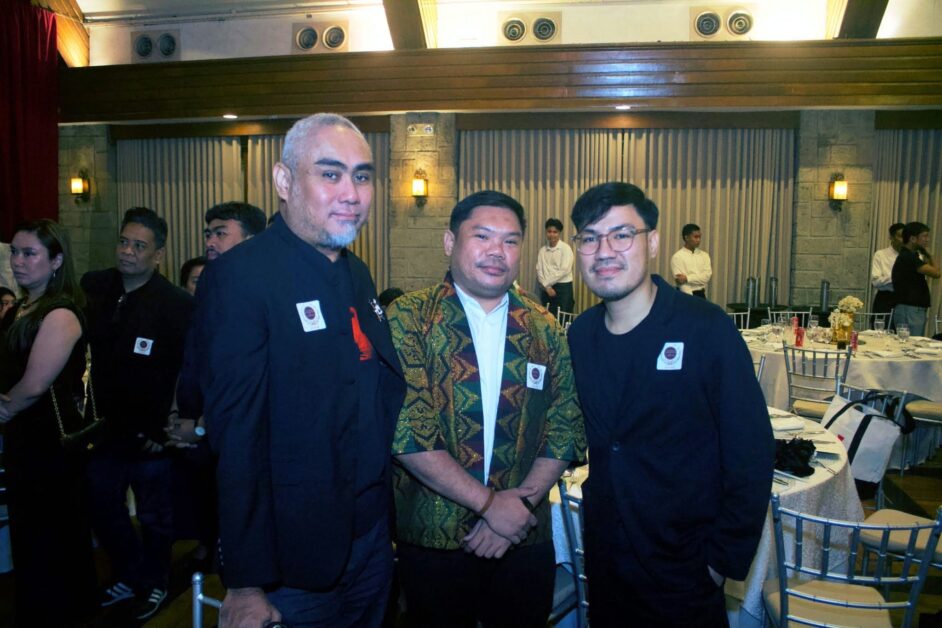
The 76th Carlos Palanca Memorial Awards for Literature held its awarding ceremony Tuesday evening, November 24, 2026, on the Manila Polo Membership. (Justine Paul Paraz / MindaNews)
https://weblog.passive-income4u.com/create-your-very-own-auto-publish-news-blog-site-and-earn-passive-income-in-just-4-easy-steps/
https://mindanews.com/arts-culture/2026/11/four-writers-from-mindanao-win-at-76th-palanca-awards/