There’s a temptation in politically charged instances to assault the messenger when the message turns into uncomfortable. That temptation was evident within the response to the testimony of the Anti-Money Laundering Council (AMLC) earlier than the Senate sitting as an impeachment court docket, with some making an attempt to painting the AMLC as politically motivated, as if the monetary intelligence it offered have been merely one other partisan accusation against Vice President Sara Duterte.
That misses the institutional character of the AMLC.
The AMLC is just not a political creation of the impeachment prosecution. It’s a creature of legislation. Created beneath Republic Act No. 9160the Anti-Cash Laundering Act of 2001, it’s the Philippines’ monetary intelligence unit, mandated to obtain and analyze coated and suspicious transaction reviews and to assist defend the integrity of the nation’s monetary system. It’s subsequently not an optionally available commentator on this course of however a part of the nation’s monetary accountability structure.
Because of this Monday’s testimony is so vital, and why the try to stop it from being heard deserves consideration.
Earlier than analyzing what the AMLC discovered, it’s price contemplating what nearly prevented the nation from listening to it. The protection sought to exclude AMLC Secretariat Government Director Ronel Buenaventura from testifying, invoking the confidentiality provisions of the Anti-Cash Laundering Act and questioning the disclosure of economic info within the company’s possession.

The objection was vital. If accepted broadly, it may have prevented the nation’s financial-intelligence company from explaining to the constitutional court docket the very info it’s legally mandated to gather and analyze.
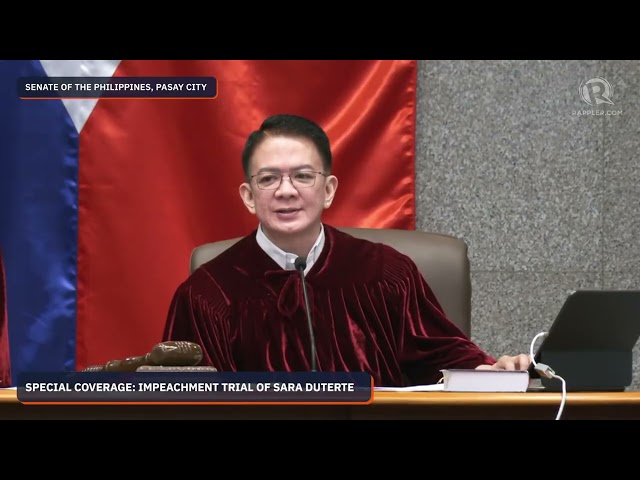
The presiding officer, Senator Francis Escudero, rejected the defense place.
His ruling acknowledged a distinction that ought to be apparent however is typically intentionally blurred: confidentiality is just not the identical as immunity from lawful inquiry. Part 8-A of the AMLA protects info towards unauthorized disclosure, but it surely can not moderately be interpreted to disable the AMLC from performing the investigative and litigation features that the legislation itself offers it, or from complying with a lawful and particularized subpoena from the impeachment court docket. The Senate additionally acknowledged that the Financial institution Secrecy Regulation itself supplies an exception to confidentiality for impeachment proceedings.
That is remarkably per the place earlier superior by former AMLC executive director Vicente Aquino years in the past.

Aquino argued that Part 8-A’s confidentiality rule is just not absolute. The legislation itself contemplates info alternate, dissemination and entry beneath applicable circumstances. He particularly maintained that the prohibition doesn’t stop lawful disclosure to courts and approved authorities companies.
Extra essentially, Aquino reminded us why the AMLC exists within the first place. It was created to assemble monetary info, analyze suspicious and coated transactions, examine money laundering and help courts and associate companies in proceedings involving the preservation, restoration and forfeiture of property. Data gathered by the AMLC turns into helpful when it may be correctly utilized by competent authorities.
The convergence between Aquino’s institutional argument and the impeachment court docket’s ruling is subsequently vital. Confidentiality protects monetary info from unauthorized disclosure; it can not develop into a authorized defend that stops a reliable constitutional tribunal from analyzing monetary intelligence via a lawful course of.
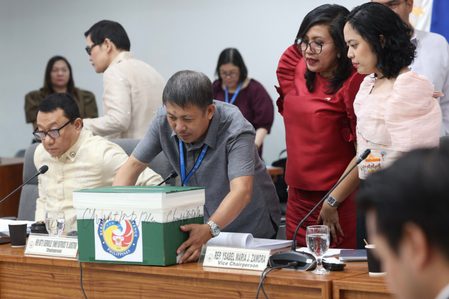
The AMLC is just not an impeachment prosecutor, a political celebration or the court docket itself. It’s the establishment that possesses monetary intelligence related to an allegation the impeachment court docket is constitutionally required to look at. Having been allowed to testify, the extra vital query now’s what that monetary intelligence means.
And what it has positioned earlier than the court docket is substantial.
AMLC information offered by Buenaventura confirmed ₱4.4 billion in covered and suspicious transactions involving Vice President Duterte and her husband, Manases Carpio, from 2007 to 2025. The information consisted of 666 coated transaction reviews and 55 suspicious transaction reviews.

The quantity is staggering, however precision issues. The ₱4.4 billion shouldn’t be described as ₱4.4 billion of non-public wealth. It’s the mixture worth of reported monetary transactions. Cash can enter and go away an account with out turning into amassed wealth. Certainly, the AMLC presentation reportedly recognized roughly ₱1.63 billion in inflows, ₱1.31 billion in outflows, and about ₱1.46 billion whose path couldn’t be decided from the abstract offered.
That qualification doesn’t diminish the importance of the proof.
It sharpens the query that the impeachment court docket now has to reply: What do these transactions signify? The place did the cash come from, the place did it go, who have been the counterparties, what reliable financial actions clarify the actions, and might the monetary flows be reconciled with the lawful revenue, declared property and identified sources of wealth of the individuals concerned?
That’s what monetary intelligence is meant to assist set up.
It’s also why the characterization of the AMLC as merely a “political” instrument is so misplaced. The transactions didn’t originate from the AMLC. They originated within the monetary system and have been reported by coated establishments pursuant to legislation. The AMLC acquired, analyzed and arranged these reviews in accordance with its statutory mandate.
If a financial institution reviews a transaction as a result of the legislation requires it to take action, the financial institution doesn’t thereby develop into political. If a number of monetary establishments submit reviews to the nation’s legally designated financial-intelligence unit, these establishments don’t thereby develop into political. And when the AMLC analyzes these reviews and presents the ensuing info pursuant to a lawful subpoena from a constitutional court docket, that doesn’t make the company political both.
The suitable response to the AMLC testimony, subsequently, is to not demonize the establishment however to look at the numbers.
Aquino’s earlier argument is especially related right here. The State actually has an obligation to guard the integrity and confidentiality of financial institution accounts. However the identical legislation declares that the Philippines should not be used as a website for laundering the proceeds of illegal actions. The AMLC’s institutional goal lies exactly at that intersection: defending reliable monetary privateness whereas serving to competent authorities establish transactions that require additional scrutiny.
Its credibility ought to consequently be judged by its authorized mandate, the standard of its monetary intelligence and the proof it presents, not by whether or not its findings are politically handy.
Reverse errors
The impeachment court docket also needs to resist two reverse errors.
One could be to conclude that ₱4.4 billion in reported transactions routinely means ₱4.4 billion in unexplained wealth. It doesn’t. The opposite, equally critical, could be to dismiss the ₱4.4 billion just because the AMLC has been accused of being political. That will be equally unwarranted.
The right method is to comply with the monetary path and set up what entered the accounts, what left them, who offered the funds, who acquired them, what reliable transactions clarify them, and whether or not the exercise is sufficiently mirrored in declared revenue and property. The difficulty is finally considered one of reconciliation: whether or not the monetary image that emerges will be reconciled with the reliable sources of revenue and wealth disclosed by the couple.
The 18-year interval is especially related. The court docket is just not wanting solely at what occurred after Duterte turned Vice President. Earlier information can set up a monetary baseline towards which later adjustments in revenue, property and monetary exercise will be measured. The query is subsequently not merely how a lot wealth the Vice President and her husband amassed, however how their monetary place developed over time and whether or not that evolution will be satisfactorily defined. (READ: IN NUMBERS: What impeachment hearings unveiled about Sara Duterte’s wealth)
In the end, nonetheless, the difficulty is bigger than accounting.
Impeachment is a constitutional mechanism for figuring out whether or not a excessive public official stays worthy of the extraordinary belief vested in public workplace. The Structure declares that public workplace is a public belief and requires public officers to stay accountable to the folks and to serve them with accountability, integrity, loyalty and effectivity.
The AMLC proof subsequently issues past banking. If the monetary information finally exhibit that the transactions are reliable and adequately explainable, that ought to be established clearly. But when substantial parts stay unexplained, inconsistent with declared revenue, or in any other case increase credible questions in regards to the accumulation of wealth, these questions can not merely be dismissed by attacking the establishment that uncovered the monetary path.
The cumulative image is what issues: lots of of coated transaction reviews, dozens of suspicious transaction reviews, billions of pesos in mixture monetary exercise and 18 years of economic historical past. None of those info, standing alone, establishes guilt. However taken collectively, they set up that there’s sufficient monetary info to require a critical clarification.
That isn’t persecution, and it’s not routinely politics. It’s the essence of accountability.
Maybe that is crucial lesson from the AMLC testimony. The Philippines shouldn’t weaken or discredit its financial-intelligence establishments just because, on one event, their findings develop into politically inconvenient. The AMLC was created by legislation to comply with the cash and assist competent authorities perceive what the monetary system is telling them.
The impeachment court docket should now do its half: look at the proof, check the reasons and decide what the monetary path finally reveals.
In the long run, the difficulty is just not whether or not the AMLC is political. It’s whether or not the monetary intelligence it has lawfully gathered will be defined, and what these explanations, or the absence of them, say in regards to the integrity and fitness of a Vice President in search of to stay in public service. – Rappler.com
Diwa C. Guinigundo is the previous deputy governor for financial coverage and different points of central banking. He was a former alternate govt director on the IMF in Washington, DC in 2001-2003. He’s the writer and editor of a number of books on political economic system, regional disaster and cooperation, debt and financial development and public coverage agenda.
He serves as unbiased director of a number of company and monetary establishments with give attention to company governance, threat oversight and audit.
He additionally serves as principal advisor for New York-based GlobalSourcePartners. He stays within the advisory board of ASEAN Macroeconomic Research Office and Singapore Administration College’s Sim Kee Boon Institute for Monetary Economics.
He’s the senior pastor of the Fullness of Christ International Ministries in Mandaluyong.
Under are associated Puso at Diwa columns you will have missed:
ALSO ON RAPPLER
https://weblog.passive-income4u.com/create-your-very-own-auto-publish-news-blog-site-and-earn-passive-income-in-just-4-easy-steps/
https://www.rappler.com/voices/thought-leaders/puso-at-diwa-when-anti-money-laundering-council-financial-intelligence-speaks/