On Might 7, Socioeconomic Planning Secretary Arsenio Balisacan was requested at a press convention whether or not the Philippines had slipped into stagflation. His reply: “I don’t see it that approach.” Inflation was being managed, he mentioned. Progress had merely “slowed down a bit.” With “structural reforms” underway, the expansion momentum would return in time.
Just a few weeks, his boss mentioned the other. In a roundtable with Japanese reporters on Might 19, President Ferdinand Marcos Jr. acknowledged that stagflation is exactly the fear. “To the financial system, the priority that now we have is the priority about stagflation,” he mentioned, “so that is what now we have been attempting to regulate.” Marcos even signaled that the federal government may let costs of “non-critical” meals gadgets rise, as a result of suppliers are “feeling the pinch.”
This isn’t the primary time that President Marcos not directly disagreed together with his financial managers. I recall that, a number of years in the past, former finance secretary Benjamin Diokno mentioned the debt-GDP ratio was “not worrisome,” whilst President Marcos flagged it as an rising concern.
So which is it? Are we in a stagflation episode or not?
What the numbers truly say
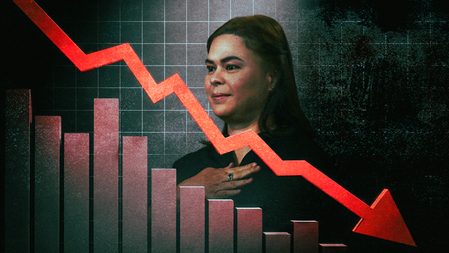
Let’s begin with the info. Within the first quarter of 2026, GDP grew 2.8% year-on-year, the slowest non-pandemic print because the world monetary disaster. It’s the third straight quarter of deceleration.
In contrast, headline inflation accelerated from 2.0% in January to 4.1% in March, then jumped to 7.2% in April. That’s the quickest in three years, and the largest month-on-month inflation soar in Twenty first-century Philippine historical past.
Stagflation is a portmanteau of slowing development or “stagnation” coupled with persistent, accelerating “inflation.” Secretary Balisacan is technically right that there is no such thing as a universally agreed numerical threshold.
However judging by what we’re experiencing proper now, I’d say that we’re already experiencing stagflation, and we’re residing in a stagflationary episode.
The phrase stagflation was coined within the Sixties and grew in reputation within the wake of the Nineteen Seventies world oil disaster, likewise sparked by battle within the Center East. To make certain, we’re nowhere close to the double-digit inflation charges we used to expertise within the Nineteen Seventies to Nineteen Eighties, and likewise nowhere close to the historic recession in 1984 to 1985. However for a rustic whose pre-pandemic pattern development was round 6%, development of beneath 3% mixed with 7% inflation will not be “a little bit of a slowdown.” It’s exactly the double whammy that characterizes stagflation, albeit utilizing fashionable requirements.
Abating inflation
The stagflation we’re experiencing has warranted vital alarm on the a part of our policymakers.
First, the Bangko Sentral ng Pilipinas (BSP) is clearly very fearful by the sharp rise of inflation. They already raised their policy rate in response to April’s inflation spike, and simply yesterday, Might 21, BSP Governor Eli Remolona mentioned they’re “considering” yet one more coverage price hike for the June assembly of the Financial Board, the BSP’s highest policymaking physique.
These selections are sound and defensible in the event that they consider inflation expectations are susceptible to “unanchoring” or being unstable. However the truth that they’re climbing rates of interest within the financial system amid a development slowdown suggests they’re prepared to tolerate a fair higher decline of output if which means controlling inflation higher. That’s the form of powerful trade-off confronted by central banks worldwide in stagflationary episodes equivalent to this one.
The BSP can solely management inflation to an extent, and one may say that their efforts appear to distinction with President Marcos’ trace that the federal government could “tolerate greater costs for sure non-essential meals gadgets.” That indicators to producers that worth ceilings will probably be policed selectively, and it would entrench inflation expectations moderately than anchoring them.
The brand new P50 rice capin the meantime, addresses the symptom and never the availability shock itself. Rice ceilings have an extended Philippine monitor report of manufacturing queues, parallel markets, and eventual rollback. It didn’t work in September 2023when Marcos tried precisely the identical factor, and I doubt it should do a lot now.
Accelerating disbursements
In the meantime, fiscal policymakers appear very involved with the drastic slowdown of presidency funding. President Marcos’ personal admission is telling: public spending was delayed within the first quarter of 2026, and the federal government is now attempting to “speed up” it.
Why was it delayed? Probably the most believable studying, which I’ve written about earlier than, is the spillover from the 2025 flood-control corruption scandal. Disbursing officers, particularly within the Division of Price range and Administration (DBM), turned understandably reluctant to log out on infrastructure initiatives. GDP information present that authorities building has subtracted from complete building for 4 straight quarters.
I believe that is a part of the rationale for the sudden sacking of finances appearing secretary Rolando Toledo, and his alternative by Kim Robert De Leonthe brand new finances secretary, aged 32.
In a Home of Representatives listening to on Might 12, methods and means chairperson Miro Quimbo alluded to incoming Secretary De Leon and known as him as somebody who “could be very strict” but additionally “very facilitative” as properly. I take that to imply that the DBM beneath De Leon’s watch gained’t be overly cautious to spend, and can facilitate spending, particularly disbursements for lawmakers (due to this fact reverse the spell of gradual disbursements).
What a coherent response would seem like
It doesn’t encourage an excessive amount of confidence that the president and his economists can’t agree concerning the present financial scenario and diagnose it with coherence.
However whether or not or not the current financial disaster is known as stagflation, the combo of excessive costs and weak development is simply as dangerous, and calls for a proportional and coherent response from authorities.
First, the financial staff ought to converge on a single public message. The staff ought to agree on what configuration of development and inflation it considers acceptable, and what they may do if the numbers worsen. They now face a dilemma: management inflation with greater rates of interest however undergo a protracted development slowdown, or abate the slowdown however worsen inflation. That short-run trade-off have to be navigated rigorously with a gentle hand coming from our leaders, ideally President Marcos himself.
Second, if we resolve to spend extra aggressively, fiscal coverage ought to unfreeze spending with out unfreezing the corruption. The political actuality is that with the Unbiased Fee for Infrastructure (ICI) dissolved on March 31, the corruption probe has all however misplaced steam, and that makes unfreezing reputable disbursements simpler on paper, but additionally riskier in apply.
I’m fearful that the historic second impeachment of Vice President Sara Duterte could open the floodgates for extra pork barrel initiatives—as a possible reward to the 257 lawmakers who voted to question Duterte. For the report, shakeup within the DBM occurred simply 8 days after that historic vote. The timing invitations some suspicion. We should always all watch that house.
Third, whereas oil costs are nonetheless elevated, the demand-side response (focused support or support, service contracting, transport gasoline reductions, buffer shares for staples) nonetheless must be scaled up. Within the newest assembly of the UPLIFT committee, it was reported that authorities had already given out P7.3 billion in money reduction help to about 1.4 million PUV drivers. On the similar time, authorities is in search of methods to raised goal support.
In conclusion, a stagflation by another title would scent as dangerous, and must be addressed simply as urgently. Nonetheless, I’m afraid the financial response dangers being distracted by the escalation of political drama, what with the upcoming impeachment trial of Vice President Duterte by July 6. – Rappler.com
Dr. JC Punongbayan is an affiliate professor on the UP Faculty of Economics and the writer of False Nostalgia: The Marcos “Golden Age” Myths and How to Debunk Them. In 2024, he obtained The Excellent Younger Males (TOYM) Award for economics. Comply with him on Instagram (@jcpunongbayan).
Click on right here for extra In This Economy articles.
https://weblog.passive-income4u.com/create-your-very-own-auto-publish-news-blog-site-and-earn-passive-income-in-just-4-easy-steps/
https://www.rappler.com/voices/thought-leaders/in-this-economy-philippines-stagflation-risks/