William Ernest Henley’s 1875 poem ‘Invictus’ is broadly referenced to specific resilience within the face of adversity. Why has it turn into the Dutertes’ favourite literary piece to cite?
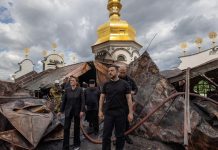
MANILA, Philippines – Vice President Sara Duterte showed up at the Senate on Tuesday, July 7, however to not attend her impeachment trial.
Earlier than she met along with her protection staff, which was speculated to be the solepurpose of her shock Senate journey, she delivered a single assertion at what the media thought was a press convention: “On this massacre and bludgeoning, I can be bloodied however unbowed.”
It is a line from the broadly identified poem Invictus by William Ernest Henley.
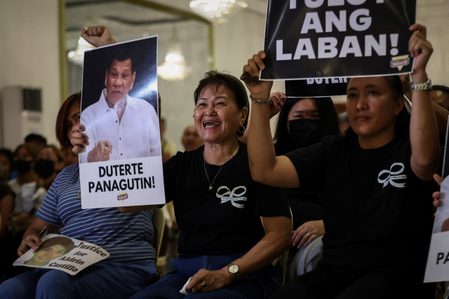
It was the identical poem her youthful sister, Kitty, had quoted again in April when the Worldwide Legal Court docket (ICC) affirmed its jurisdiction over the crimes in opposition to humanity case of their father, former president Rodrigo Duterte, who’s detained in The Hague, the Netherlands.
Kitty had instructed the supporters of the Duterte patriarch that he wished her to relay his response to the ICC’s affirmation of all his expenses, after which proceeded to recite the whole poem — putting additional emphasis on the final two strains:
Out of the evening that covers me,
Black because the pit from pole to pole,
I thank no matter gods could also be
For my unconquerable soul.
Within the fell clutch of circumstance
I’ve not winced nor cried aloud.
Below the bludgeonings of probability
My head is bloody, however unbowed.
Past this place of wrath and tears
Looms however the Horror of the shade,
And but the menace of the years
Finds and shall discover me unafraid.
It issues not how strait the gate,
How charged with punishments the scroll,
I’m the grasp of my destiny,
I’m the captain of my soul.
A poem about resilience within the face of adversity
“Invictus” is the Latin time period for “unconquered.”
Henley had written Invictus in 1875 as he was receiving medical treatment for tuberculosis of the bone, in an try to convey that he was nonetheless able to remaining robust within the face of immense hardships. This very message has been used time and time once more by completely different public figures to specific and affirm how they really feel.
Invictus is considered the favorite poem of Nelson Mandela, who was identified for his struggle in opposition to apartheid and discrimination. Mandela was jailed for 27 years on Robben Island for opposing the South African regime earlier than he finally grew to become the nation’s president in 1994.
The poem was stated to have gotten Mandela through his time in jail.
Then-British prime minister Winston Churchill had additionally paraphrased the poem’s final two strains at the House of Commons in 1941 to elevate the nation’s morale within the midst of World Warfare II: “The temper of Britain is correctly and rightly averse from each type of shallow or untimely exultation. That is no time for boasts or glowing prophecies, however there’s this — a 12 months in the past our place regarded forlorn, and properly nigh determined, to all eyes however our personal. At this time we could say aloud earlier than an awe-struck world, ‘We’re nonetheless masters of our destiny. We nonetheless are captain of our souls.’”
Referenced on each ends of the spectrum
However whereas Henley’s iconic literary piece has been quoted up to now by world leaders who had worthy causes, Invictus was additionally identified to have been quoted by controversial figures who had perpetrated civilian killings.
As an example, Timothy McVeigh, who had bombed Oklahoma Metropolis in 1995, had used the poem as his final written statement earlier than his execution in 2001. The bombing took the lives of 168 people.
In 2019, Australian-born man Brenton Tarrant gunned down and killed a complete of 51 individuals in two mosques in Christchurch, New Zealand. The then-28-year-old man had plans to focus on a 3rd mosque, however was detained earlier than he might make his solution to it.
Simply earlier than the assaults, Tarrant had published an 87-page manifesto titled “The Great Replacement.” Right here, he described himself as a “common white man,” and stated that he “determined to take a stand to make sure a future for my individuals” — vowing to create an environment of worry amongst Muslims. He had ended the manifesto with Henley’s Invictus.
It then begs the query: Why precisely do the Duterte siblings hold quoting Invictus? – Rappler.com

https://weblog.passive-income4u.com/create-your-very-own-auto-publish-news-blog-site-and-earn-passive-income-in-just-4-easy-steps/
https://www.rappler.com/individuals/newsmakers/william-ernest-henley-invictus-poem-dutertes/