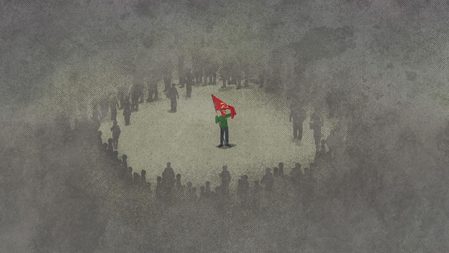
After the break up within the Communist Party of the Philippines (CPP) in 1993, many doubted that the communist insurgency waged by the CPP and its New People’s Army (NPA) would ever get better. However it did, even surpassing the height armed energy achieved within the Nineteen Eighties, first in 2005 then once more in 2017.
Since then, nevertheless, the CPP-NPA, reeling from the federal government’s intense counter-insurgency operations, has fallen right into a stoop, actually, into essentially the most severe disaster in its whole 58-year historical past.
Is it twilight time for the CPP-NPA insurgency?
From very modest beginnings, the CPP-NPA grew into a strong nationwide insurgent drive throughout the period of President Ferdinand Marcos, Sr. When the NPA launched its Maoist-style “protracted individuals’s struggle” in 1969, it began out as a ragtag band of about 60 fighters, 9 automated rifles and 26 single-shot rifles and pistols in Central Luzon. Through the interval of martial legislation, the NPA established guerrilla fronts in all the nation’s strategic mountainous areas exterior of the Moro areas. NPA guerrillas engaged the Philippine navy in tactical offensives, and constructed up its armed energy.
Within the early Nineteen Eighties, some CPP cadres advocated changes to the occasion’s revolutionary technique, arguing that its Maoist technique, which concerned “encircling the cities from the countryside” was a lot too weighted in favor of navy over political battle and rural over city struggles. They put ahead such different methods because the Vietnamese model of “protracted individuals’s struggle” which regarded each navy and political struggles as elementary and decisive, and the “insurrectional technique” of the Sandinistas in Nicaragua, which had asserted the primacy of the “insurrectional mass motion” over the navy battle.
Due to the CPP’s boycott of the 1986 presidential election, the CPP and the open “nationwide democratic” (ND) motion had been ignored of the “individuals energy” rebellion. However other than being a tactical mistake, the boycott fiasco additionally confirmed up the flaw within the CPP-NPA’s revolutionary technique. Whereas its forces had been nonetheless struggling to develop its navy battle alongside the stipulated levels of Mao’s “protracted individuals’s struggle,” the Filipino lots had toppled the Marcos dictatorship by an unarmed riot.
Peace negotiations between the federal government of the late president Corazon Aquino and the CPP’s politico-diplomatic arm, the Nationwide Democratic Entrance (NDF) in 1986-87 shortly collapsed. The federal government had demanded that the CPP-NPA-NDF lay down its arms, whereas the NDF had insisted that the talks handle the roots of the nation’s issues. (The NDF carried out peace talks with every of the post-authoritarian administrations, however didn’t attain a complete political settlement with any of them.)
Starting of a decline
For some time after the boycott fiasco, the NPA continued to develop, reaching its highest degree in 1987. The NPA was broadly reported to have swelled to 25,000 fighters, though CPP founding chair Jose Ma. Sison later belied that the NPA ever reached that quantity within the Nineteen Eighties. The CPP-NPA measures its armed energy primarily when it comes to high-powered rifles (comparable to M16, M14, AK-47 and M1 Garand). In keeping with Sison, the NPA’s armed energy “elevated to six,100 automated rifles in 1986 and nonetheless additional elevated by some hundreds in 1987,” its highest degree as much as that point.
Then the decline began. The political fallout from the boycott fiasco began impacting on the CPP-NPA. This was compounded by the revelations concerning the killings of a whole bunch of suspected authorities spies within the CPP-NPA’s anti-infiltration purges in 1982-89. The autumn of the socialist states in Japanese Europe and the Soviet Union raised questions concerning the very rectitude of the revolutionary left’s socialist undertaking.
Disagreements throughout the CPP management associated to revolutionary technique, evaluation of the up to date state of affairs, different social order, intra-party democracy and different main questions reached a boiling level within the early Nineteen Nineties. Sison wrote up “Reaffirm Our Primary Ideas and Rectify the Errors,” through which he lashed out at these essential of the occasion’s Maoist tenets, accusing them of propagating a line of “navy adventurism” and “insurrectionism.” The CPP break up into “reaffirmists” and “rejectionists,” with the “reaffirmists” rising because the legatee CPP. By way of many of the Nineteen Nineties, the CPP-NPA suffered an ebb.
On the flip of the millennium, nevertheless, the CPP-NPA began to get better. NPA guerrilla assaults picked up in lots of areas. The CPP-NPA intensified its assortment of “revolutionary tax” from mining, agribusiness, telecommunications and development companies, in addition to of “permit-to-campaign” charges from politicians campaigning in or close to NPA zones throughout election intervals. In 2005, the NPA armed energy, it was claimed, surpassed the earlier 1987 peak by just a few hundred high-powered rifles.
Numerous counterinsurgency measures undertaken throughout the administration of President Gloria Macapagal Arroyo, nevertheless, quickly took their toll on the CPP-NPA, which then suffered a decline. In 2002, following the 9/11 terrorist assaults within the U.S., the CPP and the NPA had been included within the checklist of “overseas terrorist organizations” (FTOs) of the US, the European Union and Australia. The subsequent yr, as government-NDF peace talks gave the impression to be going nowhere, President Gloria Macapagal Arroyo added the CPP-NPA to her authorities’s counter-terrorist Oplan Bantay Laya, which initially focused the Abu Sayyaf solely. The Oplan technique mixed fight, intelligence and civil-military operations, and emphasised the “neutralization” of communists. Scores of open ND leaders and activists had been arrested, tortured, disappeared or summarily executed. In 2006, Arroyo declared an “all-out struggle” towards the CPP-NPA and the extrajudicial killings of leftists worsened. NPA armed energy was mentioned to have dropped by 21.6% over 2006-2009.
Beginning in 2010, nevertheless, the CPP-NPA recovered once more. NPA guerrilla operations intensified everywhere in the nation. In Mindanao, the place the NPA was strongest, tactical offensives reportedly elevated from 250 in 2010, 350 in 2011, 400 in 2012, greater than 400 every in 2013 and 2014, and greater than 500 in 2015. The NPA’s enviornment of operations, it was additional claimed, expanded to 110 guerrilla fronts in 73 of the nation’s 81 provinces. In keeping with Sison, NPA armed energy “surpassed the earlier 2005 peak by 3 per cent” – that’s, to over 7,000 high-powered rifles.
Storm clouds
However storm clouds had been brewing. In late 2018, President Rodrigo Duterte adopted a “whole-of-nation” strategy in combating the CPP-NDF insurgency, a yr after it had terminated peace talks with the NDF. The strategy, which sought to mobilize and synchronize civilian authorities businesses, native authorities items, and navy forces in counterinsurgency efforts, mixed barangay growth tasks (roads, water methods, different infrastructure, colleges, well being stations and livelihood help) with localized peace engagements (together with native integration of former rebels) in conflict-affected areas. To implement such a technique, Duterte created a multi-agency Nationwide Process Pressure to Finish Native Communist Armed Battle (NTF-ELCAC), headed by the president himself. President Ferdinand Marcos, Jr. continued Duterte’s “whole-of-nation” strategy.
From the federal government’s viewpoint, the “whole-of-nation” technique has been an amazing success. In 2024, Marcos claimed that no NPA guerrilla fronts remained lively throughout the nation. The NTF-ELCAC added that the NPA had been lowered to solely 785 “remnants.” Within the gentle of many experiences of clashes between the navy and the NPA during the last two years, the federal government’s exultant claims aren’t credible.
However the CPP-NPA has certainly suffered grave setbacks. For the reason that launching of the “whole-of-nation” strategy, NPA numbers have dropped significantly, and guerrilla assaults have declined. The Worldwide Disaster Group (ICG) estimates that the NPA has shrunk to between 1,200 and 2,000 fighters. The CPP-NPA not gives figures of NPA tactical offensives, however the variety of clashes between authorities forces and Crimson fighters are indicative of the CPP-NPA’s decline. In keeping with the worldwide NGO Armed Conflict Location and Event Data Project (ACLED), solely 106 clashes occurred between authorities forces and the NPA in 2025 versus 273 in 2020 – a 61% decline in 5 years. Mindanao, as a complete, is not the primary NPA flash level. The primary areas of armed encounters have shifted from Western Visayas and Northern Mindanao to Eastern Visayas and Caraga.

Over the previous eight years, many high CPP-NPA leaders have been killed by the navy – in fight or by abstract execution. Amongst them are CPP chairman Benito Tiamzon and secretary-general Wilma Tiamzon, in addition to Julius Giron, Antonio Cabanatan, Jorge Madlos, Menandro Villanueva, Maria Concepcion Araneta, Eugenia Magpantay, Randall Echanis and Mariano Adlao. Another high leaders, comparable to Victor Ladlad and Rey Casambre. have been arrested and incarcerated.
The Philippines’ “all-of-nation” strategy has been broadly criticized for 1000’s of human rights violations – unlawful arrests, detentions, torture, extrajudicial killings and disappearances. Many open, authorized progressive activists have turn out to be straightforward targets of presidency harassment and repression. Obsessive about its counterinsurgency drive, the federal government has largely ignored the criticisms and denunciations of human rights teams.
In keeping with the ICG, the CPP-NPA is at its lowest ebb in a long time. Will it be capable of get better because it has up to now?
Large losses
One issue that can make restoration troublesome is that the CPP-NPA has misplaced lots of its most skilled leaders over the previous eight years or so. Aside from high leaders killed or arrested and imprisoned by the navy, some senior, long-serving leaders have handed away peacefully, amongst them Sison himself, Jose Luneta, Fidel Agcaoili and Luis Jalandoni. A couple of different veterans have been incapacitated by well being issues. The lack of the likes of Sison, Jalandoni and Madlos has additionally left a giant hole within the CPP-NPA’s public-facing spokespersons.
The CPP-NPA could partially get better for some time, however one factor is particular: it would by no means be capable of obtain the overall navy victory that it has lengthy aspired for. Its elementary Maoist rules stipulate that earlier than the revolutionary forces can triumph, the “protracted individuals’s struggle” has to progress from guerrilla warfare to common cellular warfare and finally to positional warfare; and from strategic defensive to strategic stalemate and finally to strategic offensive. All by practically six a long time of combating, the NPA has been caught in guerrilla warfare and the strategic defensive.
Endeavoring to extricate the CPP-NPA from its guerrilla warfare rut, NPA chieftain Romulo Kintanar had pushed for the institution of larger NPA formations and for “regularization” within the Nineteen Eighties. Sison accused him of “navy adventurism” and had him expelled from the CPP-NPA, then assassinated. Kintanar had established in depth worldwide linkages for the NPA, figuring out that solely exterior sources may present a sizeable and regular provide of arms and ammunition wanted for transferring as much as common warfare. This worldwide community withered away after the takeover of the NPA by the “reaffirmist” CPP management. (It should be famous right here that the Moro Nationwide Liberation Entrance and the Moro Islamic Liberation Entrance, throughout their wars for secession, did handle to safe arms from exterior sources, however nonetheless didn’t obtain navy victory towards the federal government.)
The CPP-NPA’s “protracted individuals’s struggle” has gone on for much longer than any of America’s “perpetually wars.” As outlined by Cambridge Dictionary, a perpetually struggle is “a struggle that by no means ends as a result of it can’t be received.” It’s a extended, open-ended armed battle and not using a clear, achievable endpoint or decisive victory. The struggle with out finish between the federal government and the CPP-NPA has already claimed between 40,000 to 60,000 lives. But, annually, on the NPA’s anniversary on March 29, it celebrates the protraction of its “individuals’s struggle.”
It’s twilight time for the CPP-NPA’s perpetually struggle. Mao’s rural and peasant-based “protracted individuals’s struggle,” employed in “semicolonial, semifeudal” China a century in the past, merely has been a foul match for an urbanizing Philippine society with a center revenue financial system that has shifted away from agriculture and is more and more dominated by wage labor and the service sector.
Communist insurgencies are on the wane worldwide. The CPP-NPA insurgency is certainly one of a handful of main communist insurgencies nonetheless surviving within the up to date world. Two of them, each Maoist, haven’t fared any higher than the CPP-NPA. India’s Naxalites (Communist Get together of India – Maoist), who’ve waged a 59-year-old “individuals’s struggle,” are dwindling, lowered to remoted pockets and scuffling with recruitment and funding, with a management severely degraded. Peru’s Shining Path (Communist Get together of Peru), whose founder, Abimael Guzman, was captured in 1992 and died in jail in 2021, has been all however dismantled, with just a few splinter teams financing themselves primarily by cocaine trafficking.
If the CPP nonetheless hopes to return to energy, it ought to work out a complete political settlement with the federal government and attempt to show its nonetheless considerable mass base into an electoral base. The entire government-NDF peace negotiations have come to naught. The CPP-NPA-NDF has solely been considering eking out tactical positive factors – propaganda, launch of political prisoners, immunity for “NDF negotiators,” so-called “belligerency standing” – whereas nonetheless obdurately aiming for whole navy victory. Protracted negotiations was merely a tactic in its “protracted individuals’s struggle.”
The CPP may take the cue from the its counterparts in Nepal, the Communist Party of Nepal (Maoist, now Maoist Centre), which signed a peace settlement with the Nepalese authorities in 2006 and have become the ruling occasion by democratic elections in 2008–2009 and has been within the ruling coalition a number of instances since then.
Again in 1991, writing underneath the pseudonym Omar Tupaz, I commented on the CPP-NPA’s Maoist “protracted individuals’s struggle” technique: “It will likely be troublesome, if not unimaginable, to win a revolution within the Nineteen Nineties by persevering with to stick to a primary strategic framework of a bygone period.” Sadly for the CPP-NPA, this appears to be coming to cross. – Rappler.com
Nathan Gilbert Quimpo authored Contested Democracy and the Left after Marcos and co-authored Subversive Lives: A Household Memoir of the Marcos Years. Within the Nineteen Eighties and Nineteen Nineties, he penned critiques of the communist occasion’s revolutionary technique underneath the pseudonym Marty Villalobos and Omar Tupaz.
https://weblog.passive-income4u.com/create-your-very-own-auto-publish-news-blog-site-and-earn-passive-income-in-just-4-easy-steps/
https://www.rappler.com/voices/thought-leaders/opinion-twilight-communist-party-philippines-forever-war/