If Iran can unsettle world power markets from a comparatively slim chokepoint, then China – if left to do what it needs – may also obtain the identical impact within the South China Sea commerce route
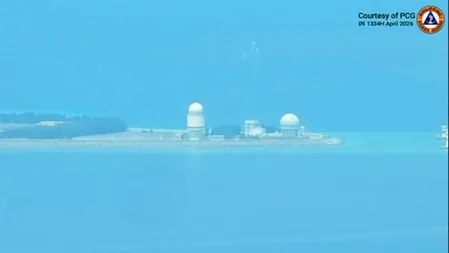
China, for the nth time on Thursday, April 9, displayed the reflex of an influence that is aware of its claims can not face up to the sunshine of legislation. It fired flares at a Philippine Coast Guard plane flying over the Panganiban and Zamora reefs.
Its antics will little question be defined away by China’s apologists as routine “safety enforcement,” however such euphemisms collapse below the faintest strain. What we’re seeing, but once more, is coercion by a state that harbors delusions of authority over a rustic whose sovereign rights are affirmed by worldwide legislation.
The goal was an unarmed plane conducting a routine maritime patrol over the Kalayaan Island Group. But our males have been all of a sudden handled as “intruders” by Beijing that manufactured islands out of sand and concrete, after which asserted territorial claims in defiance of the 2016 arbitral award.
Info are cussed issues. The reefs lie throughout the Philippines’ unique financial zone and have been dominated within the 2016 arbitral award to be low-tide elevations – options that grant China exactly zero sovereignty there.
Freedom of navigation, in essence, is without doubt one of the the reason why the Philippines issues excess of its measurement suggests. It’s not a passive bystander in maritime affairs, however a vital level of resistance in a area the place there are makes an attempt to show geography right into a monopoly.
And Beijing’s habits reveals one thing bigger than a collection of acts of harassment. It illustrates a lesson about geography and energy that’s being performed out elsewhere on the map, most vividly within the Strait of Hormuz.
Iran has proven that even a slim strip of water — the Strait of Hormuz, about 55 to 95 kilometers large general and solely round 33 kilometers at its narrowest navigable level, with industrial transport confined to lanes roughly three kilometers large — can wield affect far past its shores. A single menace, whether or not naval maneuvers or a disruption of oil shipments, sends tremors by means of world markets. Oil spikes. Diplomats scurry. Economies wobble.
Geography, as we’re seeing, can be utilized as a robust device. A waterway like Hormuz can disrupt provide chains, have an effect on markets, and drive governments to face their weaknesses. The identical thought applies to the South China Sea. Controlling vital sea routes there can affect commerce, politics, and strategic choices far past the area, even with out firing a single shot.
The South China Sea is the place our very personal West Philippine Sea sits squarely in a contest over energy, commerce, and sovereignty. This isn’t only a small regional physique of water. It is without doubt one of the world’s busiest transport routes and a significant path for world commerce.
Roughly one-third of maritime commerce within the Asia-Pacific passes by means of these waters yearly. Vitality provides, manufactured items, and uncooked supplies all transfer by means of routes that China more and more needs to regulate. If we predict that is solely about territory, then we miss the larger image of how energy works as we speak.
The similarities with the Strait of Hormuz are clear. Geography, mixed with a robust technique, can create energy far higher than conventional army energy alone.
China’s development of synthetic islands, stationing of army belongings, and relentless patrols past its territory are bare shows of coercion and intimidation, and deliberate acts to monopolize the flexibility to affect maritime visitors.
Beijing understands the lesson of Hormuz that the ability to limit entry will drive up transport prices, threaten fragile provide chains, and inject volatility into already tense markets. That’s the reason even when China has no authorized leg to face on, it stomps by means of one other’s territory as if worldwide legislation have been non-obligatory studying.

The underlying motive is unmistakably leverage. If Iran can unsettle world power markets from a comparatively slim chokepoint, then China – if left to do what it needs – may also obtain the identical impact within the South China Sea commerce route. Consolidate management right here and Beijing may strangle commerce, dictate entry to very important applied sciences, and venture army energy deep into the Pacific. These are deliberate calculations, and ignoring them is to misconceive the principles of energy as we speak.
Management over strategic waterways is about shaping how others behave, projecting energy over lengthy distances, and turning geography right into a type of strain, and never solely about army energy.
For Beijing, worldwide legislation and diplomacy are solely secondary when energy is at stake. Iran has proven how one nation can command world consideration from a really strategic location. China is watching, studying extra, and calculating. It understands that daring actions, backed by army presence and strain on neighbors, can carry outcomes.
The Strait of Hormuz teaches a easy lesson. And it’s unlikely that China – ever attentive to the grammar of energy – has not understood it for years, lengthy earlier than the most recent American-Israeli escalation with Iran. Pasteil. – Rappler.com
https://weblog.passive-income4u.com/create-your-very-own-auto-publish-news-blog-site-and-earn-passive-income-in-just-4-easy-steps/
https://www.rappler.com/voices/thought-leaders/pastilan-strait-hormuz-china-playbook/