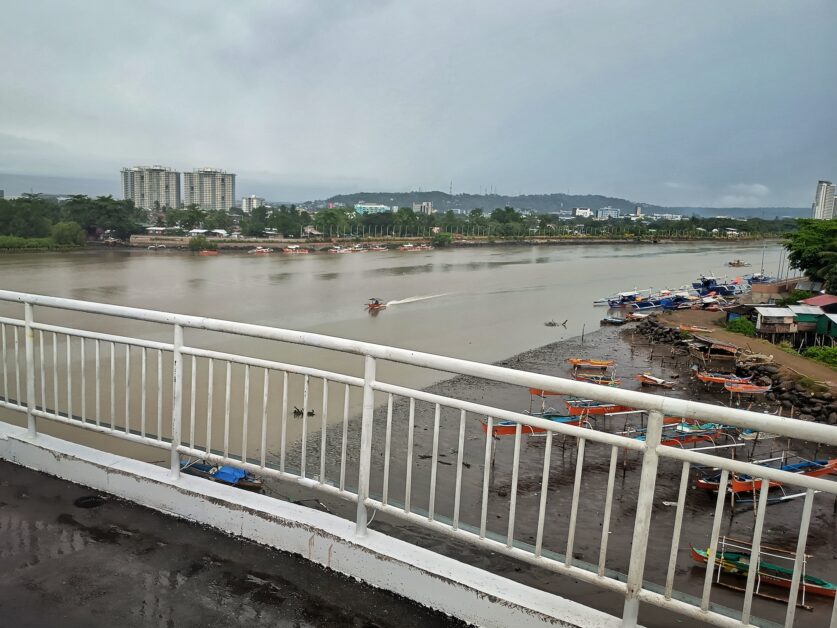
DAVAO CITY (MindaNews/5 Might)— Whereas conversations concerning the Davao River have largely targeted on conservation and sustainability, latest discussions have additionally revived one other query of how the river figures within the metropolis’s historical past, and the way that historical past is remembered.
At a discussion board held final April 30, audio system described the river as a part of a broader landscapeshaped by resistance and colonial historical past, tied to one of many metropolis’s most vital historic figures, Datu Bago — a neighborhood chief who resisted Spanish incursions into the Davao space within the mid-Nineteenth century.
Within the 1840s, Spanish forces led by José Cruz de Oyanguren launched expeditions into the Davao Gulf, finally establishing a colonial foothold within the area. Historic accounts persistently place these encounters inside the wider Davao space, the place Datu Bago, because the story goes, resisted these advances.
Some accounts go additional in associating these occasions with particular areas alongside the river. A historical past printed by the Davao Metropolis authorities, as an illustration, situates Spanish assaults at or close to the mouth of the Davao River, usually linked to early settlements round what’s now the Bolton space. Equally, native historical past narratives join Datu Bago’s resistance to communities alongside the riverbanks, once more pointing towards areas close to present-day Bolton.
Different accessible research are inclined to situate these incidents broadly throughout the Davao Gulf and surrounding areas. A historic reconstruction of Digos, as an illustration, notes that Spanish expeditions started within the Davao Gulf and led to the institution of settlements throughout the area, with out pinpointing a particular battlefield location.
Equally, a examine on Mati’s native historical past recounts the defeat of Datu Bago as a part of broader colonial consolidation within the Davao territory,once more with out specifying an actual location.
These accounts recommend that whereas elements of the river — notably areas round present-day Bolton — are sometimes referenced in historic narratives, the battle itself unfolded throughout a wider panorama quite than at a single, mounted website.
“Whereas the river’s channel has shifted in comparison with the fashionable period, it stays a part of the identical estuarine ecosystem,” mentioned environmental planner Lemuel Manalo, one of many audio system on the discussion board.
This reveals how historic modifications within the river’s course would possibly complicate efforts to pinpoint a single website for these encounters.
From historical past to present-day recognition
Whereas historic accounts usually level to areas round Bolton, present efforts to commemorate Datu Bago’s function in native historical past are usually not tied to Bolton Bridge, however to a different bridge that crosses the river.
Manalo mentioned there have been proposals to formally acknowledge Datu Bago within the metropolis’s public areas, together with a proposal to rename the Bucana Bridge after him.
In response to Manalo, the proposal has been raised with a metropolis councilor, although it has but to maneuver ahead formally, because it was made in the direction of the top of her time period.
“I’ve but to current it to the newly assigned councilor dealing with heritage and historic considerations,” Manalo shared.
The selection of Bucana displays a unique set of concerns. Positioned on the mouth of the river and a part of the newer coastal highway infrastructure, Bucana Bridge presents a extra seen and versatile website for public commemoration.
“The bridge overlooks a lot of this estuarine space, serving as a symbolic vantage level that honors him (Datu Bago) as a defender of Davao and a supply of native delight,” mentioned Manalo.
River as reminiscence, not simply useful resource
The renewed consideration in the direction of Datu Bago comes as conversations surrounding the Davao River more and more lengthen past environmental considerations. On the discussion board, audio system emphasised that sustainability efforts have to be grounded in historic understanding — recognizing how rivers operate as ecological methods mapped by human settlement patterns and battle.
Slightly than treating the river as a passive backdrop, this angle frames it as a part of a lived panorama the place historical past unfolded — one that can’t be decreased to a single level on a map.
“Place-based historical past is important to sustainable improvement… this helps remodel infrastructure from purely purposeful property into cultural reference factors,” Manalo defined.
“In Davao Metropolis, a lot of our unique landscapes have already been altered or misplaced, (similar to) outdated buildings destroyed throughout WWII,” he continued.
“What we are able to do is to honor the brand new infrastructure as symbolic markers assist protect collective reminiscence,” he mentioned.
“Historical past just isn’t restricted (to) museums and archives — trendy infrastructure may be honored for heritage,” he added. (Bea Gatmaytan/ MindaNews)
https://weblog.passive-income4u.com/create-your-very-own-auto-publish-news-blog-site-and-earn-passive-income-in-just-4-easy-steps/
https://mindanews.com/function/2026/05/remembering-datu-bago-where-did-the-battle-take-place-and-why-bucana-bridge/