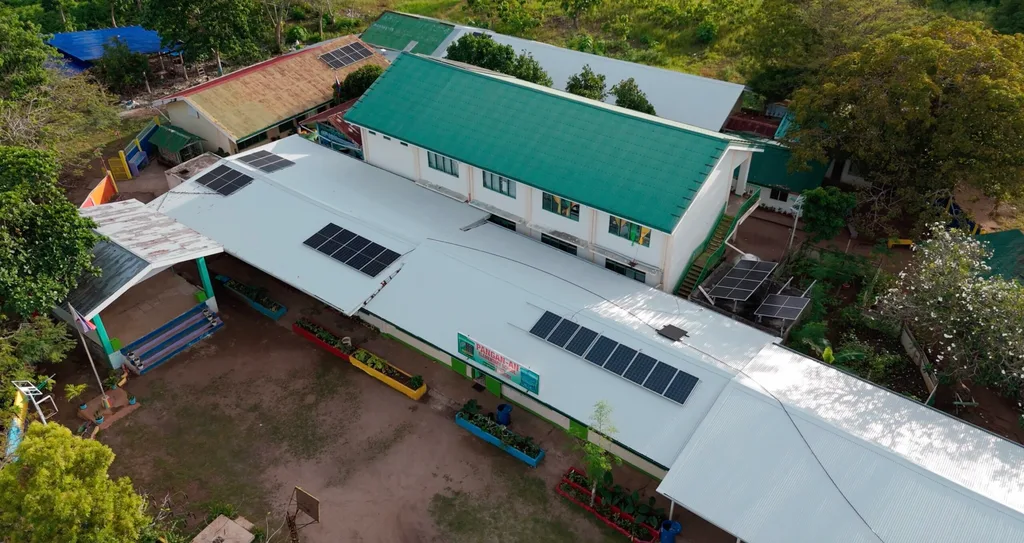
The surge in demand for photo voltaic set up has overwhelmed the native photo voltaic {industry}, which primarily sources its elements from China.
Photo voltaic installers can barely sustain with the growing demand that they now discover themselves rejecting purchasers or making them wait.
“We needed to flip down some as a result of, the story is all, ‘I need it now,’” Richmond Reyes, president of photo voltaic installer and distributor EcoSolutions PH, instructed Rappler in an interview.
Reyes mentioned costs of photo voltaic panels from China have “skyrocketed” with some growing by as a lot as 30%. Costs of aluminum railings elevated threefold. A high-quality battery priced P85,000 prior to now prices greater than P100,000. Additionally it is their apply to not top off on elements, mentioned Reyes, as a result of know-how evolves rapidly.
“We had purchasers who used to speak about how costly it was,” Reyes shared. “Which we’re not, by the best way. And now, they’re coming again and saying, ‘Sir, do you’ve got a inventory like this? Sir, can we purchase one too?’”
The photo voltaic distributor firm sources panels, aluminum railings, and batteries from China. Months earlier than the warfare, China’s {industry} ministry had urged its photo voltaic sector to curb manufacturing on account of overcapacity.
America and Israel’s assault on Iran led to the closure of the Strait of Hormuz, a essential waterway the place a lot of the petroleum from the Gulf passes by way of. The warfare is inflicting a surge in gas costs.
Now there’s worry of future energy outages or a rise in electrical energy payments on account of disruptions to grease and liquified pure gasoline shipments. These fears have stoked an natural curiosity in solar energy, particularly throughout Filipino households which have the means to shift to photo voltaic and need to be insulated from future value shocks.
In a press release on Friday, April 10, the Heart for Vitality, Ecology, and Improvement warned of a attainable improve of P5 per kilowatt-hour (kWh) within the Meralco franchise space on account of value hikes in coal and gasoline. Vitality Secretary Sharon Garin, nonetheless, mentioned they count on solely a “minimal” increase starting from 30 to 40 centavos per kWh.
Reyes mentioned it’s been an eye-opener for the native {industry}. With the demand surge, Reyes mentioned he has been occupied with the type of gear they need to be bringing to the Philippines. There’s additionally a must additional empower photo voltaic corporations catering to households and companies in islands within the Visayas and Mindanao.
Longer ready time, lack of manpower
Visayas and Mindanao households who need to shift to photo voltaic have to attend longer than these in Luzon.
Transport photo voltaic elements from Manila to Cebu would require a two-week lead time, in response to Lito Villar of non-profit group Clear Vitality Advocates and Practitioners of the Philippines Inc.
Villar additionally serves as guide for Manila-based photo voltaic firm Helios, and he mentioned that their baseline of closing three to 5 purchasers monthly has now elevated to seven purchasers in per week.
“How do you put in photo voltaic on all people’s houses? So we are saying, ‘Sir, we will accommodate you. However as a substitute of two weeks’ lead time, it is going to be 4 weeks,’” Villar instructed Rappler in an interview.
For a very long time, the native {industry} needed to surmount the issue of convincing people who the excessive upfront price of photo voltaic is price it. Now they don’t need to persuade individuals anymore. “Other than the (invoice), power safety is admittedly necessary particularly for the individuals who can afford it,” he mentioned.
Other than the part provide downside, Villar identified that extra manpower is required to cater to the demand. This implies extra individuals who have the technical expertise to put in rooftop photo voltaic on homes and reply to load adjustments, design points, or security dangers.
Brenda Valerio of photo voltaic community New Vitality Nexus Philippines mentioned constructing a reliable workforce ensures that rooftop photo voltaic is sustainable.
“(B)ut scaling this sort of coaching comes with actual constraints, from restricted trainers and services to the necessity for hands-on gear and reaching trainees throughout dispersed places,” Valerio mentioned.
Valerio’s group is without doubt one of the initiators of the New Vitality Academy, a platform for aspiring photo voltaic installers, technicians, and designers at present piloted within the Philippines.
In response to Valerio, the academy produced 636 coaching graduates as of 2025 and is aiming to triple the variety of graduates — ideally with extra coming from areas exterior Metro Manila.

‘Concentrate on renewables, not coal’
Photo voltaic shouldn’t be the one different supply being eyed to make sure the lights don’t flicker.
The Division of Vitality beforehand mentioned the nation could quickly improve reliance on coal, which serves as baseload supply. However suppose tanks are warning in opposition to relying extra on coal.
The Institute for Local weather and Sustainable Cities mentioned that the reliance on imported fossil fuels leaves the Philippines susceptible to world provide and value shocks. Favoring indigenous power — photo voltaic, wind, hydro, and geothermal — would insulate the financial system from these exterior disruptions, in response to the ICSC.
“Indigenous power assets are largely resistant to world value swings and supply predictable technology prices, shielding shoppers and the financial system from abrupt value hikes,” the group mentioned in a position paper.
Latest analysis from analysis group Zero Carbon Analytics mentioned a return to coal will solely provide short-term aid, however will expose nations to volatility of worldwide markets. Additional, the evaluation mentioned ASEAN can save as much as $4 billion if it replaces 45 gigawatts of deliberate gasoline capability with photo voltaic and battery storage.
“Vitality safety in Southeast Asia is not going to come from switching between fossil fuels,” Amy Kong, creator of the report, mentioned in a press release. “It’s going to come from decreasing dependence on them altogether.”
State-subsidized photo voltaic installations?
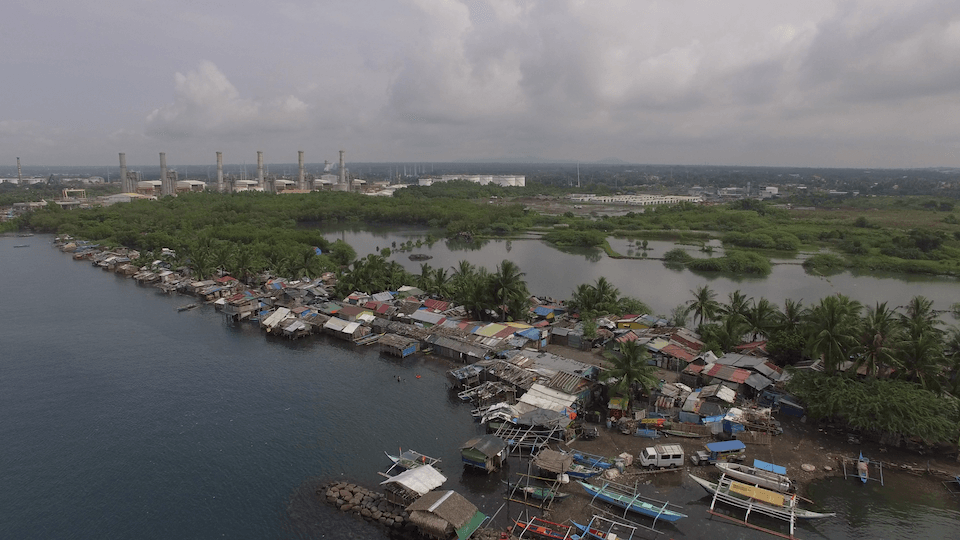
Whereas rooftop photo voltaic installations can present peace of thoughts for households that may afford it, this isn’t the case for a lot of others, particularly these in off-grid areas that depend on diesel for energy technology.
CEED is thus urging the federal government to subsidize the set up of photo voltaic rooftop programs.
The group mentioned {that a} 500-watt photo voltaic deployed to profit a million households can generate P373,140,000 in electrical energy financial savings monthly.
“An aggressive improvement of photo voltaic rooftop programs is a key and viable resolution to ease prices for susceptible communities, together with off-grid and SPUG (small energy utilities group) areas,” mentioned Gerry Arances, govt director of CEED.
Aside from sponsored photo voltaic deployment, CEED referred to as on the federal government to droop pass-through prices in electrical energy payments.
However earlier than any huge deployment, the problem of low provide have to be addressed, not solely to reply to this disaster however to implement the Philippines’ worldwide local weather commitments. The nation targets to extend to 35% the share of renewables within the energy combine by 2030. As of 2025, renewables reportedly make up 32.3% of the nation’s power combine.
“I believe this disaster is accelerating all our targets,” Reyes mentioned. “Now it’s a matter of us maintaining with the demand.” – Rappler.com
Quotes translated to English for brevity.
https://weblog.passive-income4u.com/create-your-very-own-auto-publish-news-blog-site-and-earn-passive-income-in-just-4-easy-steps/
https://www.rappler.com/newsbreak/in-depth/solar-rush-surge-demand-overwhelms-local-industry/