DAVAO CITY (MindaNews / 25 June 2026) — “Recollections can betray you,” a personality remarks in Topography (2022). The road turns into one thing of a thesis for a street movie the place reminiscence, historical past, and storytelling show equally unstable, and equally not possible to flee.
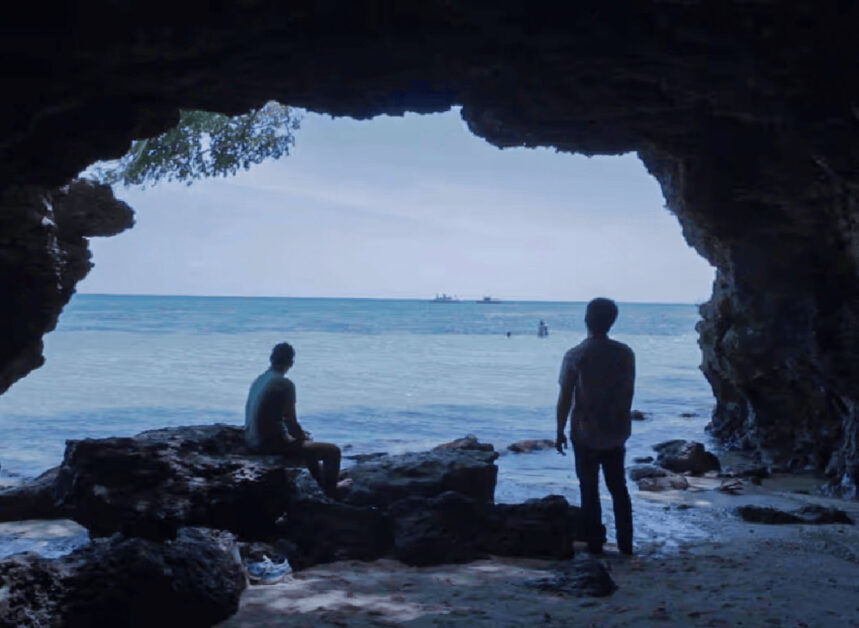
Final Monday, June 22, as a part of the Duaw Davao festivities, filmmaker Gutierrez “Teng” Mangansakan II introduced his Topography to the Cinematheque Davao. Set towards the backdrop of the Bangsamoro political transition, the movie follows two former scholar activists — Daud, inheritor to a strong political household, and Marco, a journalist quietly nursing goals of changing into a filmmaker — set off on one closing journey throughout Mindanao.
However the farther the 2 males journey, the much less the street appears to vow escape. As an alternative, each kilometer brings them nearer to the histories and inheritances that they had hoped to go away behind.
I bear in mind leaving the theater feeling surprisingly unhappy. The ending felt nearly too abrupt, refusing the emotional closure one instinctively expects from a movie constructed round a journey. However maybe that incompleteness is exactly the purpose. Topography resists decision as a result of historical past itself hardly ever gives one: neither the futures of Marco and Daud nor that of the Bangsamoro are fastened. The movie ends pregnant with chance, suspended inside historical past.
That refusal of neat conclusions extends to the movie’s understanding of historical past. Historical past in Topography is rarely introduced as a neat chronology. As an alternative, it’s one thing spectral: a drive that lingers, interrupts, quietly dictating the lives of those that inherit it.
Whether or not by means of the movie’s documentary-style narration that introduces characters like a listing, or its grainy photos of political processes that blur the road between fiction and documentary, the movie repeatedly reminds us that reminiscence is unstable, that “recollections can betray you.”
If reminiscence is unreliable, so too is historical past — not as a result of it’s false, however as a result of it’s at all times mediated by means of tales.
The political is private
We frequently repeat the feminist maxim that “the private is political.” Topography appears within the reverse — that the political is deeply private.
For Daud, politics is his household, his inheritance, his physique, his future. His father’s legacy precedes him, shaping expectations lengthy earlier than he may articulate his personal wishes. At one level, Daud admits that he’s “inheriting a really rotten system.”
Inheritance is never one thing one chooses: you don’t select your father, you don’t select your final title, you don’t select the historical past you’re born into. Historical past, the movie suggests, chooses you.
Marco, in the meantime, occupies a unique relationship with historical past. The place Daud’s future seems mapped out, Marco retains the opportunity of reinvention. He struggles to put in writing tales as a journalist whereas confessing his want to develop into a filmmaker as an alternative.
Marco’s conversations along with his editor Stan steadily evolve right into a meditation on storytelling itself: “There’s no reality in cinema,” Stan tells him. Marco counters that goal reality is elusive anyway, that each type of storytelling is already subjective.
And the movie agrees.
This perception reverberates all through Topography’s personal kind. Its documentary aesthetics, on one stage, lends authenticity to what we see, but additionally concurrently exposes documentary itself as one other narrative development: characters are launched by an omniscient narrator, political occasions are filtered by means of archival textures, recollections interrupt chronology. The result’s a movie much less fascinated with distinguishing reality from fiction, than in asking how tales come to form what we settle for as reality.
In that sense, Topography is as a lot about storytelling as it’s about politics.
Futile applied sciences
Within the movie’s opening scene, Daud explains that he commemorates each story of his life by tattooing it onto his pores and skin, preserving reminiscence by means of permanence. Marco wonders aloud why these tales will not be merely written down as an alternative. It’s an trade that begins casually however steadily reveals itself as central to one of many movie’s major considerations.
Tattoos, storytelling, reminiscence, cinema, documentary, images, journalism, filmmaking — these are all applied sciences of remembering. However each single a kind of strategies is imperfect: tattoos endure however stay non-public, tales change, photos fade, recollections betray.
Even one of many movie’s most startling sequences — a second wherein Marco unexpectedly witnesses Daud in an intimate sexual encounter and pictures it — refuses narrative closure. The scene arrives nearly with out warning, its sound design swelling into one thing oppressive with out overwhelming the performances. But the occasion stays unresolved by the movie’s conclusion.
The {photograph} by no means absolutely turns into proof. It stays suspended between picture and that means: one other secret, one other story. Marco snaps the photograph, however the picture by no means turns into data; by no means turns into reality.
Like historical past, the occasion stays suspended. Everybody is aware of. No one is aware of. The viewers carries it out of the theater.
Mindanao itself finally emerges as greater than setting. It turns into an lively presence — a panorama haunted by warfare, displacement, militarization, and political transition. Each vacation spot carries the burden of histories that can’t merely be pushed previous. At instances, the movie recollects W. G. Sebald’s journey writing, the place journeys by means of bodily landscapes develop into journeys by means of reminiscence, historical past, forgotten biographies, and amassed loss. Area and time collapse into each other till motion not signifies escape.
Two roads diverged
By the tip, the title begins to disclose its significance. Topography is the mapping of landscapes; the charting of terrain. However Topography asks what occurs when lives, too, are mapped lengthy earlier than they’re lived. Daud’s future has already been charted by household legacy and political expectation. Marco alone seems able to altering course. Their friendship, then, is much less a gathering of opposites than an encounter between two totally different relationships to historical past: one constrained by inheritance, the opposite granted the privilege of reinvention.
Topography finally leaves us with an unsettling proposition. Whereas we regularly think about historical past as one thing we research from a distance, safely contained inside books, archives, documentaries, Topography means that historical past is one thing that inhabits us. It determines the roads we are able to take, the tales we inform ourselves, the futures we think about attainable. Marco and Daud full their journey, however their reckoning stays unfinished. Just like the Bangsamoro itself, they continue to be suspended between reminiscence and chance, carrying histories they will neither absolutely escape nor fully rewrite. (Bea Gatmaytan / MindaNews)
https://weblog.passive-income4u.com/create-your-very-own-auto-publish-news-blog-site-and-earn-passive-income-in-just-4-easy-steps/
https://mindanews.com/arts-culture/2026/06/review-there-is-no-escaping-the-landscape-topografia-and-the-burden-of-inheritance/