Because the Philippines enters the brand new yr, it carries two heavy however inseparable ledgers: one financial and one political. Each had been written painstakingly over the previous 12 months, line by line, resolution by resolution — typically with self-discipline, usually with hesitation, and infrequently with expensive contradiction. For buyers, residents, and policymakers alike, the query is now not whether or not the nation has momentum as a result of it does. The extra pressing query is whether or not it has coherence.
12 months 2025 was not a collapse yr, however it was additionally not the breakout yr many had hoped for. Financial progress remained respectable by regional requirements, but stubbornly below the country’s full potential.
Inflation, while easing from its post-pandemic and commodity-shock peaks, left scars on family steadiness sheets. Interest rates stayed elevated lengthy sufficient to chill credit score urge for food and take a look at highly-leveraged company buildings. The peso found moments of stabilityhowever by no means absolutely escaped the gravitational pull of world greenback power and chronic commerce gaps.
Nonetheless, resilience was unmistakable. Consumption — lengthy the Philippine financial system’s most dependable engine — proved tough to kill, whilst meals costs pinched and borrowing prices rose. Remittances continued to behave as a quiet stabilizer, cushioning exterior shocks and propping up home demand. Infrastructure spending, although inconsistently executed, stored the long-term progress narrative intact, reminding markets that concrete, metal, and logistics nonetheless matter in a rustic of greater than 110 million folks.
But beneath the headline numbers lay a extra uncomfortable fact: progress more and more felt defended reasonably than accelerated. An excessive amount of of the yr was spent managing reasonably than decisively neutralizing dangers that had been already seen: supply-side inflation, governance considerations, and regulatory uncertainty, to call just a few. Financial coverage usually sounded proper, however moved cautiously. Markets listened, however waited.
Politically, the yr was outlined by an uneasy calm. The administration projected stability, continuity, and pragmatism — qualities buyers typically welcome. However stability with out urgency carries its personal price. Governance reforms superior in rhetoric greater than in execution. Anti-corruption drives surfaced in waves — typically forceful, typically selective, usually reactive. The outcome was a political surroundings that prevented chaos, however fell in need of conviction.
This ambiguity mattered. Capital is affected person solely to a degree. Overseas buyers, already skittish about rising markets amid world tightening cycles, seemed for clearer alerts: sooner regulatory selections, stronger institutional accountability, and a sharper break from legacy practices that blur the road between political energy and financial privilege. Too usually, these alerts arrived late or in no way.
What the previous yr finally revealed is that the Philippine story is now not about uncooked potential. That debate has been settled for many years. It’s now about execution danger. Buyers are usually not asking whether or not the nation can develop at 6% or 7% once more. They’re asking whether or not the establishments governing that progress are robust sufficient to make it sturdy, inclusive, and credible.
As the brand new yr opens, the financial outlook presents each reduction and problem. Inflation is easing, giving the Central Financial institution room to maneuver. Price cuts, as soon as hypothetical, at the moment are believable. This might revive credit score, elevate funding sentiment, and supply respiratory area to overextended steadiness sheets — from households to conglomerates. However simpler cash will solely amplify present buildings. If capital flows into productive funding, the payoff may very well be substantial. If it merely reflates asset costs or masks inefficiencies, the chance will likely be squandered.
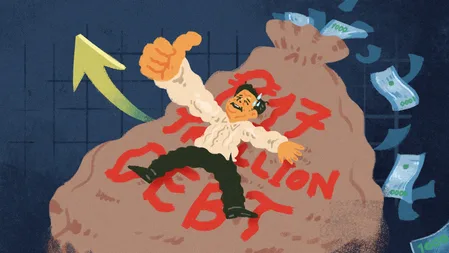
Fiscal coverage faces an analogous fork within the highway. Debt ranges stay manageable, however now not trivial. Each peso spent now carries a better burden of justification. Infrastructure should ship returns, not simply ribbon-cuttings. Social spending should translate into measurable outcomes, not everlasting dependency. The margin for populist miscalculation has narrowed.
Politically, the approaching yr will take a look at whether or not stability can evolve into reform. Midterm dynamics are already shaping incentives. Historical past suggests that is when tough selections are postponed, compromises multiply, and accountability thins. However historical past isn’t future. A reputable push on governance — actual transparency in public-private partnerships, constant enforcement of market guidelines, and visual penalties for abuse — might basically reset investor notion.
The Philippines at this time sits at a well-known crossroads, however with much less room for error than in previous cycles. Demographics stay favorable, the buyer base is massive, and strategic geography nonetheless issues in a fragmenting world financial system. These are strengths many nations envy. But they now not assure endurance from markets or forgiveness from residents.
The previous yr was a reminder that resilience isn’t the identical as progress. The yr forward will decide whether or not the nation merely absorbs shocks — or lastly converts stability into sustained, higher-quality progress. For the Philippines, the selection is evident, even when the trail isn’t: reform decisively and earn a re-rating, or drift cautiously and settle for mediocrity dressed as resilience.
What the numbers say
As we step into a brand new yr, the nation carries an financial ledger a lot bigger — and extra advanced — than the straightforward progress figures that when outlined its narrative. Buyers, policymakers and world companions are asking the identical query: Is the financial system able to transcend cyclical resilience and embrace transformative enlargement? The reply at this time, as culled by Vantage Level, in contemporary information from worldwide establishments and native authorities, is a certified “sure” — however with caveats that aren’t going away.

Progress nonetheless strong, however slowing
Economically, the Philippines stays considered one of Southeast Asia’s fastest-growing markets, but growth is decelerating from the heady post-pandemic rebound. Actual gross home product (GDP) expanded by 5.5% year-on-year within the second quarter of 2025, outpacing many regional friends. But, because the yr progressed, momentum softened. A number of forecasts — from regional our bodies to native authorities and personal economists — now place full-year GDP progress nearer to five.2-5.3%.
The Worldwide Financial Fund (IMF) and the World Financial institution paint related footage: progress stays above 5% and aggressive globally, however under earlier targets and pre-pandemic trajectories. Notably, the Division of Finance (DOF) itself has acknowledged that 2025 progress might settle nearer to 4.7-4.8%, properly beneath the official 5.5-6.5% objective.
In the meantime, gross nationwide product (GNP) — which incorporates web revenue from overseas — has climbed to historic highs in absolute phrases, touching over ₱6.68 trillion within the third quarter of 2025. This implies that revenue earned by Filipinos abroad and returns from overseas funding stay structural strengths.
Benign inflation, a double-edged sword?
Inflation presents a nuanced victory. Client value inflation slipped to round 1.5% in late 2025, comfortably under the Central Financial institution’s 2-4% goal vary.This benign value surroundings has afforded the Bangko Sentral ng Pilipinas (BSP) the flexibleness to chop coverage charges repeatedly to spur credit score and funding — a notable shift from the tight financial stances of the pandemic period.
However low inflation additionally displays weaker demand in funding and exterior sectors, not merely value stability. That’s the exact problem dealing with Philippine policymakers: keep away from deflationary complacency, whereas nurturing deeper non-public sector funding past consumption spending.

Political variables shaping the numbers
Macroeconomic indicators alone don’t inform the entire story. Investors are increasingly sensitive to political undercurrents that might reshape progress trajectories.
Worldwide benchmarks comparable to Transparency International’s Corruption Perceptions Index proceed to put the Philippines in a difficult mild, with a rating of 33 out of 100 and a rank round 114th of 180 nations. Whereas this represents a slight enchancment over prior years, it stays under regional and world averages, suggesting persistent governance gaps.
Domestically, these perceptions have translated into seen political unrest. In 2025, mass protests erupted nationwide in response to a sprawling corruption scandal involving flood control and infrastructure funds — one of many largest civic mobilizations in years. Subsequent prison fees have ensnared dozens of political and enterprise figures, together with high-level legislators, underscoring each the depth of the issue and the political will to pursue accountability, nonetheless inconsistently.
On the similar time, current surveys from the Philippine Observatory on Democracy point out rising public concern over corruption, disinformation and civic disengagement — alerts that democratic legitimacy could also be as consequential an financial variable as tax coverage or tariff charges.
World context: Exterior dangers and aggressive realities
Externally, the nationwide financial system is weak to tendencies properly past its borders. Efforts to diversify exports face headwinds from shifting US commerce coverage and world tariff regimes which, analysts say, might dampen export competitiveness and funding flows in 2026.
In contrast with its friends within the Affiliation of Southeast Asian Nations (ASEAN), the Philippines sits in a mid-tier aggressive band — beating some neighbors, however nonetheless trailing the likes of Indonesia and Vietnam in composite affect measures that weigh financial power, diplomacy, and technological capability.

Trying ahead: The highway to sustainable progress
So the place does this go away the nation within the yr forward?
On the financial entrance, the Philippines has the basics — the demographic dividend, strong remittances, resilient consumption — to maintain progress. However changing these benefits into increased, sustained funding and productiveness features would require sharper coverage execution, deeper structural reform, and extra enticing circumstances for long-horizon buyers.
On the political entrance, the unfolding drama around governance and corruption may very well be a tipping level. Clear, clear establishments aren’t simply ethical imperatives — they’re financial multipliers that unlock investor confidence, scale back danger premia, and widen the tax base.
The Philippines’ progress story is way from completed; it has merely entered a brand new chapter — one through which coverage coherence, not simply headline figures, will outline the nation’s place on the worldwide financial stage. If the subsequent yr is about decisions, then probably the most consequential one is that this: Will the Philippines reinforce its progress foundations with credible governance, or will political ambiguity undermine its financial promise?
Quo Vadis, Philippines? Markets are watching, and more and more so its personal residents. – Rappler.com

Click on right here for extra Vantage Point articles.
https://weblog.passive-income4u.com/create-your-very-own-auto-publish-news-blog-site-and-earn-passive-income-in-just-4-easy-steps/
https://www.rappler.com/voices/thought-leaders/vantage-point-year-of-reckoning-which-way-philippines/