Jollibee’s Worldwide operations now ship actual development and earnings, with double-digit same-store gross sales throughout main areas and roughly 40% of EBITDA (earnings earlier than curiosity, taxes, depreciation, and amortization) coming from abroad, underscoring that the corporate is not depending on Philippine consumption alone. Regardless of this momentum, Jollibee continues to be financed like a restaurant operator — lease-heavy, capital-intensive, and uncovered to working volatility — inserting a ceiling on valuation.
The deliberate spin-off and potential listing of its international business on a United States (US) securities exchange by 2027 highlights the chance forward: if Jollibee shifts decisively towards a McDonald’s-style, asset-light, franchise-led mannequin that prioritizes money circulate over retailer rely, it might unlock a far increased valuation. Emotion constructed the model; self-discipline will decide whether or not it turns into actually international in worth, not simply in presence.
It didn’t start as a company technique. There have been no spreadsheets, no investor decks, no valuation fashions forecasting international dominance. Jollibee Meals Company started as a small, virtually sentimental experiment in Manila — heat, acquainted, and unmistakably Filipino. Its earliest prospects weren’t searching for effectivity or scale. They got here for consolation. Fried rooster tasted like residence. Spaghetti was unapologetically candy. Even the mascot smiled the best way Filipinos did — huge, earnest, and barely theatrical.
What actually embedded Jollibee into the nationwide psyche was not meals alone, however emotion. Few shopper manufacturers wherever on the earth have understood easy methods to monetize sentiment as successfully. Jollibee’s advertisements didn’t promote meals; they offered longing — mother and father working overseas, love delayed by poverty, sacrifice repaid at a fast-food counter. These commercials turned cultural occasions, replayed and shared like quick movies. Jollibee ceased to be only a restaurant. It turned one thing nearer to household, a model Filipinos defended instinctively. (READ: Jollibee’s 10 most viewed Facebook videos before ‘Vow,’ ‘Crush,’ and ‘Date’)
Lengthy earlier than knowledge analytics, loyalty apps, and algorithmic focusing on, Jollibee mastered one thing extra primal: capitalizing on how scent can immediately set off an emotional response together with a reminiscence. The now-iconic “Langhap-Sarap” tv marketing campaign, launched in 1983, was not a mere slogan engineered in a boardroom, however an perception drawn from lived expertise. My pricey good friend Bobby Sumulong, then Jollibee’s advertising and marketing supervisor, had introduced within the late Minyong Ordoñez, an promoting legend, to develop campaigns for the corporate’s hamburger line with the intention to increase the model’s early development. Ordoñez drew on a childhood reminiscence acquainted to many Filipinos: the scent of meat hitting sizzling oil to sign that the meals was virtually prepared. Starvation then adopted aroma, and luxury adopted starvation. “Langhap-Sarap” gave language to intuition, turning scent into promise and urge for food into emotion. It advised Filipinos that Jollibee didn’t simply feed them; it understood them.
The brilliance of the marketing campaign was that it didn’t invent conduct — it validated it. Lengthy earlier than the phrase entered the Filipino lexicon, Jollibee’s founder Tony Tan Caktiong had already found, intuitively, what international chains would later formalize systematically: demand typically begins earlier than a transaction. Tan Caktiong intentionally positioned grills in order that the meaty aroma of burgers drifted into the road, turning sidewalks into funnels of anticipation. Individuals walked in not as a result of they had been persuaded, however as a result of they had been summoned. It was advertising and marketing with out advertising and marketing — a sensory invitation that felt pure quite than imposed.
The worldwide quick meals big arrives
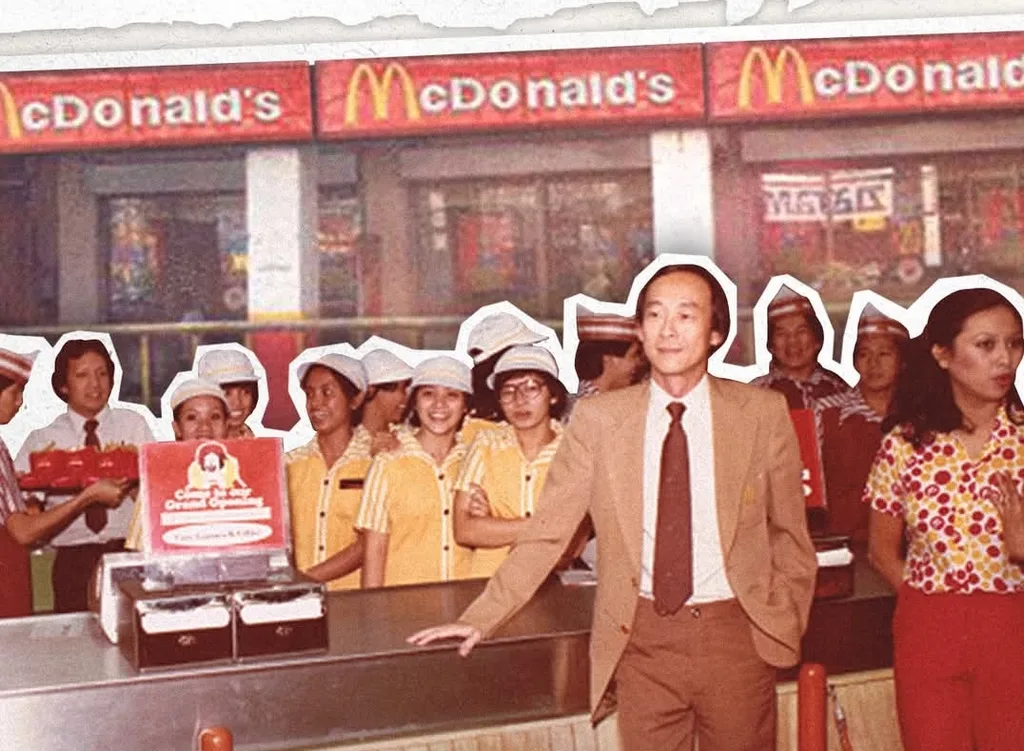
When McDonald’s entered the Philippine market in 1981 — opening its first retailer in Morayta, Manila — it did what it had executed all over the place else. It introduced with it the complete power of American fast-food self-discipline: standardized programs, industrial effectivity, technology-driven operations, and scale. For many native rivals, this is able to have been an extinction-level occasion. For Jollibee, it turned the catalyst for transformation.
What adopted was some of the underappreciated expertise transfers in international shopper historical past. Jollibee studied McDonald’s with near-obsessive depth, scrutinizing each phrase within the latter’s operations guide. That is one thing for conspiracy theorists to ponder: how did Jollibee get a glimpse of the worldwide quick meals big’s earlier, long-standing operational precept for achievement — High quality, Service, Cleanliness, and Worth (QSCV) — earlier than different markets on the earth did?
McDonald’s ‘impressed’ Jollibee’s retailer layouts, service pace, kitchen workflows, workers uniforms, menu boards, queue administration — nothing was left unexamined. The red-and-yellow palette, the standardized smiles, and the choreography behind the counter all carried unmistakable American DNA. It was as if Jollibee had stationed silent spies inside McDonald’s kitchens, absorbing each operational lesson out there. (Shoutout to the late Bobby Sumulong for this!)
However imitation alone doesn’t clarify survival. Jollibee localized what McDonald’s standardized. It stored the programs however bent the product to Filipino style. McDonald’s taught Jollibee easy methods to run a world restaurant. Filipino shoppers taught it what to promote. The outcome was not a clone, however a hybrid — American effectivity wrapped in Filipino emotion. That synthesis did greater than defend Jollibee’s residence turf. It propelled the corporate previous its international rival domestically and reworked a defensive response right into a platform for enlargement.
The query now could be whether or not that very same system can carry Jollibee by way of its most formidable chapter but: the worldwide stage.
Can Jollibee conquer the world?
Jollibee’s worldwide enlargement has moved far past the early diaspora experiment. At the moment, its abroad footprint spans fried rooster, espresso, tea, and informal eating, with manufacturers, comparable to The Coffee Bean & Tea Leaf, Compose Coffee, Milksha, and Tim Ho Wan, complementing its flagship enterprise. The dimensions is not marginal. Within the first 9 months of 2025, Jollibee posted web earnings of simply over ₱9 billion. System-wide gross sales exterior the Philippines surged greater than 30%, pushed by aggressive espresso enlargement and powerful efficiency in North America and different worldwide markets.

The working momentum is actual. Compose Espresso’s system-wide gross sales surged greater than five-fold. The Espresso Bean & Tea Leaf posted double-digit income development. Worldwide same-store gross sales development reached double digits throughout main areas, together with North America, Europe, the Center East, Africa, and elements of Asia — a sign that prospects aren’t merely sampling the model, however returning. For the primary time, worldwide operations now account for roughly 40% of group earnings earlier than EBITDA. Jollibee is not overly depending on Philippine consumption cycles to defend profitability.

Beneath the expansion narrative, nonetheless, lies a strategic stress buyers can not afford to disregard.
In January 2026, Jollibee announced plans to separate its international operations into a brand new entity in preparation for a potential itemizing on a US inventory change by 2027. Philippine operations would stay listed domestically. The transfer successfully splits Jollibee into two firms: a home money generator and a world development automobile. Administration framed the choice as a solution to unlock worth the Philippine market couldn’t totally acknowledge, permitting international buyers to cost Jollibee’s worldwide ambitions immediately.
The logic is sound. Analysts likened the transfer to San Miguel Company’s historic brewery spin-off — a restructuring that sharpened focus, improved comparability, and finally unlocked worth. Shareholders are anticipated to obtain shares within the worldwide entity as a property dividend. The market’s preliminary response was enthusiastic, with Jollibee’s share worth leaping sharply on the announcement.
Construction alone doesn’t create worth
But, right here lies the uncomfortable reality: in contrast to McDonald’s, Jollibee’s international development continues to be being financed like a restaurant firm. Its stability sheet stays heavy with lease obligations. Capital depth is excessive. Free money circulate, as soon as adjusted for lease funds, is thinner and extra unstable than headline earnings recommend. Some worldwide property shine; others falter. Tim Ho Wan’s system-wide gross sales contraction is a reminder that not each model acquisition compounds easily, and never each international footprint interprets into sturdy returns.
McDonald’s realized its most vital lesson many years in the past: international dominance will not be constructed by operating eating places — it’s constructed by franchising them. At the moment, greater than 90% of McDonald’s shops are franchised. The corporate collects hire and royalties, not operational complications. Its margins method 50%. Its money flows are predictable. Its valuation displays that self-discipline.
Jollibee now stands on the identical crossroads McDonald’s as soon as confronted.

If Jollibee continues increasing as a hands-on operator — leasing shops, absorbing labor and commodity volatility, and carrying operational danger — it could properly develop into some of the beloved fast-food manufacturers on the earth with out ever changing into considered one of its most dear. Development, in that situation, will impress shoppers however disappoint capital.
The numbers already trace at this ceiling. Utilizing the most recent publicly out there financials, Jollibee generates roughly ₱270 billion in consolidated revenues and about ₱45–47 billion in EBITDA. EBITDA margins sit within the high-teens, constrained not by demand however by a mannequin that absorbs working prices, lease funds, and reinvestment danger. Internet debt, together with lease liabilities, approaches ₱90–95 billion. The market responds rationally, valuing the corporate at roughly 11th of September instances EBITDA and high-teens to low-20s earnings multiples.
What’s changing into clearer within the newest investor disclosures is that Jollibee’s worldwide development is not pushed merely by opening extra shops. The numbers present one thing extra sturdy at work. Whole worldwide system-wide gross sales development — the mixed gross sales of each company-owned and franchised eating places — rose a strong 20%, whereas same-store gross sales development, which measures efficiency at eating places which were open for no less than a yr, reached 12% throughout main abroad areas. North America, Europe, the Center East, Africa, and Asia, together with Hong Kong and Macau, all posted double-digit same-store development, a sign that prospects are returning and spending extra, not simply sampling the model for novelty.
That distinction issues. Development fueled by current shops is normally more healthy and extra worthwhile than development pushed purely by enlargement. It suggests model acceptance, pricing energy, and operational momentum — attributes that enable scale to compound quite than pressure the system. This efficiency additionally aligns with the sturdy end Jollibee reported towards the tip of 2025, with worldwide markets more and more carrying the gross sales narrative because the yr closed.
What the numbers say
Extra telling nonetheless is the earnings combine. For the primary 9 months of 2025, roughly 60% of earnings earlier than curiosity, taxes, depreciation, and amortization got here from the Philippines, whereas a significant 40% got here from worldwide operations, with abroad EBITDA up practically 19% year-to-date. Worldwide is not a distant promise; it’s already a pillar of profitability.

And but, that is exactly the place the valuation stress sharpens. World recognition doesn’t dictate valuation. Economics does. With out a structural pivot towards a capital-light, franchise-led mannequin — nearer to McDonald’s — Jollibee dangers capping the very upside its worldwide success is now starting to unlock.
McDonald’s will not be the world’s most dear restaurant firm as a result of it sells essentially the most burgers. It’s useful as a result of it operates an asset-light, franchise-dominant system with structurally excessive margins, low reinvestment wants, and distinctive cash-flow high quality. That financial construction instructions mid-teens EBITDA multiples and premium earnings valuations.
For Jollibee, the problem will not be whether or not it could possibly promote extra rooster overseas as a result of it already does. The problem is whether or not it could possibly convert operational momentum into sturdy, high-quality earnings.
If the worldwide spin-off turns into a forcing mechanism — one which accelerates franchising, reduces direct working publicity, prunes underperforming property, and prioritizes free money circulate over footprint — Jollibee’s valuation ceiling adjustments materially. At that time, Wall Avenue would not see a Filipino restaurant chain increasing overseas. It might see a world shopper platform with emerging-market roots and developed-market self-discipline.
The actual danger for Jollibee will not be worldwide failure. It’s worldwide success structured cheaply. World enterprise historical past is plagued by manufacturers that grew impressively however delivered mediocre returns as a result of enlargement was financed with leases and operational publicity quite than royalties and self-discipline. McDonald’s prevented that destiny by slowing down, franchising aggressively, and optimizing for money extraction as a substitute of territorial dominance.
Jollibee doesn’t must develop into McDonald’s to succeed. But when it needs to be valued like McDonald’s, it should end the journey it started within the Eighties — not simply by copying the appear and feel of the golden arches, however by embracing the economics beneath them.
In shopper markets, it’s emotion that first units the stage and builds a model. What sustains that model and builds wealth is self-discipline. Jollibee’s first step has helped it grasp the primary stage. Conquering the world stage relies upon completely on how properly Jollibee takes the subsequent step. – Rappler.com

Click on right here for extra Vantage Point articles.
https://weblog.passive-income4u.com/create-your-very-own-auto-publish-news-blog-site-and-earn-passive-income-in-just-4-easy-steps/
https://www.rappler.com/voices/thought-leaders/vantage-point-jollibee-united-states-listing-mcdonalds-lessons/