In a high-end trend retailer or luxurious automotive showroom, the time period “vegan leather-based” sends a powerful message of high quality. For a lot of buyers, it guarantees the appear and feel of actual leather-based with out utilizing animal skins. As manufacturers transfer away from animal leather-based, “vegan” has come to counsel one thing that’s each kinder to animals and higher for the planet.
Nonetheless, the truth is extra sophisticated. Whereas these supplies take away animal merchandise, they typically exchange one environmental drawback with one other. Vegan leather is just not one materials, however a broad label that covers every little thing from plastic coatings to plant-based surfaces, which is why regulators are beginning to query vague green claims.
The enchantment of leather-based options is simple to know. Considerations about animal welfare, local weather change and deforestation have pushed buyers and types in direction of choices that appear extra accountable.
In consequence, “vegan leather-based” is usually seen as the higher selection – although how lengthy it lasts, and the place it finally ends up, is never questioned.
The rise of artificial cover
For many years, these supplies had been often known as “pleather” or vinyl. As we speak, higher finishes have turned skinny plastic movies into convincing leather-based lookalikes.
Most vegan leathers include polyurethane (PU) or polyvinyl chloride (PVC) coatings bonded to cloth backings. They’re waterproof and easy to embosshowever they’re additionally petroleum-derived plastics.
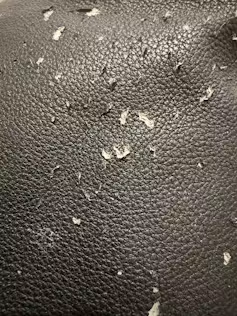
When the floor of a PU‑coated bag cracks or peels, the injury is greater than beauty. Because the coating breaks down, it sheds microplastics into the surroundings.

Creator equipped
The plastic beneath the vegetation
In response to considerations about plastic, new pretend leather-based supplies have been developed from pineapples, mushrooms, apples, grapes and even cacti. These bio-based choices are sometimes bought because the sustainable reply.
Nonetheless, utilizing a plant doesn’t mechanically make a product higher for the surroundings.
The difficulty lies in how these supplies are made. A “pineapple leather-based” shoe could also be praised for its plant fibreshowever these fibres are often held along with plastic resins to make the fabric sturdy.
The result’s a blended materials that cannot be recycled in Australia, although advertising and marketing typically focuses on the plant ingredient and hides the plastic beneath.
Plant leather-based doesn’t final lengthy
A key problem with many vegan leather-based options is energy. Uncooked plant fibers are too weak to deal with the repeated put on and strain confronted by footwear, luggage and automotive seats. To enhance efficiency, producers layer plant supplies onto plastic binders or polyester backings.
Even then, many of these materials break down prior to actual leather-based and can’t be correctly repaired. Conventional leather-based could be conditioned, patched and allowed to age over time, however plant-based options are likely to fail as soon as the floor coating cracks or peels.
A mushroom- or apple-based bag additionally can’t be composted due to the plastic beneath its floor, which means it reaches disposal a lot sooner. Some plant-based vegan leather-based merchandise have reported lifespans of as little as two years.
This factors to a broader concern. In a circular economy that prioritises reuse, restore and materials restoration, sustainability is about protecting merchandise in use and at their highest worth for so long as doable.
Manufacturers should stroll the discuss
The issues hidden by elusive advertising and marketing labels have gotten tougher to disregard. The Australian Competitors and Shopper Fee (ACCC) has made it clear broad labels resembling “sustainable” or “eco-friendly” have to be backed up with proof.
If manufacturers use the phrase “vegan” to counsel decrease environmental affect, they need to be capable to show that declare by wanting on the product’s full life cycle.
On the identical time, the Productivity Commission’s 2026 inquiry into the round financial system highlights Australia’s rising drawback with merchandise that can not be recycled. As product stewardship schemes develop, sturdiness, recyclability and what occurs to a product on the finish of its life will matter as a lot as animal welfare.
The moral distinction
None of this implies animal leather-based comes with out environmental or chemical prices. These embody methane emissions from livestock and the poisonous chemical substances utilized in tanning. For a lot of shoppers, avoiding animal-derived supplies continues to be an vital moral selection.
Nonetheless, “vegan” and “sustainable” aren’t the identical factor. One describes what has been disregarded of a product, whereas the opposite describes how that product performs over its complete life. Treating the 2 as interchangeable can exchange significant progress with reassuring labels.
The takeaway is a name for materials honesty. Sustainability can’t be decreased to a single phrase or ingredient. It’s measured by how lengthy a product stays helpful earlier than it must be thrown away. A bag that avoids animal supplies however breaks down inside a couple of years merely creates waste sooner.
If vegan options are going to be sustainable, they have to be designed to final. Sustainability is measured in years of use, not phrases on a tag.
Caroline Swee Lin TanAffiliate Professor in Trend Entrepreneurship, RMIT University and Saniyat IslamAffiliate Professor, Trend and Textiles, RMIT University.This text is republished from The Conversation beneath a Inventive Commons license. Learn the original article.
https://weblog.passive-income4u.com/create-your-very-own-auto-publish-news-blog-site-and-earn-passive-income-in-just-4-easy-steps/
https://interaksyon.philstar.com/trends-spotlights/2026/10/29/311688/vegan-leather-isnt-as-sustainable-or-ecopercentE2percent80percent91friendly-as-brands-might-claim/