MANILA, Philippines – Have you ever been to the US of Makati these days?
It’s the place workplace staff have taken to calling themselves OFWs – whether or not meaning “Onsite Filipino Staff” or, relying on the day, “Overworked Filipino Staff” – incomes their maintain in “Makati {dollars}.”
Even the Division of Tourism (DOT) joined in, pitching Makati as a “visa-free” destination for museums, malls, weekend markets, meals journeys, and runs across the Business Enterprise District (CBD). One Ayala, a contemporary commercial-transport hub on the nook of EDSA and Ayala Avenue, even issued a climate replace from the new republic.
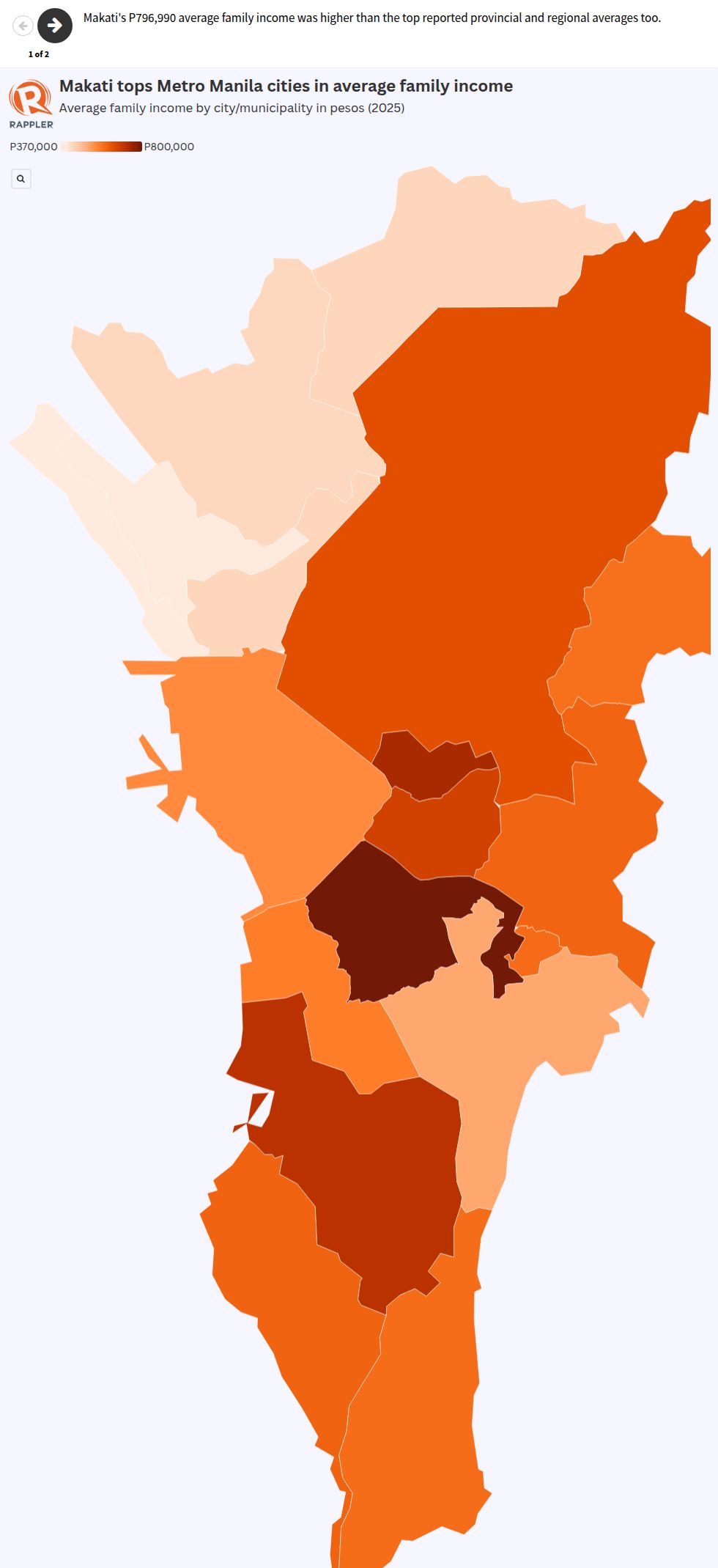
However all jokes apart, Makati actually does stand aside by the numbers. Within the Philippine Statistics Authority’s (PSA) preliminary 2025 Household Earnings and Expenditure Survey, Makati posted a mean annual household earnings of P796,990, or round P66,400 a month – that’s the best amongst extremely urbanized cities and better than any province or area too.
Rappler mapped out simply how excessive Makati’s common household earnings is in comparison with different cities within the Metro. The following map, in the meantime, reveals that whereas it’s the nation’s richest metropolis, it’s additionally essentially the most unequal.
The nationwide common was P411,350, simply over half Makati’s determine.
Makatizens additionally spent extra. Common annual household expenditure reached P606,700, likewise the best amongst Extremely Urbanized Cities (HUCs).
Try Rappler’s in-depth information visualization of which cities and provinces had the best common household earnings on this article beneath.
All roads result in Ayala Avenue
Even past family earnings, Makati is an financial anomaly.
The town generated P1.2 trillion in gross home product (GDP) in 2024. Its GDP per capita stood at a staggering P3.89 million, the best amongst all provinces and HUCs and practically 20 occasions the nationwide P197,325. It’s additionally far forward of second place Pasay.
Nonetheless, observe that Makati’s GDP per capita is partly inflated by the sheer quantity of financial exercise generated by workplaces and companies whose staff may very well reside elsewhere. Their output is counted within the metropolis’s GDP, however they aren’t counted in Makati’s resident inhabitants. No marvel the CBD can typically really feel much less like a neighborhood and extra just like the headquarters of Philippine capitalism.
You see that within the workplace market statistics too. At the same time as Philippine workplace leasing slowed within the first half of 2026, Makati posted a minimum of 106,000 sq. meters (sqm) price of transactions – essentially the most of any location tracked by Leechiu Property Consultants and forward of Bonifacio World Metropolis’s (BGC) 61,000 sqm.
I can attest to that pull personally. After I labored as an analyst for a consultancy serving foreign-based funds, we have been based mostly in Makati despite the fact that, in idea, we may have labored virtually wherever. Makati merely felt like the plain place to be.
It helps that Makati is likely one of the few locations the place getting lunch a pair blocks away is a welcome stroll reasonably than an impediment course of damaged pavements and lacking sidewalks.
Take, for instance, the 1.1-kilometer elevated Dela Rosa Walkway, stretching from Makati Medical Heart to Greenbelt. From there, pedestrians can proceed by means of a series of malls towards MRT3 Ayala Station – a godsend for commuters, although they could nonetheless begrudge a certain development for breaking apart that regular path.

Makati as a spot to reside
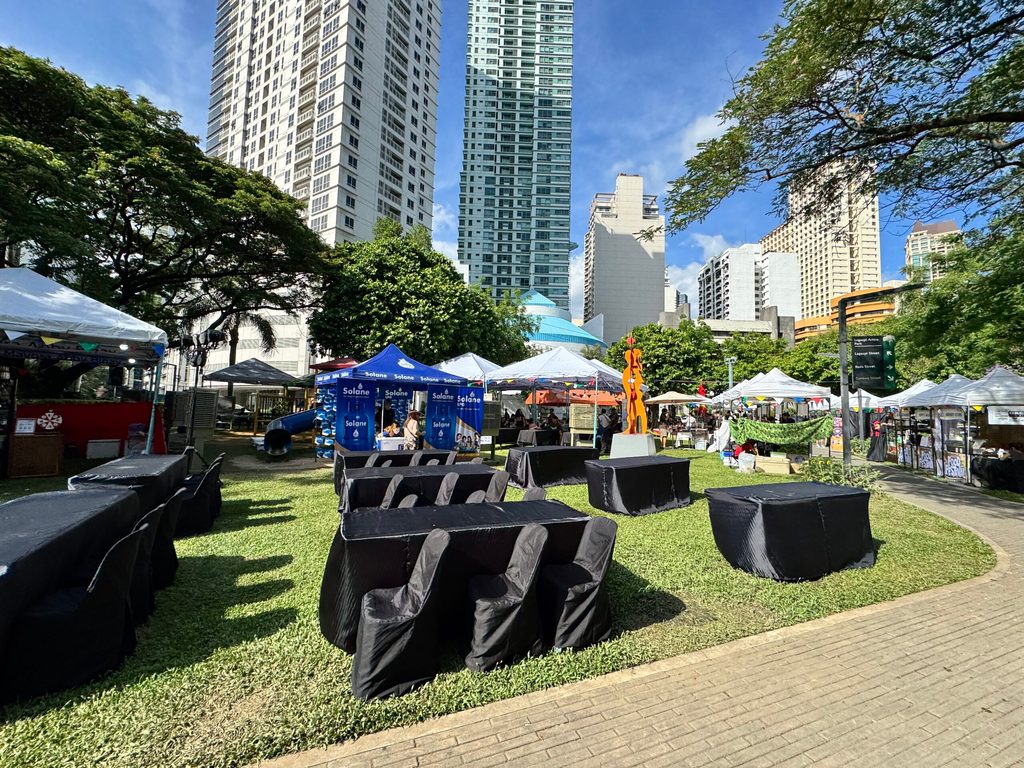
That walkability carries over into the remainder of the CBD. Greenbelt and Glorietta sit inside simple attain of workplaces, resorts, eating places, and residential towers, whereas Salcedo and Legazpi Villages combine condos and cafés with small pockets of greenery.
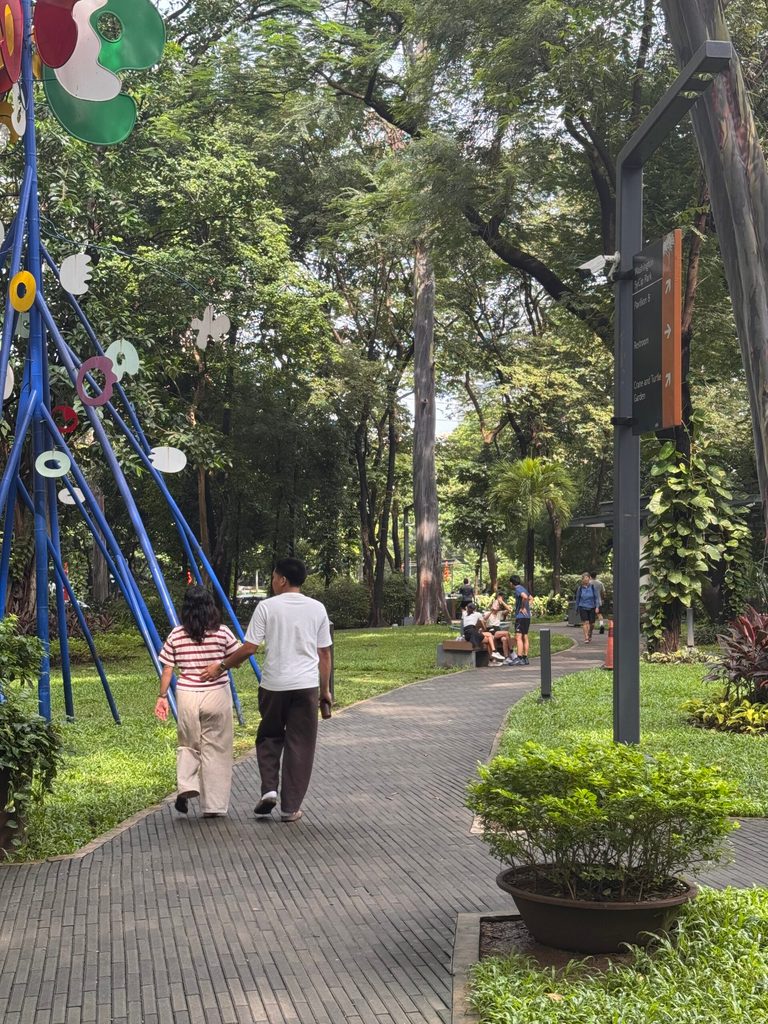
If you happen to’re an workplace employee caught inside a cubicle for eight hours a day, these small pockets are sufficient to maintain you sane. If you happen to reside in Makati, the parks turn out to be fixtures for neighborhood occasions too on weekends. Jaime Velasquez Park turns into the Salcedo Saturday Market; Legazpi has its Sunday market and two close by parks. Ayala Triangle Gardens offers one other patch of inexperienced in the course of the workplace towers.
Ayala Avenue itself turns into train area on Sunday mornings, when a 2.3-kilometer stretch goes car-free for runners, cyclists, canine walkers, and households. This system began in 2023 and has since turn out to be a crowd favourite, drawing in guests from all throughout the metro. Comparable car-free initiatives have since unfold round different cities, together with Tomas Morato in Quezon Metropolis.
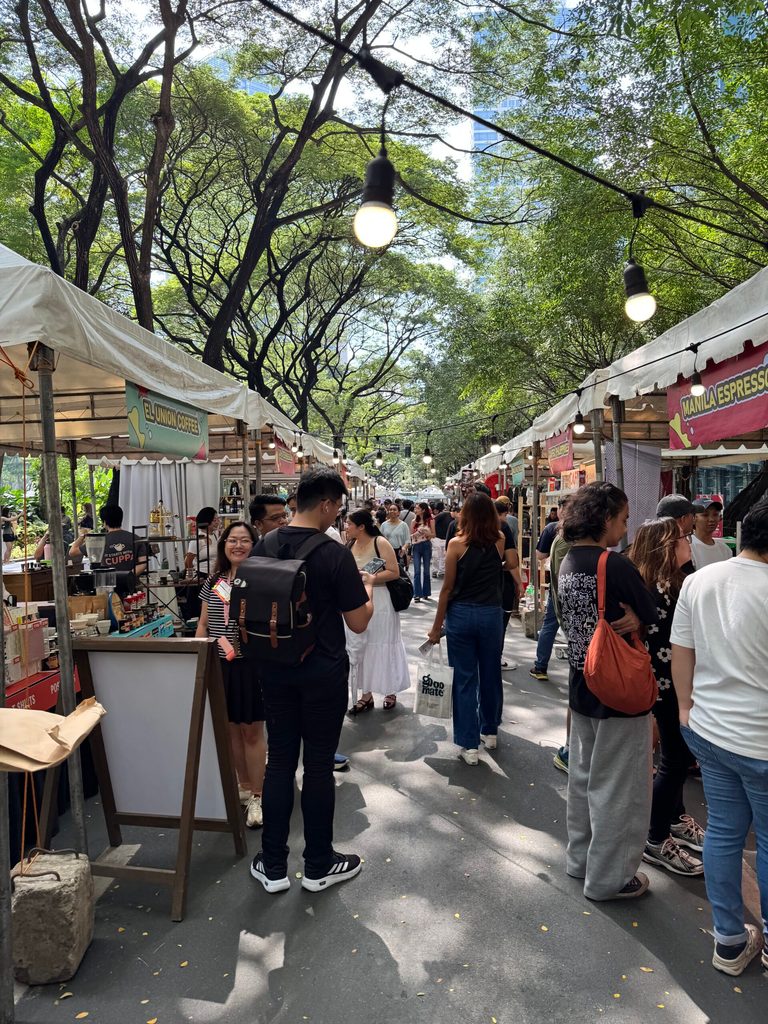
And if you happen to’re in search of an evening of energetic ingesting, then Poblacion’s only some minutes’ stroll away too.
It’s no marvel then that residential actual property costs are additionally sky-high. Two of Metro Manila’s most unique enclaves, Dasmariñas Village and Forbes Park, are technically Makatizen territory. In Leechiu’s This autumn 2025 prime village information, Dasmariñas Village reached about P711,000 per sqm, up 7% yr on yr, whereas Forbes Park was at P648,000 per sqm, up 1%.
For comparability, different prime villages like Inexperienced Meadows was at P287,000 and Ayala Alabang at P233,000.
A story of two cities
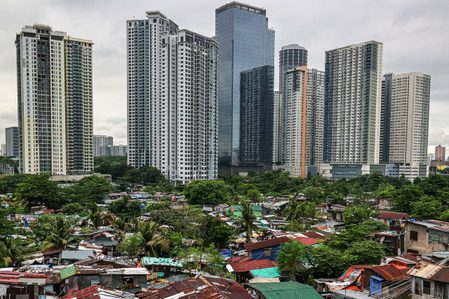
However don’t let the jokes about Makati obscure the painful actuality that whereas there may be fabulous wealth to be discovered within the metropolis, there’s additionally intense inequality in the way it’s distributed.
The typical household earnings in Makati, P796,990, is simply that – a mean. It doesn’t describe each Makati household, removed from it.
The truth is, the identical survey by the PSA reveals Makati had the best inequality amongst all main cities within the Philippines. It had a Gini coefficient of 0.4569 in 2025, significantly larger than the nationwide Gini of 0.391 and Nationwide Capital Area’s (NCR) 0.3489. The nearer that inequality measure will get to 1, the extra unequal the distribution of earnings.
The detailed PSA tables present simply how broad that hole may be.
Households in Makati’s backside 10% had a mean annual household earnings of P338,230, or roughly P28,200 a month. That’s beneath the P411,350 nationwide household common and virtually the identical because the P337,970 common for households in Surigao del Norte.
On the different finish, Makati households within the highest earnings decile averaged P2.66 million a yr, or about P221,000 a month. That’s practically eight occasions the household earnings of these in Makati’s lowest decile.
Even the quantity left between earnings and spending appears radically totally different. The bottom earnings decile earned a mean P338,230 and spent P314,930, a distinction of solely about P23,300 for your entire yr.
For the best decile, common earnings of P2.66 million in contrast with expenditure of P1.77 million, leaving a niche of practically P889,000. These variations shouldn’t mechanically be handled as financial savings, however they do illustrate how far more monetary room higher-income households have.
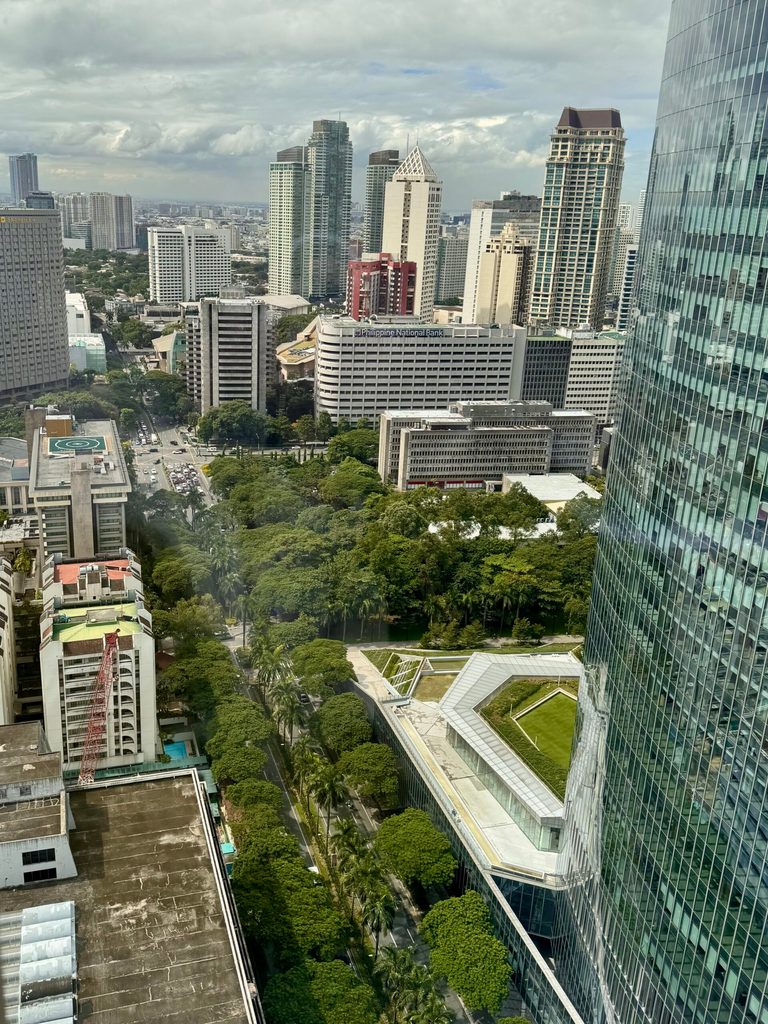
And Makati, that glittering little metropolis of ambition, is dear. A household incomes P338,000 there and one other incomes roughly the identical quantity elsewhere could also be residing very totally different lives as soon as housing, meals, transport, and different prices enter the image. – Rappler.com
https://weblog.passive-income4u.com/create-your-very-own-auto-publish-news-blog-site-and-earn-passive-income-in-just-4-easy-steps/
https://www.rappler.com/enterprise/united-states-makati-average-family-income-highest-unequal-philippines/