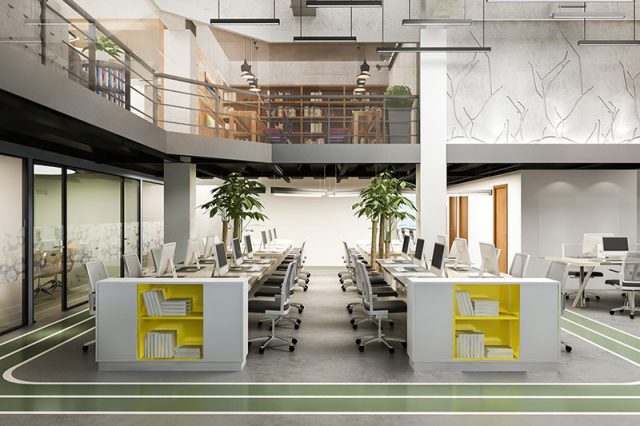

Because the pandemic, workplaces around the globe have quietly shrunk. Many organizations don’t want as a lot ground house or as many desks, given many workers now do a mixture of hybrid earn a living from home and the workplace.
However on days when extra workers are required to be in, workplace areas can really feel noticeably busier and noisier. Regardless of a lot concentrate on getting employees again into workplaces, there was far much less concentrate on the impacts of returning to open-plan workspaces.
Now, extra research confirms what many suspected: our brains must work tougher in open-plan areas than in personal workplaces.
What the most recent examine examined
In a recently published studyresearchers at a Spanish college fitted 26 folks, aged of their mid-20s to mid-60s, with wi-fi electroencephalogram (EEG) headsets. EEG testing can measure how onerous the mind is working by monitoring electrical exercise by way of sensors on the scalp.
Members accomplished simulated workplace duties, similar to monitoring notifications, studying and responding to emails, and memorising and recalling lists of phrases.
Every participant was monitored whereas finishing the duties in two completely different settings: an open-plan workspace with colleagues close by, and a small enclosed work “pod” with clear glazed panels on one aspect.
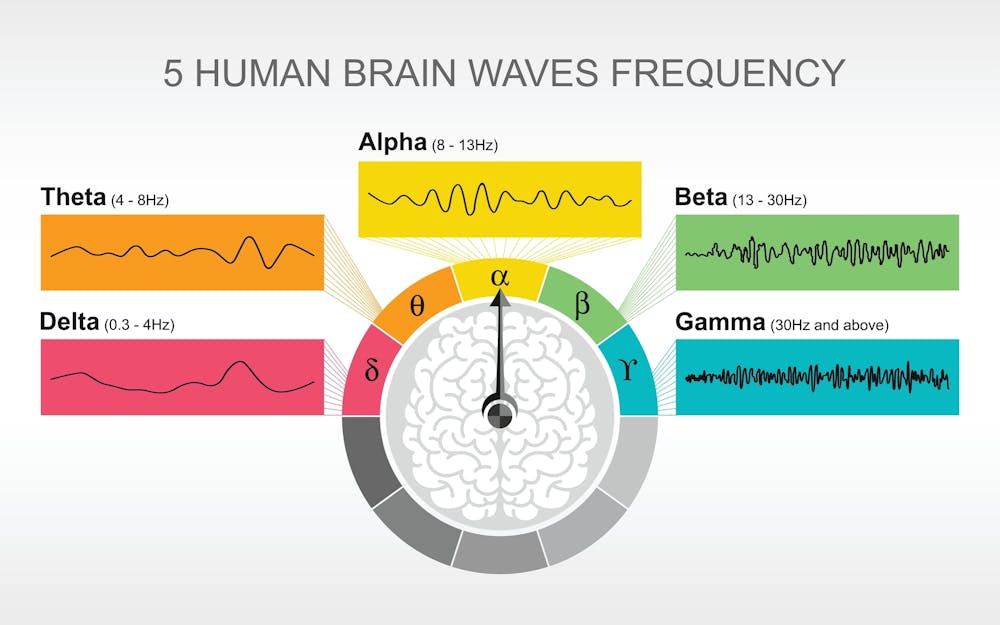
The researchers targeted on the frontal areas of the mind, liable for consideration, focus, and filtering out distractions. They measured several types of mind waves.
Shutterstock
As neuroscientist Susan Hillier explains in more detailcompletely different mind waves reveal distinct psychological states:
- “gamma” is linked with states or duties that require extra targeted focus
- “beta” is linked with larger nervousness and extra lively states, with consideration typically directed externally
- “alpha” is linked with being very relaxed, and passive consideration (similar to listening quietly however not partaking)
- “theta” is linked with deep leisure and inward focus
- and “delta” is linked with deep sleep.
The Spanish examine discovered that the identical duties carried out contained in the enclosed pod vs the open-plan workspace produced utterly reverse patterns.
It takes effort to filter out distractions
Within the work pod, the examine discovered beta waves — related to lively psychological processing — dropped considerably over the experiment, as did alpha waves linked to passive consideration and total exercise within the frontal mind areas.
This meant folks’s brains wanted progressively much less effort to maintain the identical work.
The open-plan workplace testing confirmed the reverse.
Gamma waves, linked to complicated psychological processing, climbed steadily. Theta waves, which observe each working reminiscence and psychological fatigue, elevated. Two key measures additionally rose considerably: arousal (how alert and activated the mind is) and engagement (how a lot psychological effort is being utilized).
In different phrases, within the open-plan workplace contributors’ brains needed to work tougher to take care of efficiency.
Even after we attempt to ignore distractions, our mind has to expend psychological effort to filter them out.
In distinction, the pod eradicated most background noise and visible disruptions, permitting participant’s brains to work extra effectively.
Researchers additionally discovered a lot wider variability within the open workplace. Some folks’s mind exercise elevated dramatically, whereas others confirmed modest modifications. This means particular person variations in how distracting we discover open-plan areas.
With solely 26 contributors, this was a comparatively small examine. However its findings echo a major physique of analysis from the previous decade.
What previous analysis has proven
In our 2021 studymy colleagues and I discovered a major causal relationship between open-plan workplace noise and physiological stress. Finding out 43 contributors in managed circumstances — utilizing coronary heart fee, pores and skin conductivity and AI facial emotion recognition — we discovered destructive temper in open plan workplaces elevated by 25% and physiological stress by 34%.
Another study confirmed background conversations and noisy environments can degrade cognitive activity efficiency and improve distraction for employees.
And a 2013 analysis of greater than 42,000 workplace employees in america, Finland, Canada and Australia discovered these in open-plan workplaces had been much less glad with their work atmosphere than these in personal workplaces. This was largely due to elevated, uncontrollable noise and lack of privateness.
Simply as we now recognise poorly designed chairs trigger bodily pressure, years of analysis has proven how workspace design may end up in cognitive pressure.
What to do about it
The power to focus and focus with out interruption and distraction is a basic requirement for contemporary data work.
But the worth of uninterrupted work continues to be undervalued in office design.
Creating zones the place employees can match their office atmosphere to the duty is important.
Responding to having extra workers doing hybrid work post-pandemic, LinkedIn redesigned its flagship San Francisco workplace. LinkedIn halved the variety of workstations in open plan areas, as an alternative experimenting with 75 forms of work settings, together with work areas for quiet focus.
For organizations trying to take care of their employees’ brains, there are sensible measures to think about. These embrace establishing completely different work zones, acoustic therapies and sound-masking applied sciences, and thoughtfully positioned partitions to scale back visible and auditory distractions.
Whereas including these additional options in might price extra upfront than an open plan workplace, they are often value it. Analysis has proven the significant hidden toll of poor workplace design on productiveness, well being and worker retention.
Offering employees with extra selection in how a lot they’re uncovered to noise and different interruptions will not be a luxurious. To get extra carried out, with much less pressure on our brains, higher design at work needs to be seen as a necessity.
Libby (Elizabeth) SanderMBA Director & Affiliate Professor of Organisational Behaviour, Bond Enterprise College, Bond University. This text is republished from The Conversation beneath a Inventive Commons license. Learn the original article.
https://weblog.passive-income4u.com/create-your-very-own-auto-publish-news-blog-site-and-earn-passive-income-in-just-4-easy-steps/
https://interaksyon.philstar.com/trends-spotlights/2026/02/25/309772/why-brain-work-harder-open-plan-office-private-offices-study/