By Jorge Golle of The Mindanao Sentinel
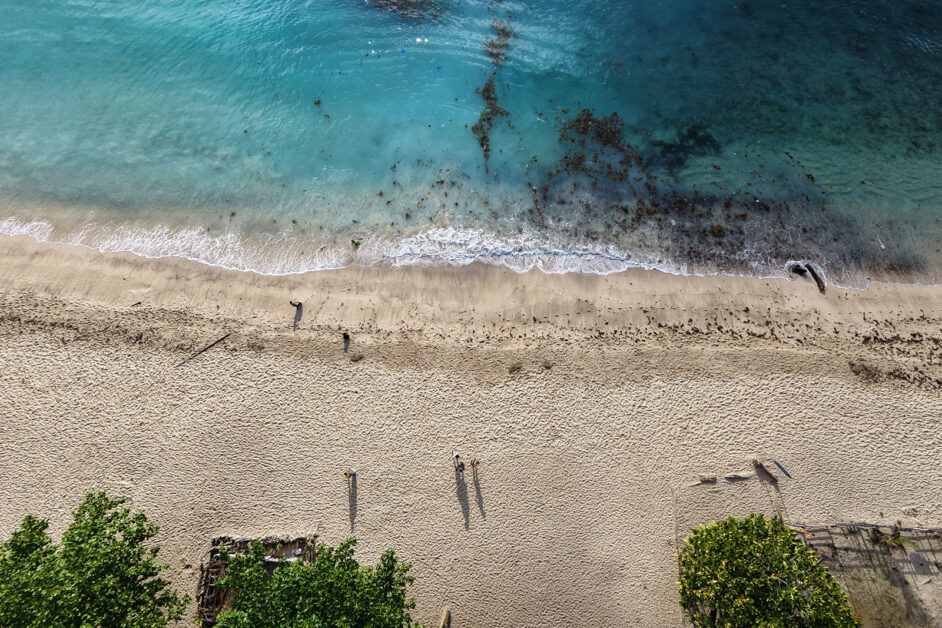
MATI CITY (MindaNews / 30 April) — In Dahican Seaside, the day begins with the sound of waves folding into shore—regular, affected person, virtually cussed. For many years, this stretch of coast has been generally known as a surfer’s refuge, a skimboarder’s playground, and a sanctuary for pawikan, or sea turtles. However beneath its postcard magnificence lies a quieter, extra fragile story—one carried largely by ladies.
Dahican attracts its title from “dahik,” a neighborhood time period for turtle nesting grounds — a becoming tribute to a shoreline lengthy embraced by nesting sea turtles. Winston Plaza, a marine life volunteer and member of Amihan sa Dahican – Balod sa Paglaum, Inc., stated that in 2025 alone, an estimated 25,000 eggs had been laid alongside its 1.5-kilometer stretch of shore, marking a notable rise from earlier years. However behind this encouraging determine lies a harsher reality: of the 1000’s of eggs laid, barely one % will survive.
Predators lurk. Human actions encroach. The percentages are unforgiving.
Nonetheless, each evening throughout nesting season, individuals watch, wait, and shield.
Amongst them is 50-year-old Ola Lorenzo, a single mom of three, a breast most cancers survivor, and a surf teacher who has turn out to be one of many quiet pillars of conservation in Dahican. She is a member of Amihanan sa Dahican – Balod sa Paglaom Inc., a community-based group that has taken on the duty of defending turtle hatcheries whereas balancing the realities of every day survival.

For Ola and the ladies beside her, conservation isn’t a facet effort—it’s woven into survival itself.
Their group screens nesting websites, ensures hatcheries stay undisturbed, and conducts every day coastal clean-ups. They remind guests—typically gently, typically firmly—that the seashore isn’t just a vacation spot, however a residing system.
“Depart no trash,” they are saying. It’s not a slogan. It’s a plea.
Their work is supported, partly, by partnerships with establishments like Davao Oriental State College, the Regional Coastal Useful resource Administration Heart, and Interfacing Improvement Interventions for Sustainability (IDIS). These collaborations present technical steering, coaching, and occasional livelihood help. However on most days, the work continues no matter what help arrives—or doesn’t.
As a result of life right here doesn’t pause.
Fishing, as soon as the spine of Dahican’s financial system, has slowed down dramatically.
“Fishing could be very gradual now. Many have stopped” (So many have stopped), Ola says.
Out of the barangay’s roughly 18,756 residents, based mostly on the 2024 inhabitants survey of the Philippine Statistics Authority (PSA), at the least 3,000 rely on fishing. In recent times, nevertheless, the catch has grown smaller and fewer predictable — a development additionally famous by the Metropolis Agriculture Workplace, though no particular native knowledge has been offered.
Regional figures from the PSA within the Davao Area present a decline in annual fisheries manufacturing in Davao Oriental: from 30,300.39 metric tons in 2022 to 29,064.74 in 2023, dropping additional to 23,434.69 in 2024, earlier than barely recovering to 24,966.18 in 2025. Total, this displays a 17.6 % lower in fish manufacturing over the interval.
Fisherfolk converse of waters that now not observe acquainted rhythms, the place calm and tough seasons blur into uncertainty.

Local weather change has altered patterns they as soon as relied on. Coupled with rising competitors in fishing grounds, the ocean—as soon as beneficiant—has turn out to be tougher to learn.
Barangay kagawad Elmo Acera, who oversees environmental considerations and fisheries, confirms what many have already felt: the change started about three years in the past, and it has solely worsened since.
The influence ripples past the shoreline.
In lots of households, ladies are stepping in to fill the hole. Some depart to work overseas. Others take out small loans—usually from casual lenders with steep compensation phrases—simply to begin micro-businesses. Many juggle a number of sources of earnings, stretching each peso to cowl meals, faculty, and every day wants.
For households with 5 or extra youngsters, the pressure is sharper. Some younger individuals have needed to cease going to highschool altogether.
Tourism, as soon as seen as a buffer, is now not as dependable.
Ola earns round ₱500 per browsing session when vacationers rent her as an teacher. On good days, she will additionally make a number of hundred pesos renting out tables, chairs, and mats to beachgoers. However these good days have gotten much less frequent.
Two forces have quietly chipped away at customer numbers: rising gasoline costs—linked to tensions within the Center East—and an more and more punishing warmth index that retains individuals away from the shore.
Even paradise has its off days now.
Help from native establishments has been uneven. Below a earlier metropolis administration, Ola’s group obtained a month-to-month rice subsidy that helped maintain their operations. That help has since stopped.
The Metropolis Agriculture Workplace did lengthen monetary help to assist the group begin a small enterprise retailer—an effort to supply regular earnings for members. However past that, help has been restricted.
Organizations like IDIS at the moment are exploring extra livelihood help, recognizing the rising hole between wants and obtainable assets.
Nonetheless, the ladies proceed.
Each hatchling launched into the ocean carries a fragile promise. Most gained’t return. However some will. Sufficient to maintain the cycle alive.

Ola sees herself in that battle.
She has confronted sickness, raised youngsters on her personal, and stood witness to a shoreline in transition. But she stays anchored—not simply by necessity, however by perception.
Just like the turtles they shield, she is aware of survival is rarely assured.
However it’s all the time attainable.
“So long as there’s one %,” she says, “we nonetheless have hope.”
(Jorge Golle is the founder and editor of The Mindanao Sentinel in Koronadal Metropolis. This story was produced through the Local weather Influence and Setting Reporting Workshop for Journalists in Mindanao on April 24 to 26 in Mati Metropolis, Davao Oriental. It was organized by the Mindanao Institute of Journalism, writer of MindaNews, below the Media Influence Philippines challenge. Media Influence is supported by Worldwide Media Help (IMS) and co-funded by the European Union and the Danish Worldwide Improvement Company (DANIDA).)
https://weblog.passive-income4u.com/create-your-very-own-auto-publish-news-blog-site-and-earn-passive-income-in-just-4-easy-steps/
https://mindanews.com/top-stories/2026/04/women-of-the-tides-holding-the-line-in-dahican/